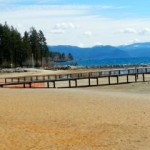
Full moon snowshoe on West Shore

There will be a guided full moon snowshoe at Sugar Pine Point State Park on Feb. 20.

Explore the natural and cultural history around the Hellman-Ehrman estate and walk along the Lake Tahoe shore.

For those new to snowshoeing, there will be a beginner’s clinic at 6:30pm. The hike starts promptly at 7 pm near the restrooms in the day use side of the park (lake side entrance, east side of Highway 89). The program lasts approximately 1½ hours and costs $25 per person for adults. Children 12 and under are $10. The cost includes tour, event parking, and snowshoe rentals.

Wear warm, layered clothing and winter boots.

Space is limited. Purchase tickets online.


Washoe County could have highest sales tax in state

By Trevon Milliard, Reno Gazette-Journal

Washoe County voters found out Friday which tax increase for local schools awaits their decision on the November ballot.

Sales tax.

And voters will likely be asked to pass the highest sales tax in Nevada of 8.265 percent, according to a Washoe committee unanimously agreeing Friday to seek a sales tax increase in the General Election.

Washoe’s current sales tax rate is 7.725 percent, falling below the state high of 8.15 percent charged for purchases in Clark County.

Read the whole story


Liberty begins building solar project

The Luning Solar Project will look similar to this facility. Photo/Provided

The Luning Solar Project will look similar to this facility. Photo/Provided

Liberty Utilities started construction this week on its first solar project.

It is projected that it will provide 25 percent of the utility’s energy requirements when it comes online in December.

The Luning Solar Energy Center will be a 50 megawatt project. Luning is 140 miles southeast of Minden and 80 miles northwest of Tonopah.

In addition to the solar facility, a 120 kV power line approximately 1.6-miles long will be constructed from the solar facility to NV Energy’s existing Table Mountain substation. The Luning Project will deliver its generation at this point of interconnection on the NV Energy transmission system in Nevada. NV Energy will then deliver the energy to delivery
points within Liberty Utilities’ service territory, which includes the California side of the Lake Tahoe Basin, Truckee and Alpine County.


Reno’s Guldemond on podium at Fenway

By USSA

BOSTON – U.S. Snowboarding rookie Julia Marino (Westport, Conn.) topped the women’s field at the Polartec Big Air at Fenway on Thursday night in front of a stellar Boston crowd in one of America’s most iconic sports venues. Marino, a New England native, wasn’t originally even scheduled to compete. She snuck in off the alternate list when her teammate Ty Walker (Stowe, Vt,) was forced to drop after being injured in practice.

It was a groundbreaking event for the U.S. Grand Prix and the FIS Snowboard World Cup – a 140-foot-tall scaffolding big air event situated in the center of Boston’s Fenway Park. Never before has the U.S. Grand Prix featured a big air-only event, and never before has snowboarding been presented in such a historic American venue.

Marino, who hadn’t competed on a scaffolding jump or in front of such an enormous crowd before, said that she was feeling the vibe of the Fenway spectators. “I’ve never snowboarded at a contest with a crowd this big – it’s amazing!” she said. “I thought it would make me more nervous but it actually made it way more fun. Every time I landed a trick it was so cool to hear the whole crowd going wild. There were so many people here – I didn’t think that this many people would show up for a snowboarding event; it’s amazing to see all these awesome fans out here supporting what we do.”

The Canadian women rounded out the podium with top qualifier Jenna Blasman in second and Brooke Voigt in third.

Chas Guldemond (Reno) led the U.S. men with a third-place podium finish. He was also pumped on the energy of the crowd, hyping everyone up with his best imitation of Babe Ruth.

“Fenway totally went off like we expected it to,” Guldemond said. “The crowd was really behind me which made my experience amazing and to land three runs and call my shot on the last one and send it to the bottom, that topped off my night.”

The men’s event was won by Max Parrot of Canada, who was the only athlete to throw a triple cork. Fellow Canadian Michael Ciccarelli was second.

Rounding up the American women, Jessika Jenson (Rigby, Idaho) was fifth and Karly Shorr (Milford, Mich.) was sixth. For the men, Eric Beauchemin (Grand Blanc, Mich.) seventh. Lyon Farrell (Haiku, Hawaii) eighth.


SLT proposing significant project near Ski Run

The area in green represents the area South Lake Tahoe wants to acquire, while the gold are is the "southwest corner" property at Ski Run and Highway 50. Map/South Lake Tahoe

The triangle area in green represents the area South Lake Tahoe wants to acquire, while the gold section is the “southwest corner” property at Ski Run and Highway 50. The purple section is California Tahoe Conservancy land. Map provide by South Lake Tahoe

By Kathryn Reed

Bulldozing and starting over is what many people would like to do with a majority of parcels in South Lake Tahoe.

One-by-one the California Tahoe Conservancy is doing this. The board in March will have a say in whether that happens to the Knights Inn that fronts Highway 50 at the corner of Herbert Avenue.

First, though, it will be the South Lake Tahoe City Council deciding if it wants to buy the property. It is adjacent to what is loosely known as the “southwest corner” parcel at Highway 50 and Ski Run Boulevard.

The goal is to combine the two parcels, which together is about 6 acres, into one development plan.

The city owns the parcel at Ski Run, having bought it from the now defunct Redevelopment Agency for $800,000. It has been in escrow for more than a year with Halferty Development Company out of Sacramento for $1.3 million.

Knights Inn may be razed,  including Mo's Place. The recently paved sidewalks will stay intact. Photo/LTN

Knights Inn may be razed, including Mo’s Place. The recently paved sidewalks will stay intact. Photo/LTN

The hotel site, which also includes a conference center on Lloyd Avenue as well as owner Pradip Patel’s residence on that street, has been appraised at $4.5 million. On Feb. 16 the council will be asked to vote to buy it for $6 million. The added costs account for the value of the commodities, which include 110 hotel units (which bring in approximately $100,000 year in transit occupancy tax), about 5,000-square-feet of commercial floor area, and a substantial amount of coverage.

The bulk of the money to buy the property is projected to come from the CTC, with the city contributing the money from the sale of the southwest corner and probably a couple hundred thousand dollars. Which fund that comes out of the council will decide.

Assuming the CTC board green lights the idea, the city would spend the summer doing environmental analysis. The CTC board would then make the final decision at its October meeting. The developer and city would spend next fall-winter getting permits, and construction could begin in May 2017.

“If it all falls together, it will be a beautiful entryway. It will be remarkable,” City Councilman Austin Sass told Lake Tahoe News. “If it happens, it will be very exciting for our town.”

Sass with Councilman Hal Cole make up the city’s real property subcommittee, which has been negotiating the deal along with city staff.

While the specific tenants are not known, not even the types of businesses are being disclosed. What city officials would say is the retail won’t be T-shirt shops or a drug store. They said businesses not currently operating here are who the developer is wooing. The city as landowner has negotiated a deal so that it has final say over what type of business goes in.

It will be a mini-village of sorts with varied retail, that will be walkable, aesthetically appealing, and potentially have an educational component regarding the environment.

The "southwest corner" lot comes with 88 parking spaces in the adjacent garage that otherwise is controlled by Lake Tahoe Vacation Resort. Photo/LTN

The “southwest corner” lot comes with 88 parking spaces in the adjacent garage that otherwise is controlled by Lake Tahoe Vacation Resort. Photo/LTN

The developer already bought 12,000-square-feet of CFA from the city for the southwest corner. They will need more to do the project they have in mind. Between the two parcels three buildings may be constructed. Depending on the tenant(s) it could be a build-to-suit scenario. The southwest corner can have a maximum height of 56 feet, and the hotel property can go up to 44 feet.

It’s too soon to decide if a long-term lease will be entered into or if one day the city might sell the land to the developer or another entity.

The entrance Sass referenced would be at the corner of Ski Run and Highway 50. On the hotel property a water feature is planned to capture the natural flow of the runoff that comes down from the mountain side (and is the reason the hotel for years has had flooding issues), and then have it go under the highway to the lake. Right now it flows that way without ever being treated.

This area was once a stream environmental zone.

The Conservancy funds these sorts of endeavors when there is a significant environmental gain. City officials estimate 8,000 pounds of sediment could be prevented from reaching the lake with the proper erosion control measures put into place. This in turn would meet more than 20 percent of the city’s sediment reduction goals that Lahontan Water Quality Control Board has mandated for the five-year period starting this year.

—–

Notes:

  • The City Council meets Feb. 16 at 9am at Lake Tahoe Airport.


Opinion: Don’t play ‘gotcha’ with the Great Emancipator

By Allen C. Guelzo

“If slavery is not wrong, nothing is wrong,” Abraham Lincoln said in 1864. “I can not remember when I did not so think, and feel.”

Yet, there has always been doubt about just how great an emancipator he really was. Why did he wait for two years into his presidency to issue his Emancipation Proclamation? And why didn’t that proclamation free all the 3.9 million African-Americans then held in bondage?

The answers reset in Lincoln himself. But we know he thought of slavery primarily as an economic injustice rather than a racial one. It forced people into labor they had not chosen, and took from them what that labor produced. Lincoln could remember his own resentment at the easy way his father had rented him out to neighboring farmers and pocketed all his earnings. Lincoln would say later that the turning point of his life came when he was able to keep two silver half-dollars he had earned on the Ohio River for ferrying two strangers out to a passing steamboat. “It was a most important incident in my life. I could scarcely credit that I, a poor boy, had earned a dollar in less than a day…. The world seemed wider and fairer before me.”

Slavery, in Lincoln’s mind, was any economic relationship based on force and confiscation, and in his experience, it was an offense that rose above questions of race. “I used to be a slave,” he said in 1858, “and now I am so free that they let me practice law.” He admitted that he had “no purpose to introduce political and social equality between the white and the black races.” But “in the right to eat the bread, without leave of anybody else, which his own hand earns,” every African-American “is my equal and the equal of … every living man.”

The great question before the Civil War, however, was what to do about slavery, since it was protected by law in 15 states.

The wisest path to ending slavery, argued Lincoln, was to hem it into the states where it was then legal and admit no further slave states to the Union. But slaveholders had no intention of allowing themselves to be hemmed-in. When Lincoln was elected president in 1860, 11 of the slave-holding states organized themselves as the Confederate States of America, and civil war broke out between North and South. But even as president of the United States, Lincoln lacked any clear constitutional authority to undo state laws about slavery.

That left Lincoln only one other option, and it was the most risky of all—a proclamation of emancipation, freeing the slaves, issued not in his civilian authority as president but as a military necessity decreed in his capacity as commander-in-chief, relying on his presidential “war powers.” No president had ever actually attempted to use these “war powers.” But time and the opportunity to act against slavery were slipping away, and Lincoln “had about come to the conclusion that we must free the slaves or be ourselves subdued.” On July 22, 1862, he submitted a draft emancipation proclamation to his cabinet, then issued it in preliminary form on Sept. 22, and finally signed it into law on Jan. 1, 1863.

The proclamation did not free slaves in the four slave states that had refused to join the rebels. A “war powers” proclamation could only operate on those who were at war with the government. Not until the 1864 congressional elections gave Lincoln an irrefutable mandate was he able to press onward to a constitutional amendment that ended slavery everywhere in the nation.

We love the drama of the “gotcha” moment in politics, even though we know that the drama frequently tramples all over complexity. It’s no different in history. Understanding our history can’t be done by cherry picking “gotcha” phrases from Lincoln or smirking over the blemishes of the Founders. The study of history is like the rebuilding of disappeared cathedrals—it can’t be done by hurriedly putting up a tin shack and then complaining about how cheap the cathedral looks. It requires the patient reconstruction of the full world someone like Lincoln lived in, with all the options and all the obstructions as clearly in view to our eyes as they were to his.

Several years ago, speaking at a college in upstate New York, I laid out the legal niceties of Lincoln’s strategy for emancipation. But the niceties didn’t satisfy one questioner in the audience, who complained that it just ”didn’t feel right” to say, “Lincoln freed the slaves.” He was afraid that Lincoln was being given credit he didn’t really deserve, while the role of everyone else—including the slaves—was neglected. It’s true that many hands pulled down the edifice of slavery. But Lincoln’s hands remain the most important; even if to some of us they seemed puzzlingly slow in doing their work. Without Lincoln’s attention to the legalities of emancipation, fugitive slaves would never be anything more than fugitives, and a civil war might have ended with federal courts still protecting slaveholding. Frederick Douglass, the African-American abolitionist, understood this when he said that, “viewed from the genuine abolition ground, Mr. Lincoln seemed tardy, cold, dull, and indifferent; but measuring him by the sentiment of his country, a sentiment he was bound as a statesman to consult, he was swift, zealous, radical, and determined.” Our understanding of our history, and of Abraham Lincoln, needs to be reminded of that.

Allen C. Guelzo is the Henry R. Luce professor of the Civil War era at Gettysburg College, and the author of “Redeeming the Great Emancipator”. He wrote this for What It Means to Be American, a national conversation hosted by the Smithsonian and Zócalo Public Square.



Touring can’t save musicians in age of Spotify

By Mike Errico, New York Times

Every couple of months, I see another post in my Facebook feed about a band that was cut off by an 18-wheeler or skidded on a patch of black ice and rolled their van into a ditch. Some members are injured, and they’re launching a Kickstarter campaign to pay for medical bills and to get back on their feet.

My heart (and often, money) goes out to them. But if you need to crowdfund your hospital costs, you were never on your feet to begin with. After many years as a touring artist myself, I’m honestly surprised that the person in that ditch has never been me.

Touring is, of course, the most ancient business model available to artists — and in many ways, it remains a vital part of their livelihood, even while the surrounding industry undergoes major upheaval to accommodate the new paradigm of streaming music. In response to the shift in revenue sources, standard recording contracts now intrude into the numerous nonrecording aspects of an artist’s career. But the advice given to the creative generators of this multibillion dollar industry is still one that would be recognizable to a medieval troubadour: Go on tour.

And yet from a business standpoint, it’s hard to find a model more unsustainable than one that relies on a single human body. This is why we have vice presidents, relief pitchers and sixth men. When applied to music’s seemingly limitless streaming future, the only scarce resource left is the artists themselves. You would think the industry would protect such an important piece of its business model, but in fact, the opposite is true.

Read the whole story


Nevadans expected to shell out $179M for Valentine’s Day

By Kimber Laux, Las Vegas Review-Journal

If you want something wearable and shiny this Valentine’s Day, start dropping hints now.

According to the Retail Association of Nevada, only one in five Nevadans are planning to buy jewelry for their Valentine.

On the bright side, you’re about 25 percent more likely to receive candy this Sunday, a day on which Nevadans are expected to spend a total of $179 million, up 5.7 percent from last year.

Read the whole story


Snippets about Lake Tahoe

Tahoe piers-drought: Kings Beach·      Tahoe Regional Planning Agency’s Advisory Planning Commission will have a hearing on the Kings Beach pier reconstruction project on April 13. The comment deadline has been extended to April 15. More info about the project is online.

·       The North Lake Tahoe Bridal Fair is Feb. 28 from 11am-3pm at the Olympic Valley Lodge. For more info, go online.

·      Tahoe Toastmasters is designed to empower people to develop communication and leadership skills. The next meeting is Feb. 22 at 6:30pm at the South Tahoe PUD offices, 1275 Meadow Crest Drive, South Lake Tahoe. There is no cost to attend.

·       Whittell High School senior Kate Krolicki will be one of 104 student delegates at the annual U.S. Senate Youth Program in Washington, D.C., in March.

·       Vikingsholm will be featured in on the Travel Channel on Feb. 12. The episode is titled “Queen Victoria Assassination, Lucky Lindy, Affair of the Poisons.”


Nev. makes strides in reducing number of uninsured children

By Jackie Valley, Las Vegas Sun

The number of Nevada children without health insurance keeps dropping, especially among such historically hard-to-reach populations as minorities and lower-income residents, according to a Robert Wood Johnson Foundation study released Thursday.

The number of uninsured Nevada children dropped to 10 percent in 2014 from 14.4 percent in 2013 — the largest percentage decline among all states and the District of Columbia. That means 30,758 Nevada children gained health insurance during that one-year period.


While Nevada posted a number of significant gains, 10 percent of Nevada children remain uninsured — leading to a 48th ranking among all states and the District of Columbia. In 2013, Nevada had the highest rate of uninsured children in the nation.

Read the whole story