Former surgeon general calls for pot acceptance

By Peter Hecht, Sacramento Bee

Joycelyn Elders was never shy about speaking her mind as she consistently stirred public controversy while serving as surgeon general during her spirited – and short-lived – tenure with President Bill Clinton.

Now 82, Elders demurred just a bit when she was introduced Friday night at a reception at the International Cannabis Business Conference, a teeming marijuana politics and industry conference at the Hyatt Regency Hotel in San Francisco.

She built a reputation as a maverick on marijuana and other public health issues as she irked the Clinton Administration in publicly discussing legalizing drugs, and amid the depths of the AIDS crisis, considering marijuana as an effective medicinal relief.

On Saturday morning, Elders formally opened the weekend marijuana policy conference with a fiery condemnation of America’s drug enforcement policies.

Read the whole story


Barton joins National Rural Accountable Care Organization

Barton Health was selected as one of 100 Medicare Shared Savings Program Accountable Care Organizations (ACOs), providing Medicare beneficiaries with access to high-quality, coordinated care across the United States.

Doctors, hospitals and health care providers establish ACOs in order to work together to provide higher-quality coordinated care to their patients, while helping to slow health care cost growth. ACOs receive a portion of the Medicare savings generated from lowering the growth in health care costs as long as they also meet standards for high quality care.


More information about the Shared Savings Program is available online.


Presidential campaigns address Western issues

By Seth A. Richardson, Reno Gazette-Journal

Western issues were the focus of the Democratic presidential campaigns Saturday in Reno as a group of grassroots organizations held a summit to address regional concerns about matters like public lands, indigenous tribes and water rights.

Vermont Sen. Bernie Sanders appeared on his own behalf while New Jersey Sen. Cory Booker represented former Secretary of State Hillary Clinton at the Real Solutions for Real People Summit hosted by several organizations including the Progressive Leadership Alliance of Nevada, Acting in Community Together in Organizing Northern Nevada and the Center for Community Change. Around 400 attendees from progressive groups around the state and the community showed up to hear the campaigns. Members of the community asked the questions, including people from the Paiute Tribe, DREAMers and the University of Nevada, Reno.

Western issues had not been at the forefront of presidential campaign stops save for a visit by former Florida Gov. Jeb Bush in October recommending Reno as a potential headquarters for the Department of the Interior.

Read the whole story


Anderson wins Snowjamboree in Canada

By USSA

QUEBEC CITY, Canada – Jamie Anderson (Meyers) won the ladies’ event at the Snowjamboree, presented by Videotron Mobile, FIS World Cup big air, battling arctic temperatures in downtown Quebec City. Ryan Stassel (Anchorage) was third for the men, scoring his first World Cup big air podium.

For the second time in three days, the big air athletes competed on a man-made scaffolding jump – heading north from Boston’s Fenway Park to Quebec City. This time Anderson won the competition in dominant fashion, beating second-place Katie Ormerod of Great Britain by more than 50 points. Spain’s Queralt Castellet rounded out the podium in third.

“I think the event tonight was awesome,” Anderson said after the competition. “It was really, really cold with our arctic front, but we are winter athletes so we got to perform in crazy weather and I’m just stoked.”

Julia Marino (Westport, Conn.), who won the Big Air at Fenway, was seventh.

For the men, Max Parrot of Canada took home his second big air World Cup win in three days on the jump he helped to design. His fellow countryman Tyler Nicholson was second and Stassel, who competed for the U.S. in slopestyle at the 2014 Sochi Olympics, finished a respectable third.

Brett Moody (Anchorage) took seventh while Brandon Davis (Mammoth Lakes) was 25th.


Ski industry vet embraces challenges in Utah

Bill Rock relishes his role of leading the largest ski resort in the United States. Photo/Provided

Bill Rock relishes his role of leading the largest ski resort in the United States. Photo/Provided

Publisher’s note: This is one in a series of stories about Park City, Utah.

By Kathryn Reed

Bill Rock is getting used to being the new guy, only this time it’s on a larger stage and in a much more public capacity.

He is the man Vail Resorts taps to be the leader when it acquires a significant property. In 2010 it was Northstar, and in 2014 Park City Mountain Resort and Canyons became his domain.

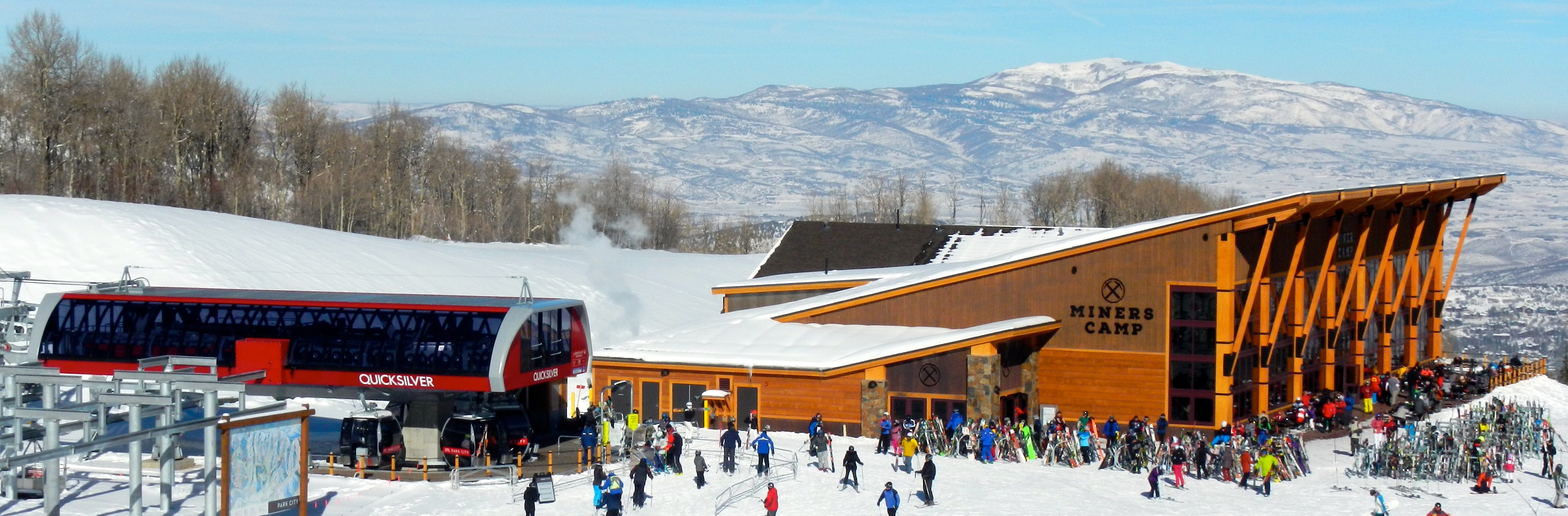
This, though, is the season where all eyes are on this Utah behemoth, which is now one resort known as Park City. With the Quicksilver gondola being launched in December, it links Park City with what was known as the Canyons. The Canyons was already part of the Broomfield, Colo.-based Vail Resorts’ portfolio before Park City was acquired.

At Northstar, Rock was overseeing a resort with 3,000 skiable acres. Park City has 7,300 acres.

The 47-year-old doesn’t like to talk about himself. But he’s a proven leader.

“Bill was instrumental in our integration of Northstar in 2010, including overseeing a $30 million capital program and building cultural and community engagement and alignment. He has an outstanding leadership track record and a deep understanding of how to elevate the guest experience in close collaboration with our employees that will benefit all of our stakeholders in the Park City community,” Rob Katz, CEO of Vail Resorts, said in a statement.

The gondola and mid-mountain lodge are new for the 2015-16 ski season. Photo/Kathryn Reed

The gondola and mid-mountain lodge are new for the 2015-16 ski season. Photo/Kathryn Reed

Rock has been in the ski industry for more than 20 years. Building relationships is one of his hallmarks – with the community the resort is in as well as with his staff. He is also a man who knows how to increase the bottom line.

His approach in Utah has been much the same as it has been other places.

“The No. 1 thing is information,” Rock told Lake Tahoe News. He made it a priority to let people know what was going to change and how. He said it’s the only way to build trust. “I spent a lot of time in the community and with employees explaining what the big plans are, painting a vision.

“With something as complicated as what we are trying to do, it takes time,” Rock said of convincing people Vail Resorts has the community’s best interest at heart.

Less than a handful of people were let go with the merging of the resorts. Not everyone has their same job; some were promoted to the corporate office.

One of the biggest differences between his job in Truckee when Vail took over Northstar from Booth Creek compared to Park City is the publicity. Northstar is a bit isolated and not an integral part of Truckee. While the acquisition made headlines with Vail expanding its footprint in California, having bought Heavenly Mountain Resort in 2002, it was not controversial.

Just the opposite was true with Vail buying Park City. Powdr Corp., Park City’s former owner, forgot to renew its lease. Vail swooped in. The courts got involved, but in the end Vail prevailed.

“Here, Park City is in the heart of the community. There is a passionate feeling about the resort. There was controversy leading up to us arriving,” Rock acknowledged. “The best thing is the community is rallying around our company, and the fact we are part of the community and being very public about that.”

In one year Vail pumped $50 million into its Utah property, created the country’s largest ski area and took control of one of the nation’s premier ski hills.

He’s not afraid of Vail Resorts homogenizing the ski industry with its improvements. Tamarack (Heavenly), Zephyr (Northstar) and Miners Camp (Park City) are all the same design.

“Even though it’s the same shell they present differently at each site. The building is just one aspect of the overall experience. What differentiates the resorts is the overall experience,” Rock said. He doesn’t anticipate half naked women dancing at his mid-mountain lodge for après ski fun like there is on the South Shore.

Plus, the menus – other than the Epic Burger – are also different. Still, Rock said he wouldn’t be surprised if the lodge design is used other places. Then it’s up to each resort to embrace it to be their own. He’s doing that in ways that go beyond one building.

“It feels like the first year of a brand new resort and no one in our generation in the ski industry gets to do that anymore,” Rock said of Park City. “I’m trying to seize the moment and enjoy it.”


Bookstores record first rise in sales since 2007

By Tom Kludt, CNNMoney

In the book publishing world, what’s old is new again.

Data from the U.S. Census Bureau shows that bookstore sales rose by 2.5 percent from $10.89 billion to $11.17 billion in 2015, the first such increase in the industry since 2007.

The figures were reported by Publishers Weekly, which also noted that eBook sales declined in 2015 while print sales went up.

Read the whole story


Author of ‘The Tower’ coming to Squaw

Alpenglow Sports’ fourth installment of the 10th anniversary Winter Film Series will feature internationally acclaimed alpinist Kelly Cordes.

The free show will be Feb. 25 at 7pm at Squaw Valley’s Olympic Village Lodge.

Cordes will present a sampling of the stories told in his 2015 book “The Tower,” a climbing historical of Patagonia’s otherworldly and iconic granite spire Cerro Torre. “The Tower” focuses on the much debated and polarizing climbing history of Cerro Torre, a granite spire that exists at the southern tip of Argentina between Patagonia’s wind-swept pampas and the Pacific Ocean. Its vertical and overhanging walls have attracted the finest and most devoted alpinists in the world, including some of the most obsessed.

The show is part of the larger Alpenglow Mountain Festival, a nine-day celebration of human-powered winter mountain sports, events, clinics, equipment demonstrations, presentations, film and more.


Then and now: From tacos and trucks to burgers and auto parts

Firefighters try to save Jim Boy's. Photo/South Lake Tahoe

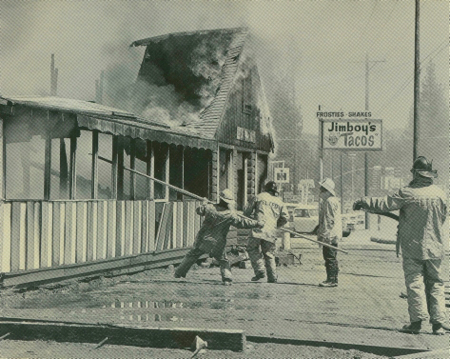
Firefighters try to save Jimboy’s in 1970 Photo/South Lake Tahoe

In 1970, the South Lake Tahoe Fire Department was in action at Jimboy’s Tacos on Highway 50 near Reno Avenue.

The distant “iH” sign (center background) was in front of Buzz Springmeyer’s historic International Harvester dealership and garage building. It was razed in 2014 and replaced by Auto Zone.

Today the parcel is occupied by Izzy’s. Photo/Bill Kingman

Forty-six years later, that area includes landscaping while the old utility poles and overhead wires are long gone.

— Bill Kingman


An epic ski experience at Park City

Park City is now the country's largest ski resort. Photo/Kathryn Reed

Park City is now the country’s largest ski resort. Photo/Kathryn Reed

Publisher’s note: This is one in a series of stories about Park City, Utah.

By Susan Wood

PARK CITY, Utah – It’s a new PC world where “The Greatest Snow on Earth” meets the largest ski company in the United States.

Vail Resorts, which owns Northstar, Heavenly and Kirkwood mountain resorts, expanded its reach and portfolio by opening Park City with the advertising tagline: “There is only one.” The marketing reference signifies the Broomfield, Colo.-based ski company’s purchase of the Park City Mountain Resort in 2014 for $182.5 million upon Powdr Corp.’s miscalculation and coerced selling of the Wasatch Mountain flagship ski area next door to Vail’s formerly-named Canyons resort.

What was Powdr Corp.’s misfortune may turn out to represent a fortune for Vail.

Orange Bubble Express is a unique experience the cover. Photo/Kathryn Reed

Orange Bubble Express is a unique experience with the cover. Photo/Kathryn Reed

Vail being Vail – the ski company didn’t waste any time investing in the combined Park City-Canyons resort. A little less than half of Vail’s $50 million commitment went into the eight-person Quicksilver gondola at mid-mountain that combines the two ski areas. The linking lift, which opened in December, provides skiers with 300 trails served by 41 lifts on 7,300 skiable acres. The connection makes Park City the largest resort in the United States.

Take it from this reporter who through the years has spent five weeks skiing Utah – this is massive, exciting and full of potential.

Park City and Canyons have historically been different worlds. Now Vail has the best of both. Park City has runs like Widowmaker, which a skier and boarder can eye from the extremely convenient town lift, and Jupiter Bowl with Volkswagen-sized moguls that can humble an experienced skier. A few decades ago, tourists flocked to Park City because it was the “in” thing and the groomers had their way on powder days. The Canyons ski area has been known as Wolf Mountain and Park City West – where a relatively inexpensive ski experience awaited. If one wanted untouched powder on many runs, this is where you graced the slopes.

Then came a 180-degree turn. The atmosphere evolved under Vail’s wing when Canyons was bought in 2013. In a few years, Canyons became the swank skier experience, with a mini upscale village anchored by Grand Summit timeshare units at the base.

Aspects of Park City's mining history is scattered about the mountain. Photo/Kathryn Reed

Aspects of Park City’s mining history is scattered about the mountain. Photo/Kathryn Reed

While Canyons has catered to snow bunnies and Sundance types in recent years, Park City Mountain Resort managed to keep its just-here-to-ski-and-bask-in-Olympic-glory feel. The giant slalom and snowboard halfpipe events were staged there during the 2002 Salt Lake City Winter Olympics.

Now Vail hopes to extend its touch to the Park City side after Powdr Corp. forgot to renew its bargain-basement 20-year lease at $150,000 annually with Talisker Land Holdings, the Canadian corporation that owns the land upon which Park City operates. To illustrate the small world of the ski industry, Talisker bought the old Canyons resort from the New England-based American Skiing Company and brought on Powdr Corp. to manage it. ASC once owned Heavenly before its stock was delisted from the New York Stock Exchange.

The high finance, chess-type negotiations have some die-hard Park City old-time skiers either whole-heartedly enthusiastic or cautiously optimistic about the infrastructure possibilities and transformation.

Jim Hadden – a 44-year Park City resident – remains in a wait-and-see mode.

Miners Camp design is a replica of the lodges at Heavenly and Northstar in California. Photo/Kathryn Reed

Miners Camp’s design is a replica of the lodges at Heavenly and Northstar in California. Photo/Kathryn Reed

“I didn’t want Vail to come in (at first). I wanted to leave the mountain the way it was,” Hadden told Lake Tahoe News while riding the Crescent Express chairlift. The lift offers access to some sweeping views from the Wasatch looking toward town and on a weekday, wide-open black runs.

Now retired, Hadden showed up straight out of college as an authentic ski bum. He fondly remembers the days when “really good skiers” would cover the mountain.

“Now I’ve noticed more beginners with Epic,” Hadden said of Vail’s multi-resort pass. “The ski schools should be full,” mocking the inability of those who now ski at Park City.

He’s open to having more runs and lifts with Vail’s reputation of investing in its ski areas. But like old-timers in other ski areas, he’s concerned Park City will lose its unique character. What’s more, he’s adamant about not paying for parking.

To that, Chief Operating Officer Bill Rock – who ran Tahoe’s Northstar before being tapped by Vail corporate for this large assignment – told Lake Tahoe News no plans are in place to expand paid parking beyond its two paid lots at the Sundial resort at Canyons and the underground lot in Park City. Most of Vail’s resorts have some sort of exclusive paid parking for those who opt into it.

Hadden is not alone in the parking demand.

“They better keep it free,” Josh Salberg of Salt Lake City, who has been coming to the Canyons side for 20 years, said while buckling up his board at the top of the Saddleback Express chairlift. The high-speed quad is tucked away behind the front ridge and represents a best-kept secret on the Canyons side with the ever-lasting long Snow Dancer run off the high ground.

The mid-mountain gondola links Park City to what was Canyons. Photo/Kathryn Reed

The mid-mountain gondola links Park City to what was Canyons. Photo/Kathryn Reed

There are other best-kept secrets. Salberg takes the Cabriolet lift from the Canyons side lower parking lot to the mountain base. The unique, stand-up, flatbed lift is open at the top, offering 360-degree views.

To accommodate a perceived influx of skiers and boarders at the combined resort, Rock pointed to the efficient Park City transit system that with Vail encourages “people to not get in their vehicles, to park and take the shuttle from the (Salt Lake City) airport.”

“One thing as a local that bothers me with Vail is they’ve taken away the local discounts,” Salberg said. He used to enjoy getting free buddy tickets with a pass.

“Now they’re half off, which isn’t bad,” he said.

He also has a 5-year-old child and therefore wants Vail to bring back the kids’ ski free program.

To that, Rock told LTN that the Epic pass combining both resorts represents “a huge deal” with no need to now buy two passes at Park City and Canyons. Also in Utah, there’s a kindergarten-to-fifth-grade pass that provides five days of free skiing, one lesson and rental equipment.

“I love that they combined the mountain and upgraded,” Salberg said. But in the same breath, he admitted the jury is still out on how good Vail taking over the dual resort is if it means everything goes upscale, prices go up, tourists rule and many of the ski area workers he knows can’t afford to live in Park City.

The old Canyons side is much more developed than the Park City base. Photo/Kathryn Reed

The old Canyons side is much more developed than the Park City base. Photo/Kathryn Reed

The Cairns family from Australia offered a different perspective from the top of Tombstone Express. The high-speed six-pack offers an ideal middle ground for skiers and boarders wanting a connection between the steeps at Super Condor Express where an extreme rider may walk up Murdock Peak and the blue-run land near the new gondola.

Lisa Cairns said she likes being able to have family members use the Epic pass since Vail just bought the Perisher resort, which is within driving distance from their home in the Blue Mountains. And the Cairns feel at home in Park City. Father Hayden used to be a ski instructor at Deer Valley, and with that, 17-year-old Zac declared he was born in PC and agreed with mom that he likes “the Vail influence” despite initial reluctance.

“That means we can ski the Australian winter,” the family matriarch said of the opposite seasons from the States to the land Down Under. It’s summer there now.

“I can’t believe how many Australians are here,” she said.

Within minutes of the clan skiing off, another Aussie family skied by.

Jeff Throm of New Orleans got out of the Orange Bubble Express lift on the Canyons side ecstatic about the possibilities of where to go, insisting he had just scratched the surface one recent sunny Park City morning. The Orange Bubble high-speed quad comes equipped with an orange cover that shields riders from the elements.

“I like that they combined the resort, but I’d like to see more lifts for more connections,” he said.

Chairlifts cost a lot of money and can turn even the most tucked away ski area into a hot spot where overpriced food and lodging as well as paid parking may bring in more out-of-towners, but can scare away those who call the region home.

And once again, there lies the delicate balance between appeasing locals and increasing visitation.
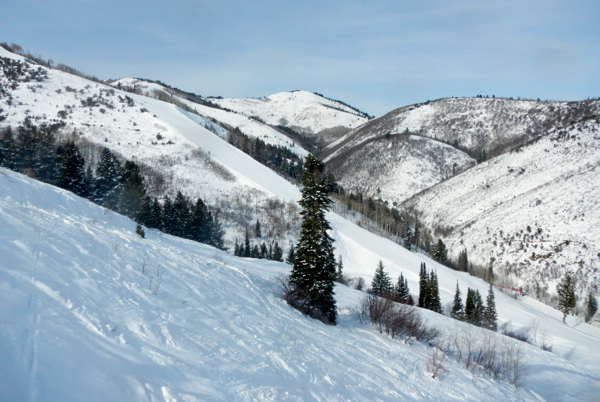
With the vast amount terrain, it would be hard to ski everything at Park City in one day. Photo/Kathryn Reed

With the vast amount terrain, it would be hard to ski everything at Park City in one day. Photo/Kathryn Reed

Ski areas are like people

How does a ski industry corporation raise or raze a resort that adapts to its ideals while embracing its unique fingerprint and footprint?

That appears to be the challenge. A Tahoe resident need only look at Vail’s Kirkwood and Heavenly to see the genuine differences.

A skier or boarder might ponder this as they visit Vail day-use lodges. Take Northstar’s Zephyr Lodge and Heavenly’s Tamarack Lodge. Both look strikingly similar to Park City’s brand-new Miners Camp. Miners Camp replaced a funky ski hut amid old mining shafts and aspen trees that dot the resort. Plus, the PC food offerings are vast with unique items such as vegetarian Moroccan stew and three-cheese potatoes, but one can still get a $7 beer there. Despite the homogenous architecture, Vail embraced the lodge’s past by mounting miner axes on the wall at the bar.

While Canyons has grown up on the newer side of the Park City region, the PC old-town side has the feel of an old ski town. Many of the historic landmarks exist, and the ski area has embraced the history with a tour designed to share it.

“I always like to learn,” skier and retired college Professor Jeanne Pankanin said while on the historic tour with guide Chic Carlucci. She enjoyed hearing about the history of the Olympics at the top of the Eagle lift where the giant slalom race was staged.

At the top of McConkey’s Express, the snow is as light as a feather and the bowls as treacherous as the waves at Mavericks. The tour group peered down on Soldier’s Hollow, the setting for the Games’ cross country ski events.

For the most part, Carlucci provided a wealth of background information on the history of Park City mining. More than 1,200 miles of tunnels with up to 1,700-foot drops connected to 70 mines represented a $450 million industry sparked in the 1800s. The resort has even maintained its ore bins for historic reasons, Carlucci said. In some cases, workers have had to prop up dilapidated buildings.

One 1,300 tunnel built to transport water was constructed so well a miner “could see the end of it,” Carlucci declared.

“They built the railroad in four months on just human labor. Normally that would take three years,” the New York guide said at the top of the Crescent chairlift.

Many who ski and board the Wasatch ski area seem hopeful Vail will make infrastructure improvements — especially when it comes to putting in connecting runs and lifts. Some who worked there have already seen the potential. At the top of the Bonanza Express six-pack, one can ski the long ridgetop Jonesy’s run and forget about the everyday working world.

Even Heavenly’s former COO, Blaise Carrig, – who ran Vail mountain resort operations before retiring – has a run named after him. Blaise’s Way runs adjacent to the new gondola at the mid-point stop, smack dab between the old Park City resort and the Canyons side, the ski area Carrig ran before he worked for Vail.

“It looks like the only way,” one skier said of Blaise’s Run, before heading down to the lower mountain from the gondola.

Perhaps the only way for Vail Resorts is progression and innovation. The challenge at Park City may involve harnessing that new growth and creativity without forgetting the ski area’s colorful past.


Opinion: It’s in America’s DNA to be ‘divisive’

By Wesley Morris, New York Times

Let’s face it: There are some things we just can’t face. Life’s too short. Somebody’s too sensitive. And the subject — whatever it is, although lately it’s been whatever — is too third-rail dangerous. Border walls, charter schools, closing Guantánamo, global warming, that Al Jazeera documentary claiming Peyton Manning used performance-enhancing drugs, Hillary Clinton, #OscarsSoWhite: Why bring any of this up? Why bring it up now? It’s too fraught, too . . . divisive.

This used to be an easy word. In a generic sense, it means ‘‘causing disagreement or dissension.’’ There, ‘‘divisive’’ meets up with our more discursive selves. We like to argue, and what we’re arguing about is that which leaves us on opposing sides of a divide. Last year, the world went bananas arguing over the color of a dress posted on Tumblr. Some people saw white and gold. Some people saw black and blue (although they’re crazy). And that made the dress divisive. But that kind of divisive seems quaint.

The word is now used in a way that is both antirhetorical and opportunistic.

Read the whole story