Tahoe resorts bouncing back after years of drought

By Jim Carlton, Wall Street Journal

TAHOE CITY — At this time last year, so little snow had fallen around Lake Tahoe that a nearby golf course opened months earlier than usual, and ski resorts had to make their own powder on runs flanked by bare ground.

But this year, Lake Tahoe is once again a winter wonderland: resorts are enjoying the most snowfall since California’s drought began more than four years ago. That is creating a positive ripple effect throughout the picturesque region in the Sierra Nevada mountains, which has suffered economically due to the dry weather.

Squaw Valley/Alpine Meadows says it is on track to record more than a million visitors this season for the first time ever. Vail Resorts Inc. credits strong performance at its Heavenly, Northstar and Kirkwood destinations at Tahoe for helping lift the company’s overall U.S. ski visits 11.1 percent in the season through Jan. 11 compared with a year earlier.

“In the context of the past four years, it’s as good as it gets,” said Andy Wirth, president and chief executive officer of Squaw Valley Ski Holdings Inc., whose namesake resort has been buried this season in nearly 25 feet of snow––more than in all of the 2014-15 season.

Read the whole story


Lobbyist Whittemore leaves prison

By Siobhan McAndrew, Reno Gazette-Journal

Nevada lawyer and lobbyist Harvey Whittemore has left the Federal Prison Camp in Lompoc and is now living in a halfway house in San Francisco, according to son Chase Whittemore.

Whittemore was released earlier this month to the Sacramento branch of the Reentry Rehabilitation Management Program through the Federal Bureau of Prisons after living at a minimum security satellite camp with 477 inmates for the last 17 months.

Whittemore, 63, was sent to prison in 2014 after being convicted of two counts of using employees and family to get around finance limits to contribute to Sen. Harry Reid’s re-election bid in 2007. He was also found guilty of causing Reid’s campaign to file a false Federal Election Commission report.

Read the whole story


Nevada cops targeting unsafe drivers

More than two dozen law enforcement agencies in Nevada will be joining forces Feb. 19-March 7 to crack down on drivers exceeding speed limits or driving too fast for road conditions.

Speeding is a contributing factor in approximately one-third of fatal crashes on the nation’s roadways. Exceeding the speed limit is considered aggressive driving just as weaving in and out of traffic and failing to yield to other motorists.

The Nevada Highway Patrol will be increasing its staffing around the clock for this event.  Troopers will be looking for a variety of traffic related violations to include speeding and aggressive driving.

According to National Highway Traffic Safety Administration (NHTSA), the consequences of driving too fast include:

·      Greater potential for loss of vehicle control

·      Reduced effectiveness of occupant protection equipment

·      Increased stopping distance when the driver perceives a danger

·      Increased degree of crash severity leading to more debilitating injuries

·      Unexpected economic and psychological implications of a speed-related crash.


Foot of snow and then some covers Tahoe

Shovels and snowblowers  are essential today in the basin. Photo/LTN

Shovels and snowblowers are essential today in the basin. Photo/LTN

With at least a foot of snow falling on the South Shore overnight, the lake schools in Douglas County School District are closed today.

The Sierra Avalanche Center has said the danger level is “considerable” for Feb. 18. Ski resorts are reporting about 2 feet of new white stuff on the slopes.

A winter storm warning and lake wind advisory remain in effect through noon Thursday. A chance of snow is in the forecast for Feb. 19, with partly sunny skies returning for the weekend, according to the National Weather Service in Reno.

Roads are slick many are not clear. For highway road conditions, click on the state icons on the home page of Lake Tahoe News.

— Lake Tahoe News staff report


Life saving course being offered in SLT

The South Lake Tahoe Recreation Department is offering American Red Cross certified lifeguard training.

Participants will be trained and certified to provide care for breathing and cardiac emergencies, injuries, and sudden illness until emergency services take over.

Participants must be at least 15, able to swim 300 yards continuously while demonstrating breathing control and rhythmic breathing, tread water for two minutes using legs only, and complete a timed event. The class includes seven hours and 25 minutes of online learning and 20 hours of hands-on instruction.

Upon successful completion, participants will receive the American Red Cross certificate for lifeguarding/first aid/CPR/AED, which is valid for two years.

Precourse and swim test is by appointment, call 530.542.6059

Classes are March 14-22, Mondays, Tuesdays and Thursdays from 4-8:30pm. Cost is $225. Register online.


South Tahoe seeks to upgrade design standards

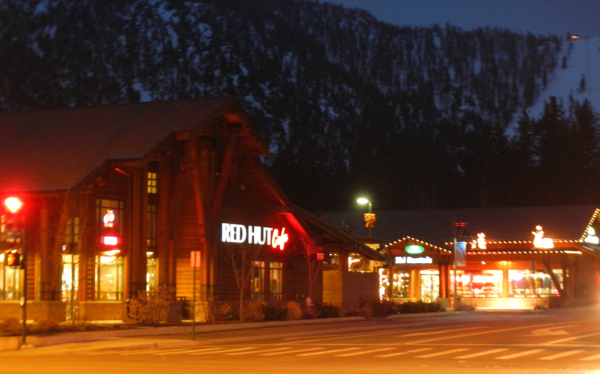
Red Hut on Ski Run Boulevard is an example of building design that works. Photo/LTN

Red Hut on Ski Run Boulevard is an example of building design that works. Photo/LTN

By Kathryn Reed

Roof lines, construction material, lighting, landscaping – even how the building is situated on the property – are all aspects of design guidelines being created for future development in South Lake Tahoe.

The goal is to establish a mountain feel, while still being contemporary.

Plenty of negative comments surfaced after BevMo and Auto Zone were built. People said they look like they could have been built anywhere. They met the minimum standards.

Those who have been involved in the design guideline process want more for this town than ordinary, average and homogenous.

Wednesday night marked the second of three informational gathering sessions. After the January meeting there was also an online survey to solicit input.

The final draft is expected to be released at a March 9 meeting. After that, the Planning Commission and City Council will be presented with the document for approval.

Repeatedly at the Feb. 17 meeting the Red Hut restaurant on Ski Run Boulevard was mentioned as a building that works on many levels – from how it is located on the lot to the roof to the materials used.

Stephanie Grigsby with Design Workshop went over some of the responses from the last meeting as well as from the 260 online surveys.

People don’t like it when there is little or no landscaping. Instead, the preference is for native vegetation, and plants that need little water. Using the plants as a buffer between the street and building is being touted. Signs that are clean with a concise message are more desirable than ones that stand on a pole or are cluttered. Boxy designs are passé. Don’t have parking be the visual focal point. Create a sense of connectivity to neighboring businesses and open space. Use natural materials. All of these ideas came from survey takers.

—–

Notes:

·      The next design workshop is March 9, 5-7pm at City Hall.

·      A second online survey is open until Feb. 26 at 5pm.


Opinion: It pays to invest in the environment

By Joanne Marchetta

At Lake Tahoe, we know our natural resources are one of our most valuable assets, and that’s why we have worked for decades to conserve and restore them. The natural wonders of the Jewel of the Sierra and the opportunities they afford are why we live here, and why millions of visitors travel here to enjoy the Tahoe basin each year.

People around the world are coming to a similar realization about the Earth’s natural resources. They are working to understand the true economic value of nature and the resources and services it provides, and to better incorporate those values into policy decisions for a more sustainable future.

Joann Marchetta

Joann Marchetta

This is a shift away from the historic mismanagement of natural resources for short-term gain, but otherwise long-term detriment. This happened at Tahoe during the Comstock era and the building boom in the run up to the 1960 Winter Olympics at Squaw Valley. People are instead today taking the longer view of nature as a form of wealth, and realizing our health and prosperity will depend upon conservation and the wise management of resources.

A recent Washington Post article called out a new study from the National Academy of Sciences publishing a formula for computing the price of nature. This idea of “natural capital” espoused by the Nature Conservancy and many other groups means recognizing and valuing the many ways that we all benefit from healthy, functioning landscapes and ecosystems, and pricing those values into decisions about their use, management, conservation, and restoration.

Even without the economists’ latest formula, we know it makes sense to invest in the health of Tahoe’s environment. People who support the Lake Tahoe region have long recognized and treasured the value of Tahoe’s natural splendor, and are working cooperatively to conserve it and restore it as our greatest capital asset. Tahoe’s natural wealth is immense and awe inspiring. Our mountain lake is one of the deepest and clearest lakes in the world, holding 39 trillion gallons of incredibly pure fresh water. We have majestic mountains world-renowned for skiing, hiking, and mountain biking, expansive forests, streams, marshes, and wildlife. Tahoe’s natural splendor makes it a national treasure, a special place on Earth. It’s the “natural capital” that drives the economic activity our communities depend upon.

Environmental restoration and recreational enhancements are the focus of the Lake Tahoe Environmental Improvement Program. It’s one of the most ambitious restoration programs in the nation, and is a model for collaboration and environmental investment because of its success. Since its launch in 1997, local, state, and federal governments and private sector partners have invested $1.8 billion into projects to improve water quality and forest health, restore environmentally sensitive areas and wildlife habitat, fight invasive species, and improve recreation opportunities.

Broad recognition that nature is Tahoe’s greatest capital asset is also why we’re seeing bipartisan support for the Lake Tahoe Restoration Act of 2015. Versions of the bill have cleared committees in both chambers of Congress, and we are optimistic our legislators will compromise to enact this important piece of legislation. It would authorize up to $415 million in federal funding over 10 years for important environmental restoration and conservation work to continue at Tahoe, and to leverage these values with continued local, state, and private sector investment.

Environmental conservation and restoration are front and center in our Regional Plan. The plan is working to remove outdated legacy development from environmentally-sensitive areas, and to restore those areas so they filter polluted stormwater runoff while at the same time revitalizing our town centers.

The health of Tahoe’s environment is also the primary focus of our strategic initiatives at the Tahoe Regional Planning Agency. The work of our partner agencies to remove hazardous fuels from our forests will improve forest health and reduce the risk of a catastrophic wildfire. Ramping up our control program to fight invasive species will keep them from doing more harm to our lake. Reducing stormwater pollution will improve water quality and restore lake clarity. And re-examining and updating our threshold standards, development commodities system, and permitting programs will facilitate the kind of redevelopment our environment and communities need.

At Lake Tahoe, there is no doubt that nature is an irreplaceable capital asset. The health of our environment and our economy are directly linked. Please join us in continuing to invest in the conservation and restoration of Tahoe’s environment. We know it’s the right thing to do, for those of us who enjoy Tahoe’s splendor today and for future generations.

Joanne Marchetta is executive director of the Tahoe Regional Planning Agency.


Outdoor sleep systems for adventurous couples

By Wes Siler, Outside

Camping: the best third date in the world. But bring the wrong sleeping bag or mattress and you might get the cold shoulder—quite literally. Fortunately, couple’s camping gear is suddenly becoming a hot segment. We’ve tested the latest equipment and are here to tell you what works.

The go-to options, at least when a car is involved, have always been one of those cheap, inflatable air beds, paired with a cheap, synthetic double sleeping bag. Both likely purchased at Walmart. There’s a number of problems with this stuff, starting with size and weight and ending with poor insulation.

Here’s the kind of double sleeping bag both you, I, and our ex-girlfriends likely have experience with. It packs down to roughly the size of a beer keg and weighs a positively unbelievable 16.5 pounds. Worth sacrificing half your trunk space, given its zero-degree Fahrenheit advertised temperature rating? Not even close. I’ve spent many nights in this thing and can report with considerable disappointment that it sleeps cold if temperatures even approach freezing.

Read the whole story


Truckee youth 13th in cross-country cross

By USSA

LILLEHAMMER, Norway – At the Winter Youth Olympic Games debut of cross-country cross, Hannah Halvorsen (Truckee) and Hunter Wonders (Anchorage) finished 13th and 30th, respectively.

The new cross country discipline challenges skiers agility and poise as they raced through bumps, jumps and slalom turns throughout the 1.5K freestyle course through the Birkebeineren Cross-Country Stadium.

“The cross-country cross was a really fun event,” said U.S. Coach Adam St. Pierre. “FIS is always trying to increase the excitement for spectators and racers and we are likely to see more races in this format in the future.”

In the women’s race, Sweden’s Moa Lundgren dominated throughout the qualifiers and semifinals and was able to snatch first in the finals from teammate Johanna Hagstroem by 1.74 seconds. France’s Laura Chamiot Maitral finished third.

Halvorsen started the cross-country cross with a strong qualifier, finishing 10th, which advanced her to the semifinal heats. But in the semifinals, Halvorsen was fifth, denying her a spot in the final heat.

“Hannah missed out on a spot in the final by a slim margin,” St. Pierre said. “She lost some momentum in the uphill slalom part of the course, but it was a fun way to start the week.”

In the men’s cross-country cross competition, Korea’s Magnus Kim ruled the course. The son of a Korean mother and a Norwegian father, Magnus was undefeated throughout the day winning the qualifiers, his semifinal heat and the final heat to claim victory just 1.17 seconds ahead of Norway’s Thomas Helland Larsen. Finland’s Lauri Mannila finished third.

Wonders snagged a spot in the semifinal heats after qualifying 30th. The semifinal heat consisted of 10 athletes skiing on the tactical course, where Wonders ended up ninth and was not able to advance to the finals. He finished 30th overall.

“Hunter was excited to qualify and skied well enough in his semifinal to move up in the overall results,” said St. Pierre. “His semifinal was pretty tight, with all 10 athletes skiing in a close pack.”


Conner’s request to change judges denied

JoAnn Conner with her attorney Jacqueline Mittlestadt fighting the censure hearing last fall. Photo/LTN file

South Lake Tahoe City Councilwoman JoAnn Conner with her attorney Jacqueline Mittlestadt fighting the censure hearing last fall. Photo/LTN file

By Kathryn Reed

South Lake Tahoe City Councilwoman JoAnn Conner’s challenge to have a judge dismissed from the case she has filed against the city has been denied.

“His statements were all prefaced with ‘I don’t know’ or ‘I don’t have the record in front of me’ and lastly ‘I’m not sure.’ The statements do not reflect a predisposition but rather an uncertainty and willingness to consider subsequently submitted evidence and consideration of the law,” Placer County Superior Court Judge Frances Kearney ruled.

She was tasked with deciding whether El Dorado County Superior Court Judge Steve Bailey would be biased. Kearney said no; and therefore Bailey will continue to hear the case.

Conner’s attorney, Jacqueline Mittelstadt, had requested Bailey be removed from hearing the case she has filed against the other four council members and against Conner’s employee, City Manager Nancy Kerry. The case involves whether the censure hearing from last fall followed proper procedure as well as claiming that when Kerry barred Conner from speaking directly to staff she limited her ability to do her job as an elected official.

One of Conner’s issues is that by having her card key taken away she no longer has easy access to her mail. That issue was remedied this week with the installation of mailboxes in the lobby of City Hall for all council members.

Mittelstadt’s main issue was when Bailey at a December hearing said, “I’m not prepared to go and set aside a political act of the City Council, whether it’s something that should have been done or should not have been done, that really is up to the City Council.”

She believes this showed bias on Bailey’s part by having made up his mind about the censure issue. The censure issue being challenged is procedural, not whether Conner should be censured or not.

Mittelstadt was unaware of the Placer County judge’s ruling until Lake Tahoe News called Feb. 17.

“We are happy to proceed in front of Judge Bailey. We will respect whatever decision he makes. It is my hope that in fact that even though he made that statement that he will evaluate the facts under the law and make a fair and unbiased decision once he has heard the evidence and reviewed the law,” Mittelstadt told Lake Tahoe News.

Nira Feeley, assistant city attorney who is filling in while her boss is out of town, did not return a phone call.

A case management conference has been set for March 15.