Anderson to be on ‘Dancing with the Stars’

Jamie Anderson is used to doing a dance of sorts on the snow, now she will see if she can do so without a snowboard attached to her feet.

The Olympian from Meyers is going to compete on ABC’s “Dancing with the Stars: Athletes.” Her professional partner will be Artem Chigvintsev.

Other contestants include Adam Rippon, Arike Ogunbowale, Chris Mazdzer, Kareem Abdul-Jabbar, Jennie Finch Daigle, Johnny Damon, Josh Norman, Mirai Nagasu and Tonya Hardin.

The show starts April 30.

— Lake Tahoe News staff report


Tourists ignore signs not to drive in neighborhoods

Signs are not enough to keep tourists from trying to find a short cut through residential areas. Photo/Jessie Marchesseau

By Jessie Marchesseau

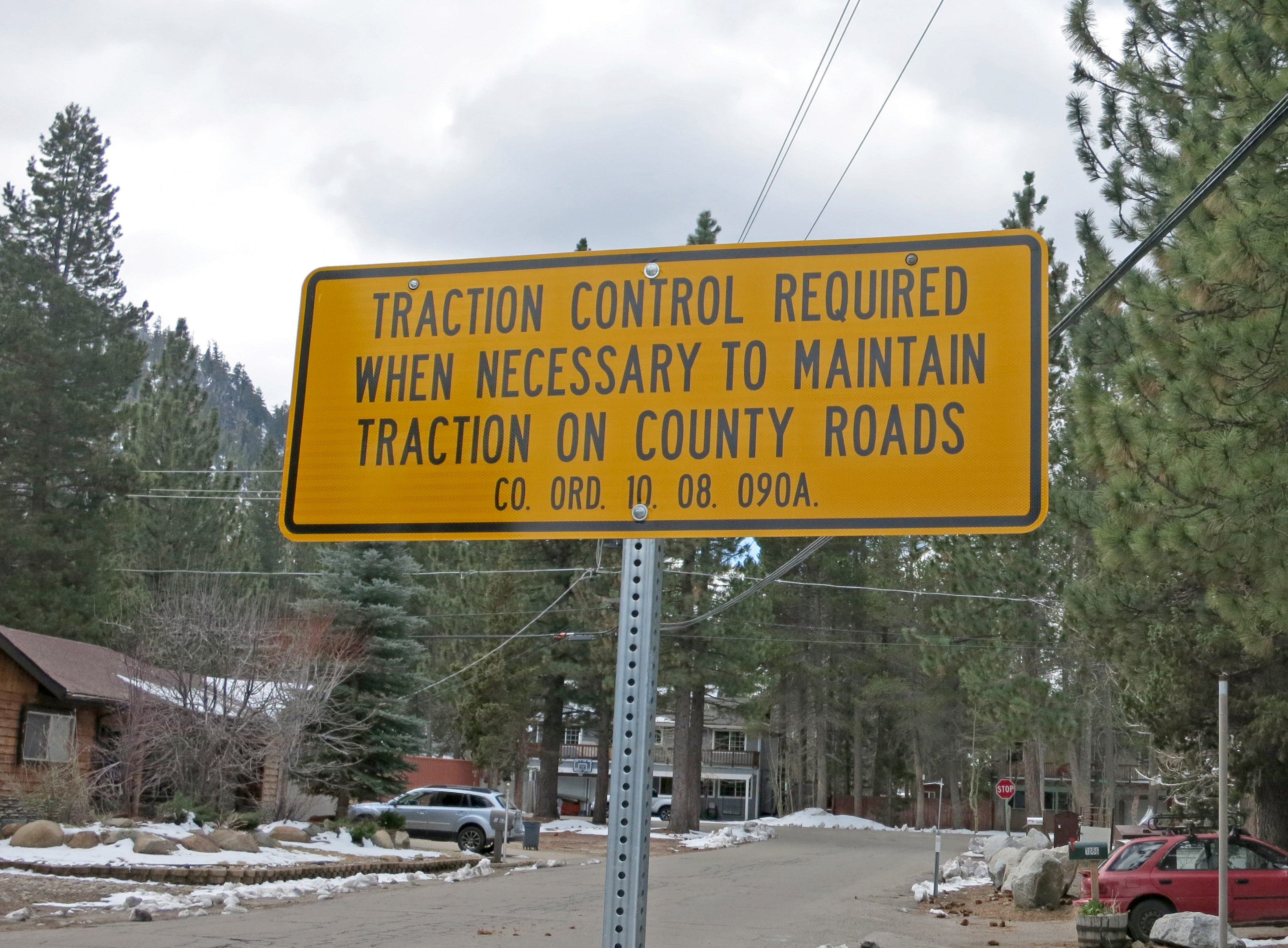
MEYERS – Tourists are not paying attention to the signs designed to keep them on Highway 50 and out of South Shore neighborhoods.

El Dorado County Supervisor Sue Novasel said the signs were largely ineffective in diverting tourists from residential roads. She said the signs may be too hard to see or people are just following their GPS directions and not even paying attention to them.

Rafael Martinez, director of transportation for the county, explained that nonetheless, the presence of the signs enables law enforcement to cite drivers who end up stuck or run off the road in those areas. California Highway Patrol officers and El Dorado County sheriff’s deputies ticketed such drivers this winter. Martinez said the hope is that those drivers will spread the message to other drivers which will, in turn, start to deter nonlocals from choosing to use those routes.

On April 18, the county hosted a community meeting at the Lake Tahoe Environmental Science Magnet School to discuss traffic issues in the Lake Tahoe Basin, particularly on Sundays and holidays.

Representatives from El Dorado County Department of Transportation, Board of Supervisors and county counsel as well as the California Highway Patrol shared the results of the two pilot programs put into place this winter and discussed other options being considered for the future.

One of the pilot programs involved putting up 25 signs on residential roads warning drivers of traction control requirements.

In response to a suggestion of using “chains required” instead of “traction control” signs, Novasel explained that actual chain control signs require the presence of a chain installation area which the county does not have, nor could they be installed in multiple residential areas. It would also require hiring someone to turn or open/close the signs as conditions changed.

A suggestion was posed for adding flashing solar lights to the signs to make them more visible, something the county already explored, but at $800 per sign, Martinez explained they were not sure it would be the most effective use of their limited budget.

The second pilot program put into place this winter was what Martinez referred to as “the nudge.” It was an effort in behavioral modification of drivers attempting to use North Upper Truckee to leave town on Sundays. Signs were placed on Lake Tahoe Boulevard directing drivers to use Sawmill Road to get back to Highway 50 in order to leave town. “The nudge” was first implemented on March 4 and again on three more Sundays.

Much more effective than the traction control signs, Martinez said an unofficial study by the transportation department indicated that 60-70 percent of traffic was abiding by the signage and using Sawmill to get back to Highway 50 instead of North Upper Truckee. Considering that a large portion of the cars not obeying the signs was likely local traffic, he estimated the compliance rate could have been as high as 90 percent by tourists.

The nudge will be implemented again four times this summer and then reevaluated as a feasible and effective mid-range, though likely not long-term, solution. Expect to see signs diverting drivers down Sawmill on Memorial Day weekend, Fourth of July, celebrity golf week, and Labor Day weekend.

The cost of the program was about $800 for the signs and $300 to install and take down the setup each time. Should the project continue, it would need to be accounted for in future transportation budgets.

The panel proceeded to review status of the 21 suggestions gathered at the Feb. 28 community meeting.

The suggestion which received the most discussion and perhaps holds the most hope is putting the focus on the agriculture inspection station in Meyers. Part 1 involves installing signs notifying drivers that they are required by law to pass through the inspection station.

Part 2, and perhaps more important, EDC is drafting a letter to road mapping app companies alerting them to the state statute requiring motorists to pass through the station when entering California. The hope is that companies, in an effort to abide by state laws, will only direct drivers to leave the basin via Highway 50 through the inspection station.

County Counsel Mike Ciccozzi said there is a loophole the companies may use to avoid doing so. If that happens, it could result in lengthy litigation. While he does consider that a possibility, he says he is hoping it does not end up that way and they simply agree.

He expects the letter to be ready to send out within the next week or two.

A few other suggestions were offered up by residents at the meeting, but most had little traction. One person suggested adding a “local traffic only” lane onto Highway 50 for locals trying to get to Meyers. Novasel explained that widening Highway 50 had already been explored and was out of the question.

Another resident who lives off of Sawmill requested turning the traffic around at the high school. Martinez said that location is in the city, not the county, and the city had declined to do so, not wanting to direct traffic back into its jurisdiction.

Someone else suggested making Tahoe a little less attractive on holiday weekends so there aren’t quite as many people coming to town, such as a higher TOT tax. Novasel said that is unlikely as it will require legislation to do so.

So, while there is no long-term solution out there right now, Martinez said they are exploring solutions to work in the short- and mid-term while an ultimate long-term solution is decided and implemented.



Opinion: Working together to protect shoreline

By Joanne Marchetta

Lake Tahoe’s shoreline is a place of majestic beauty with sandy beaches and secluded, boulder-strewn coves. It’s where residents and visitors alike go to enjoy Tahoe’s famously cold, clear water, whether they are dipping their toes in for the first time or launching their boat, kayak, or paddleboard for a daily outing.

TRPA and nearly a dozen partner agencies and groups have been working together for two years to update Lake Tahoe’s shoreline regulations for the first time in decades. We continue to move forward with this initiative and aim to have a broadly-supported shoreline plan up for consideration by the end of 2018.

Joanne Marchetta

These 72-miles of shoreline have been one of Tahoe’s most difficult planning areas. TRPA has proposed updates to its shoreline regulations many times, but each attempt faltered as various groups rejected plans put forward.

This time, TRPA took a more collaborative and inclusive approach. The agency invited stakeholders like the Lake Tahoe Marina Association, League to Save Lake Tahoe, and Tahoe Lakefront Owners’ Association, as well as other public agencies, to work together to identify key issues and craft a plan that protects Tahoe’s environment and scenic beauty and improves recreation access to the lake.

The collaborative approach is working. This spring will mark a major milestone in the initiative, with the release of a draft environmental review for a proposed shoreline plan.

That draft review is slated to be released for public comment in early May. It examines a proposed shoreline plan that was endorsed by the Shoreline Steering Committee members and TRPA’s Regional Plan Implementation Committee, as well as several other alternatives to regulate shoreline structures such as piers, buoys, boat slips, and marinas.

With a functioning plan in place, we can see beneficial redevelopment as shoreline structures are upgraded or relocated from sensitive areas like stream mouths, as well as scenic improvements and better recreation access to the lake.

The proposed plan would authorize two new public boat ramps, 10 new public piers, and up to 128 new private piers. Private piers would be authorized gradually, and the program would prioritize piers that serve multiple properties or retire pier development potential on other properties. The plan would also authorize up to 1,486 new buoys for lakefront properties and homeowners associations and create a reserve pool of 630 buoys for use by marinas and public agencies.

No new marinas would be allowed under the proposed shoreline plan. But marinas could expand or reconfigure if they become certified as a “clean marina” and incorporate environmental improvements into their projects, including work to control aquatic invasive species, reduce stormwater pollution, or provide cleaner, more efficient boat rental fleets.

The proposed shoreline plan includes new environmental protection provisions for rentals and concessionaires and storage racks for non-motorized watercraft and would maintain Tahoe’s 600-foot no-wake-zone to prevent shoreline erosion and reduce conflicts between motorized and non-motorized watercraft. It would expand this no-wake-zone to include all Emerald Bay, the most heavily-visited site on the lake. TRPA is also working with marinas, law enforcement, and state parks on ways to improve education and enforcement of the no-wake-zone to help protect people who enjoy non-motorized watercraft.

The proposed shoreline plan includes various low-lake adaptation strategies. The last drought left many piers, buoys, and boat ramps unusable as water levels fell below Tahoe’s natural rim. These strategies aim to keep such structures functional down to an elevation of 6,220 feet, allowing property owners to install an additional buoy block to be able to move buoys into deeper water as lake levels fall, allow public boat ramps to be temporarily extended further into the lake, and allow marinas to install an additional row of lakeward buoy anchors and temporary floating pier extensions for use during low lake levels.

TRPA looks forward to the release of this draft environmental review in May, and to receiving and incorporating public comment on the shoreline plan proposals. There will be community workshops, public hearings, and many other opportunities to share your thoughts and ideas as this plan continues to progress in coming months. Please go online to learn more about this draft plan and the process guiding it, or to request a presentation on the shoreline plan from TRPA staff.

We have made great progress working together on this difficult issue. By continuing to work together, find common ground, and build consensus, we can develop a shoreline plan that protects Lake Tahoe’s environment and scenic beauty, while also helping more people enjoy one of the greatest recreation experiences in the world.

Joanne Marchetta is executive director of the Tahoe Regional Planning Agency.


20 ways legal marijuana has affected Nevada

By Chris Kudialis, Las Vegas Sun

Friday marks Nevada’s first 4/20 since recreational marijuana sales were legalized last July. With more than 45 dispensaries in the Las Vegas Valley and 62 statewide expecting increased sales for the unofficial pot holiday, here’s a look at 20 ways that legal weed has affected our state:

1. More cannabis products

After waiting more than two years for recreational sales to begin, many of the state’s 205 combined cultivation and production facilities have more than doubled the quantity of pot products they manufacture and distribute to meet the demand from increased dispensary sales, said Riana Durrett, executive director of the Nevada Dispensary Association.

2. Increased tax revenue.

Read the whole story


Caltrans to build retaining wall near Emerald Bay

Repair work to build a retaining wall along a section of Highway 89 in Emerald Bay is set to resume next week.

The retaining wall is being built near the Eagle Point Campground.

Work should be completed by the end of May. The northbound lane of the highway is closed and reversing one-way traffic is being controlled by automated signals.

A new concrete barrier near Eagle Falls was completed as part of the $4.4 million project last fall.


Americans want legal pot; states disagree on regulations

By Santiago Guerra, The Conversation

On 4/20, many across the U.S. gather to celebrate their love and appreciation for marijuana.

Polls show that 64 percent of Americans favor legalizing marijuana. Despite the majority support, there’s no clear consensus on how it should be regulated. As a researcher who has studied the impact of drugs in the U.S. and Mexico, it’s been captivating to watch states adapt as they attempt to regulate this illicit and stigmatized substance.

Many states permit medical marijuana, but there’s a wide variety of approaches. Today, 29 states currently permit medical marijuana and have an established system for regulating it.

Another 17 states have limited medical programs. These programs provide access to products with low levels of tetrahydrocannabinol (THC) and high levels of cannabidiol (CBD), with the goal of eliminating the “high” and maximizing medical benefits. Beyond that, the conditions doctors and patients can treat with cannabis vary from state to state.

Minnesota, New York and West Virginia don’t permit marijuana smoking as part of their medical programs. West Virginia, however, allows patients to vaporize marijuana plant matter, while Minnesota only permits consumption of marijuana in liquid extract form.

Colorado, where I am based, has a much more expansive medical program. Patients can access an array of products, from extracts to strains of raw plant material. While New York caps the amount of THC that a product dose may contain, Colorado and other states have no such limit on their medical marijuana products.

Meanwhile, recreational marijuana use has been approved for adults 21 and over by nine states: Alaska, California, Colorado, Maine, Massachusetts, Nevada, Oregon, Vermont and Washington, as well as the District of Columbia.

However, once again, states haven’t implemented their policies uniformly. Vermont, for example, does not currently have a system for commercial sale and distribution, and only allows individuals to cultivate two plants. Colorado, on the other hand, has developed a robust commercial system, allows individuals to grow up to six plants, and limits the amount of marijuana products an individual can possess.

Most states have struggled with how to navigate the public consumption of cannabis, which remains illegal. As states continue to debate and implement marijuana policies, the American public will begin to recognize what works (and what doesn’t).

While these policy inconsistencies may raise concerns for some constituents, these state experiments are a valuable way to figure out how this substance works and how it affects society.

Santiago Guerra is an assistant professor of Southwest studies at Colorado College.


13 people train to be on Douglas County SAR team

On April 17, 13 people graduated from a 48-hour academy to become official members of the Douglas County sheriff’s search and rescue team.

The focus of the academy was to become certified as a Nevada Wilderness Search and Rescue Technician (NWSRT), which is a nationally recognized credential. It provided knowledge concerning the general responsibilities, skills, abilities and the equipment needed by people who are assigned to field operations during a search and rescue mission. The course content includes topics in three major areas: survival/support, search, and rescue.

The NWSRT course provided classroom and field sessions. Students were required to take a 145 question written test and a field skill evaluation to complete the course.

In December, DCSAR volunteers were involved in four rescue missions, which included hikers in distress, a missing person, a stranded off roader, and the use of the drone for an emergency situation.  SAR members were utilized for 210 hours during that month. 

There is no charge for the search and rescue mission to the involved community member or visitor to the county. 

DCSAR members were utilized for 18 hours during the Stateline underground explosion on April 1 for public safety.


Democratic challenger outraises McClintock – again

By Emily Cadei, Sacramento Bee

For Congressman Tom McClintock, a new year hasn’t changed a fundamental campaign weakness. The veteran Republican lawmaker was again outraised by his leading Democratic challenger, Jessica Morse, in the first three months of 2018, new federal fundraising reports disclose.

It marks the third quarter in a row that Morse has outraised McClintock, leaving her with more cash in the bank going into a crucial phase of the campaign.

Read the whole story


Study: Global warming mixing up nature’s dinner time

By Seth Borenstein, AP

Global warming is screwing up nature’s intricately timed dinner hour, often making hungry critters and those on the menu show up at much different times, a study shows.

Timing is everything in nature. Bees have to be around and flowers have to bloom at the same time for pollination to work, and hawks need to migrate at the same time as their prey. In many cases, global warming is interfering with that timing, scientists said.

A first-of-its-kind global mega analysis on the biological timing of 88 species that rely on another life form shows that on average species are moving out of sync by about six days a decade, although some pairs are actually moving closer together.

Read the whole story


Snippets about Lake Tahoe

·      Come to the Valhalla site April 21 at 10am to help with the spring cleaning. The day starts with the unveiling of the plaque honoring Carolyn Grubb. RSVP to sharon@valhallatahoe.com.

·      Sierra Senior Services and Soroptimist International of Truckee Donner are putting on a pancake breakfast buffet on April 22 from 8-11:30am at the Truckee Tahoe Senior Apartments. The event benefits meals on wheels. For more info, go online.

·      Mark McLaughlin will discuss his award winning book “Snowbound! Legendary Winters of the Tahoe Sierra” on May 19 from 5-6:30pm at Donner Memorial State Park visitor center. Cost is $5. Parking is free.

·      A new K9 will soon be in service at the Washoe County Sheriff’s Office thanks to a donation from Washoe County K9 Partners. K9 Partners donated $19,810 to the sheriff’s office to acquire the new K9 along with the necessary gear. The donation will also cover additional equipment for the K9 Unit, including heat sensors for the K9 vehicles, and training for K9 deputies.

·      Douglas County Public Library Foundation and the Friends of the Douglas County Public Library’s spring book sale is May 19 from 9am-5pm and May 20 from 9am-2pm. The book sale will be at the C.V.I.C. Hall, 1602 Esmeralda Ave. in Minden.