Soroptimist honors women making a difference

Soroptimist winners from left, Bonnie Driscoll, Tatiana Esposito, Abby Abel, Hunter Turney, Annie Buchser, Allyson Swain, Tatum Whatford, Mireya Ortega, and Jordawn Amthauer.  Not pictured, Sabrina Green. Photo/Provided

Soroptimist winners from left, Bonnie Driscoll, Tatiana Esposito, Abby Abel, Hunter Turney, Annie Buchser, Allyson Swain, Tatum Whatford, Mireya Ortega, and Jordawn Amthauer. Not pictured, Sabrina Green. Photo/Provided

By Kathryn Reed

STATELINE – “It’s what you do that counts.”

That is what Lydia Rogers said before the recipients of the Violet Richardson Awards were announced last week.

Rogers, president of Soroptimist International of Tahoe Sierra, and Brenda Knox, president of Soroptimist International of South Lake Tahoe, hosted the annual awards dinner at Harrah’s Lake Tahoe.

This particular award recognizes girls age 14-17 who have taken volunteerism to a new heights. It is named after the first president of Soroptimist “who was committed to creating opportunities for girls and young women through her affiliations with Soroptimist, the Girls Scout Council and the American Association of University Women.”

The six young women who were singled out have spent countless hours volunteering at school and in the community. They are: Abby Abel, Allyson Swain, Hunter Turney, Annie Buchser, Sabina Green and Tatum Whatford. Each received $100 from Soroptimist.

The Women’s Opportunity Award has been renamed Live Your Dream Award to more aptly reflect what it is. The clubs each select a woman who has overcome obstacles that no one should have to face. They each received $3,000 — $1,000 of which came from an outside donor. The money is to be used to further their education.

“Still today single mothers trying to go to school and better their lives and their employment opportunities is still a very difficult experience. Very few women have the luxury of being able to stay at home and be supported to achieve all of their goals and interests in life,” Nancy Kerry told Lake Tahoe News. Although not a Soroptimist, Kerry is the one who increased this year’s allocation. “I was one of those women. I didn’t know about any resources really available. But I never wanted to give up on the idea that the current job situation could be improved. I really saw myself in those young girls.”

For Jordawn Amthauer, she is a single mom, goes to Lake Tahoe Community College and works at the college. She was raised by a single mom. She’s been working since she was 13. She is the first member of her family to go to college.

Tatiana Esposito, the other recipient, said, “I was a victim of domestic violence. I didn’t think I could do anything on my own.”

She grew up in Russia in an abusive household, came to the United States seven years ago, got married, and the abuse continued. She finally left with her two daughters and is on a quest to become a teacher.

The Ruby Award, honoring women who have worked to improve women and girls through their work or volunteerism, went to Bonnie Driscoll and Mireya Ortega. Driscoll is said to have volunteering in her DNA based on the number of organizations she has been affiliated with, while Ortega for years has been providing free or reduced dental care to youth who otherwise would never have their teeth cared for.

“The women tonight should inspire all of us,” Rogers said as the evening came to a close.


Opinion: E. Coli is your oldest friend

By Lisa Margonelli

It’s hard to find a fan of E. coli—especially since last October, when 55 people in 11 states got sick after eating at Chipotle. But we can see a reflection of ourselves in these tiny sausage-shaped bacteria. Like us, E. coli is a tireless innovator—constantly refining more than 700 different strains—though it lives in your intestines, instead of Silicon Valley.

While pathogenic E. coli can travel in many different foods—hamburger, sprouts, spinach, romaine lettuce, rotisserie chicken salad, Lebanon bologna, raw cookie dough—“good” E. coli is one of your oldest, most intimate friends. This fine frenemy has allowed us to transcend the limits of our humanity, playing with genes, time, and evolution on an awesome scale.

Long before you drove a car or ordered a drink, you declared your independence by embracing E. coli. Just a few hours after you were separated from your mother, this strain of bacteria swam into your intestines and set up housekeeping. While you slept, it triggered vital elements of your immune system, and prepared the environment for the arrival of other good bacteria. It also set about manufacturing vitamin K, and keeping harmful bacteria at bay.

You might think that E. coli exerts its will through big numbers, but that’s not the case. It is much less than 1 percent of your gut’s 9 trillion microbial cells. You have just a billion E. coli, each merely 1 micrometer wide and 2 micrometers long. (For comparison, a human hair is between 17 micrometers and 181 micrometers thick.) As for the toxic E. coli, it takes hardly any of those to make a person mortally ill. Ten will do do the trick. Ten! One of E. coli’s recipes for success is reproducing really quickly, sometimes doubling population in 20 minutes.

Another of E. coli’s tricks is sharing code—like open source software developers and DJs. E. coli has a fancy toolkit for acquiring and trading DNA, including viruses and pieces of circular DNA that, Frisbee-like, can transfer DNA from one bacterium to another.

When microbiologist Pina Fratamico joined the USDA in 1990 she started researching a newly discovered E. coli strain that lived harmlessly in cows’ intestines but caused terrible diarrhea and kidney failure in humans. O157:H7, as the strain is named, had picked up the code for the kidney toxin from a virus (aka bacteriophage) had the ability to invade bacteria. Meanwhile other pieces of DNA, a group of genetic recipes for increased virulence called “pathogenicity islands,” had made their way into the cell. Rather than riding in on a virus, the problematic DNA was either inserted into the cell’s chromosome or remained as DNA rings, and the codes (virulence genes) carried by this newly acquired DNA made the bacterium more dangerous.

In 1993, O157:H7 showed up in hamburger at Jack in the Box, sickening more than 600 people and killing four children. That outbreak caused the USDA to declare the O157:H7 an “adulterant” in beef, and processors and restaurants changed their practices.

As humans changed their behavior, E coli kept on switching DNA and evolving. In 2011, a batch of bean sprouts in Germany harbored a new strain of E. coli carrying a toxin and novel way to adhere to intestinal cells sickened 4,000, caused kidney failure in more than 800, and killed 53 people. That strain was resistant to antibiotics. In 2012, the USDA began testing beef trimmings for six new toxic strains in addition to O157:H7. Keeping a few steps ahead of her nemesis is Fratamico’s job, so now she’s looking into another type of E. coli that may spend time in poultry before causing urinary tract infections and pneumonia in humans. “E. coli are very intelligent about illness. They want to survive,” says Fratamico. “We’re always trying to find the emerging strains and develop methods to detect them, but they’re smarter than we are.”

E. coli’s resourcefulness, and its willingness to dance with humans in laboratories have, ironically, given us the super-human power of recombinant DNA. The lab strain K-12 was isolated from the stool of “a convalescing diphtheria patient” in Palo Alto in 1918. K-12 then went to Stanford and (along with three other strains) became the pet of labs around the world, leading to 11 Nobel prizes. More important, scientists learned to take advantage of those Frisbee-like plasmids to insert DNA that would trick E. coli into producing useful things, including insulin that diabetics can use.

Another scientist who has revealed the powers of E. coli is Richard E. Lenski of Michigan State University. On Feb. 24, 1988, Lenski thawed a frozen sample of E. coli from his lab’s freezer, and put 0.1 milliliter in each of 12 little flasks. Overnight, the E. coli in the flasks snarfed up all the glucose in their broth while producing seven generations of E. coli. The next day, Professor Lenski removed 0.1 milliliter again from each flask and put them in 12 clean flasks with more glucose broth. Unlike many wild strains of E. coli, the strain that Lenski studied didn’t have plasmids and phages that allow cells to exchange genes. So when he put them in their flasks it was as though he’d taken away all of their smartphones and GameBoys and other toys and left them in a bare room with only a gulp of sugary drink. Lenski hoped to see how they evolved using only random mutations and natural selection, not gene sharing. “Evolution is like a game that combines luck and skill and perhaps bacteria could teach me some new games,” he wrote. The experiment was supposed to last 2,000 generations or about a year.

But it still hasn’t stopped. Twenty-eight years and 64,000 generations later, the experiment is still going. It’s not just an evolutionary casino, though, it’s also a time machine because every 500 generations the lab froze a sample from each of the 12 vials. Lenski has always wondered what it would be like if he could bring a Neanderthal back to life and and have him try to play chess or football—these frozen samples are his tiny time travelers.

When the project started, Lenski thought that evolution would go quickly at first, as the bacteria evolved to fit into their flask-niche environment, and then plateau. But what Lenski and his team found is that the bacteria kept evolving and improving with a curve describing their fitness trending ever upward. Evolution is a bottomless well of innovation.

And something else really interesting happened. E. coli normally lives on glucose. Every night, the growing population in the flask would gobble up all the glucose, oblivious to the fact that there happened to be another food in the broth called citrate. Lenski calls it a “lemony dessert,” and until 2003 the bacteria skipped dessert. And then in one of the 12 flasks, they had a mutation and those bacteria started sitting down to lemon merengue pie every night.

Lenski’s long-running experiment became a sort of petri dish for smart students with skills in mathematics, modeling, and genetics, drawn to his 12 flasks and thousands of frozen samples. One of them, Zachary Blount, realized that they could trace the lemony-simpatico mutation back through the frozen samples and re-evolve it. It was like they were playing Groundhog Day with the bacteria, giving the Bill Murray character chance after chance. And in the process they were able to run evolution backwards and forwards, trying to find its underlying physics.

The research is more than theoretical: the type of work that Lenski and his students and colleagues have done has helped the FBI identify genetic differences between strains after the 2001 anthrax attacks and is helping others learn how bacteria evolve in the lungs of people with cystic fibrosis.

As Lenski reflected on his years with the experiment, he said, “How exciting is life in one tiny glass flask!” That got him thinking about the teeming activity that takes place on Earth: If every human, and a lot of cows and pigs and so on, have a billion or so E. coli in our guts, then there are more than a hundred quintillion E. coli or more out there—all mutating and evolving madly, full of potential.

Lisa Margonelli writes the Small Science column for Zócalo Public Square, where she is the science and humanities editor.


Calif. universities reach out to immigrant students

By Tatiana Sanchez, Los Angeles Times

Officials at California’s four-year public universities are reaching out to an estimated 10,000 undergraduate students who might qualify for a special loan aimed at reducing their tuition — a program that further distinguishes the state as a national trendsetter in providing services to immigrants who are in the country illegally.

The California DREAM low-interest loans are designated for such immigrants who are enrolled at University of California or California State University campuses. Gov. Jerry Brown signed the program into law in 2014, but funding didn’t become available until last month.

It’s the latest in a series of measures that Brown and the Democratic-controlled Legislature have approved to help integrate these immigrants into mainstream society.

Read the whole story


Key Calif. campsite reservations open March 1

By Tom Stienstra, San Francisco Chronicle

If you snooze Tuesday morning, you will lose.

A series of target moments arrive at 7, 8 and 9am on March 1 for campsite reservations at state parks across California — including Point Reyes National Seashore in Marin, trail camps in the Santa Cruz Mountains and national forests in the Sierra Nevada — with other key dates imminent for Yosemite National Park.

At many sites across California, Labor Day Weekend is in play starting Tuesday, as well as all dates throughout summer.

Read the whole story


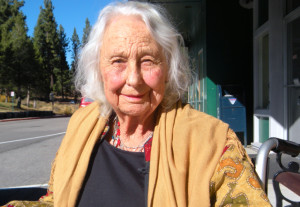
Opinion: Marjorie Springmeyer — one of a kind

Marjorie Springmeyer

Marjorie Springmeyer

By Kathryn Reed

MINDEN – I’m a firm believer people come into our lives for a reason – even if it is not immediately apparent why.

As a journalist I’m always meeting people. Some of those encounters are more profound than others and have a lasting impression. Such was the case with Marjorie Springmeyer.

What an incredible woman – and I only knew her for a fraction of the 93 years she was alive.

More than 125 people gathered Feb. 28 to remember Mrs. Springmeyer, who died Jan. 28.

She used to write me letters – longhand – talking about the city of South Lake Tahoe, her travels, life and a little about her family. We would converse by phone. When I saw it was her calling I would answer if I knew I had the next hour free to chat. She wasn’t one who would easily get off the phone.

Mrs. Springmeyer had such wonderful stories to tell about what life was like in Tahoe before it became a tourist destination and overbuilt. Her travels made me want to pack my bags.

I miss our talks – I’ve missed them for quite a while. I always thought there might be one more.

Her anger, frustration and heartache toward and because of the city are legendary. During the video of her life headlines involving some of that strife were shown – proving the significance it held in her life. She and her brothers, Knox and Bill Johnson, donated land for a City Hall that never got built. Instead, it’s where the police department and courthouse are in South Lake Tahoe.

Bill Johnson attended Saturday’s service, noting how his sister helped raise him because their mother was busy after their father died. Bill was 3 months old at the time and Marjorie 9 years old.

“When I think of Marjorie she always had a good spirit,” Mr. Johnson said.

He and others didn’t gloss over the difficulties Mrs. Springmeyer had to endure in her life – spending more than two years in a hospital after a car wreck in high school that killed one person and that left her with lifelong mobility issues, having her three children and husband precede her in death, being bed ridden for the last several years of her life, and all the land issues at the lake.

She had told me the friends were going to see “Gone with the Wind” the night of the accident. It was mentioned at the service this was her favorite movie. One has to wonder if it was just the most memorable.

Her brother and others also spoke of the goodness Mrs. Springmeyer brought to their lives and those around her.

Her long, flowing white hair and penchant to wear bright colored clothes were talked about. So was her love for travel, animals and helping others.

Three Washoe women spoke of Mrs. Springmeyer’s love of the tribe and how they had adopted her as a Washoe sister.

One relative talked about her fondness for donkeys.

In 2005 she told me, “I have a burro permit (from South Lake Tahoe). I pay $30. I used to have them at the amusement park. I keep it because they would never let me have another license.”

That is the spirit – some might call orneriness – which I admired about Mrs. Springmeyer. She was a fighter, a doer, a don’t take no for an answer kind of woman. I respected her for all of those things.

The wind was a constant refrain during the service – her love for it. Now I will forever think of Mrs. Springmeyer when the wind blows and listen just a little harder to what it might be whispering or howling.


Jitloff top American in GS in Austria

By USSA

HINTERSTODER, Austria – Tim Jitloff (Reno) is getting closer to dialing in the equipment issues he’s been struggling with the past few weeks. In Sunday’s Audi FIS Ski World Cup giant slalom, he almost found the right combination, finished as the top American in 23rd.

“Today, I knew I wanted to come out and put together a solid day,” said Jitloff. “The first run was a step in the right direction.”

France’s Alexis Pinturault won his second-straight giant slalom – he also won Friday’s GS in Hinterstoder – in commanding fashion by 1.14 seconds over Austria’s Marcel Hirscher. Norway’s Henrik Kristofferson was third.

The past couple of weeks have been a struggle for the 31-year-old, six-time U.S. Champion as he has worked diligently to perfect his equipment set up. However, long training hours have taken a toll, physically and emotionally.

“The difficulties of the last two weeks and the effort that’s gone into trying to get things right, I just felt very tired,” Jitloff said after finishing 10th in Sunday’s first run, only to fall to 23rd after the second run. “It was an extremely long and turny course, and I just didn’t have the energy in that second run and unfortunately was quite slow.”

Jitloff was the only American to qualify for a second run. Brennan Rubie (Salt Lake City), Mark Engel (Truckee), Kieffer Christianson (Anchorage), Ryan Cochran-Siegle (Starksboro, Vt.) and Samuel Dupratt (Dixon) didn’t make the top-30 first run cut. Tommy Ford (Bend, Ore.), 29th in Friday’s GS, did not finish the first run.


Bowman takes silver in X Games halfpipe

By USSA

OSLO, Norway – It was an American sweep for the men at X Games Oslo Sunday night with Torin Yater-Wallace (Basalt, Colo.) making a triumphant return to the top of the X Games halfpipe podium, followed by good friend Alex Ferreira (Aspen, Colo.) in the silver-medal position and Gus Kenworthy (Telluride, Colo.) in bronze. Maddie Bowman (Meyers) led for the women with a silver medal.

Bowman, who won gold in halfpipe last month in Aspen, used three versions of the 900 (though not on her highest-scoring run) to earn the silver medal. It was her seventh overall X Games medal. Bowman, who also won Olympic gold at Sochi in 2014, said, “I just came out and gave it everything I had. I had a good night and I was happy to get three nines in there.”

Brita Sigourney (Carmel) finished fifth for the ladies. Devin Logan (West Dover, Vt.) was sixth and Annalisa Drew (Andover, MA) was eighth.

It has been a long trek for Yater-Wallace, widely considered one of the greatest talents of his sport, since he won gold at X Games Tignes in 2013. A series of injuries have kept him sidelined at times throughout the past several years, but it was his recent battle with a life-threatening case of Streptococcus that was the most serious. “It was a hard start to the season,” Yater-Wallace said. “I had to deal with some illnesses, but I’ve been on skis as much as I can and been enjoying time at home riding in Aspen.” Cleared to ski again in January, the Aspen native proved that he was ready to return to the top of the international ranks with a performance in Oslo that featured enormous amplitude and culminated with an alley-oop double flatspin 1080—the trick of the night.

“I don’t even have the words,” Yater-Wallace said of the win. “It’s just an amazing night. I’ve been wanting to do that alley-oop double flatspin in a contest for a while now and it was finally the right pipe. It’s unreal to have three Colorado boys on the podium: Alex, one of my best friends and Gus. We all grew up skiing together so this is pretty unreal.”


More than half of the 20-man field at X Games Oslo was comprised of American skiers: David Wise (Reno) was fourth, Aaron Blunck (Crested Butte, Colo.) seventh, Kyle Smaine (South Lake Tahoe) eighth, Taylor Seaton (Avon, Colo.) ninth, Broby Leeds (Vail, Colo.) 10th, Jacob Beebe (Bend, Ore.) 12th, Lennon Vaughan (Steamboat Springs, Colo.) 13th, Jaxin Hoerter (Breckenridge, Colo.) 16th, Lyman Currier (Boulder, Colo.) 18th and Birk Irving (Winter Park, Colo.) 19th.


Body of second canoeist recovered from Donner

Divers on Sunday recovered the second victim from Friday’s fatal canoe trip on Donner Lake.

Lucas Johnson, 34, from the Auburn area and Joshua Patterson, 33, from Cool were canoeing Feb. 26 when the vessel capsized. Waves that afternoon were reaching 3 feet because of the heavy winds.

Neither man was wearing a life jacket.

Capt. Rob Leftwich with the Truckee Police Department in a statement said, “We would like to remind everyone how important personal flotation devices are. These situations are always extremely tragic and we can only hope we can prevent similar incidents in the future.”

— Lake Tahoe News staff report


Body in vehicle may be missing Carson City man

By Marcella Corona, Reno Gazette-Journal

Carson City sheriff’s deputies found a man’s body in a vehicle believed to be associated with a person reported missing in December last year.

Deputies responded at 12:09pm Feb. 26  to a report of a vehicle with a body inside found about three to five miles east of Carson City in the Pine Nut Range.

Deputies said the man they found was about 50 years old and was located in the driver’s seat. They also found a gun inside the vehicle.

Read the whole story


Snippets about Lake Tahoe

skis·       Diamond Peak reported 43,000 skier visits for January, which is a 65 percent increase compared to 2015. This month the ski resort has had 35,000 skier visits as of Feb. 24. The resort has earned $7.6 million in revenue and spent $4.2 million.

·      There will be an open house March 3 starting at 5pm about Donner Pass Road improvements in Truckee. It will be at the town hall.

·      Here is the Sierra roadwork schedule for Caltrans for the coming week.

·      Incline Village General Improvement District is offering rebates for people installing bear boxes. For more info, go online.

·      Placer County is using Open Government as a tool to provide transparency about financial matters. For more info, go online.