Sandoval electrifies Nevada highway

By Richard N. Velotta, Las Vegas Review-Journal

BEATTY – Gov. Brian Sandoval rolled up to a new electric car charging station here in an electric Ford Focus emblazoned with a Nevada Department of Transportation logo and plugged into a charging port like he had done it a thousand times.

“See,” he said to an approving crowd. “It’s so easy even I can do it.”

And with that, Sandoval kicked off a new chapter in his “New Nevada” tech program, dedicating the first state-sponsored electric car charging station in rural Nevada.

Read the whole story


Invasive species aren’t always unwanted

By Erica Goode, New York Times

Invasive species are bad news, or so goes the conventional wisdom, encouraged by persistent warnings from biologists about the dangers of foreign animals and plants moving into new territories.

Conservation organizations bill alien species as the foremost threat to native wildlife. Cities rip out exotic trees and shrubs in favor of indigenous varieties. And governments spend millions on efforts to head off or eradicate biological invaders.

“I think the dominant paradigm in the field is still a ‘when in doubt, kill them’ sort of attitude,” said Dov Sax, an associate professor of ecology and evolutionary biology at Brown University.

But a growing number of scientists are challenging this view, arguing that not all invasive species are destructive; some, they contend, are even beneficial. The assumption that what hails from elsewhere is inherently bad, these researchers say, rests more on xenophobia than on science.

Read the whole story


Opinion: Heroin turning soup kitchen into an ER

By Bill Burns

In August, she drove two miles, past a large hospital, to get her boyfriend to our soup kitchen, but not for the food. She knew someone here would have Narcan, a life-saving overdose-reversing drug that, until recently, was unavailable here in Maine to people at risk of overdosing.

Her boyfriend was bluish and slumped over the passenger side of the van when he arrived. Brittney, a caseworker, administered Narcan and he survived.

Sternal rubs. Rescue breathing. Intra-nasal application of Narcan. These are the lexicons of emergency personnel—people whose job it is to save lives during desperate times. Increasingly, and unexpectedly, these words have also become part of the unofficial job description for me and other social workers at the Preble Street Resource Center in downtown Portland, Maine.

With so many clients at risk of heroin and opiate addiction, we are the new first responders.

We are also the last responders: We’ve had so many clients die that we’ve gotten good at compassionate grief. We’ve become experts at the well-staged memorial service. Two hundred and fifty Mainers reportedly died of heroin and opiate overdoses in 2015, up from 176 in 2013. Over the past six months, we’ve responded to more than a dozen overdoses in our space, and held roughly the same number of memorial services for people we know who died on the street.

I began my career as a social worker with high ideals. Fresh out of Africa and the Peace Corps in the late 1980s, I wanted to apply “practical idealism” to alleviate the suffering of others, especially homeless people. I started working in a New York City children’s shelter in the South Bronx, moved to running shelters in other cities, and finally came to work in Portland, population 66,000, five years ago. Preble Street is a shelter where people can breathe and find connection, community, and support. We serve 1,100 meals a day and work with 1,200 clients a year. By providing a pair of socks, a shower, and a hot meal, we strive to create meaningful connections with struggling people. We’re guided by our founder Joe Kreisler, who said: “Part of my job, part of being alive, is making sure that other people are, too.”

The high risk of death by heroin and opiates has changed our work—and in a way changed who we are. We’ve had to modify bathrooms that promised a homeless person some modicum of privacy, by cutting 10 inch gaps at the bottom of the doors and installing a light system that lets us know if someone has stopped moving. We didn’t want to do this, but we’ve simply had too many people who stopped breathing in those bathrooms. The pressure we feel as the final stop before someone dies is too real to stick with our ideals about dignity.

In October, we had a woman who—sitting on the toilet, pants around her ankles, needle in neck—was unresponsive and barely breathing. We screamed her name, scraping our knuckles across her sternum. Quick-thinking staff, the overdose response protocol, and another client with Narcan saved her life. Later that week, she came back, embarrassed, sorry for causing us such worry, and said she’d secured a rare bed in a detox unit and was on her way to recovery and a changed life. The near miss reminded us that dead addicts don’t recover—that’s our mantra these days.

Maybe heroin used to be perceived as an inner city thing, but today, high rates of drug overdoses are occurring in rural and impoverished counties. Nearly 90 percent of people who tried heroin for the first time in the past decade were white, and the highest use rates were among those making less than $20,000 per year.

Maine is poor, rural, and white—and at the epicenter of what we call an “epidemic.” The number of people addicted to heroin nationally has more than doubled in a decade, from 214,000 in 2002 to 517,000 in 2013, according to a study released this year by the Substance Abuse and Mental Health Services Administration. But we do not respond to this epidemic the way we would if, say, the number of measles deaths had more than doubled in the same period. Instead of a medical response, the opiate-heroin epidemic gets a moral one: Calls for more arrests, punishment, shaming, the suggestion that offering Narcan will “just encourage them.”

Scandalously, the cause of our current problem is not a virus but a series of deliberate policies that combined into disaster. Between 1996 and 2002, pharmaceutical companies marketed opiates as safe, long-term pain relievers. By 2010, the United States, with about 5 percent of the world’s population, was consuming 99 percent of the world’s hydrocodone (the narcotic in Vicodin), along with 80 percent of the oxycodone (in Percocet and OxyContin). Mainers were prescribed opiates at twice the national rate and soon pain pills were circulating across the state.

When Obamacare began, Maine was the only New England state that did not expand Medicaid, forfeiting more than $300 million in federal funds yearly. Then in January 2013, spending on MaineCare, Maine’s Medicaid program, was reduced and 20,000 low-income Mainers lost coverage. Without Medicaid funding, the number of beds in detox programs fell. Now, in Portland, there are only 10 beds for the uninsured.

For those who couldn’t get off the opiates, heroin arrived, often cut with more potent and cheaper fentanyl. The number of people who died from heroin in Maine rose from 7 in 2010 to more than 70 in 2015. This has created real dilemmas for my colleagues and me.

The day before yesterday a long-time client asked for $4. He knew we would refuse but he was desperate. With his MaineCare cut, he was no longer able to fill his prescription for suboxone—widely used by people trying to kick heroin. His choice? Find $4 to buy some suboxone off the street—or go get some heroin, which his dealer would undoubtedly provide for free, welcoming back an old customer with open arms. We held our breath until we saw him the next day, knowing that there was always the chance that we would never see him again.

We’re watching the gap between public policy and human need grow wider every day.

In 1848, the great German scientist Rudolph Virchow said that medicine is a social science and politics is nothing more than medicine on a grand scale. That has been the case with opiates and heroin. The people caught between these policies and politics need an alternative to death as a way out.

The first step should be to respond to this crisis like a real epidemic, not a moral failing. We do not need a “war” on addiction.

We need, first of all, to make Narcan more readily available. We need more detox beds, obviously, but also programs that employ, house, and support people who’ve come out of detox. And we need rational policies from government, business, and medical leaders that improve the health of everyone. The fact that so many Mainers were prescribed opiates in the first place speaks to deeper issues in our health care system.

The most significant thing we can do is take the federal money to expand Medicaid/MaineCare—almost 70 percent of Mainers agree that this makes sense. This one policy would mean more treatment, and more saved lives. This epidemic is taking place not just at my workplace, but in your community and, increasingly, in your family.

Bill Burns is the coordinator of the Resource Center, a program of Preble Street, a social service agency in Portland, Maine. He has also worked with homeless people in San Antonio, Brooklyn, and Philadelphia. He wrote this for Zocalo Public Square.


South Africa’s winemakers winning new markets

By Eleni Giokos, CNNMoney

It’s a rare bright spot in a very gloomy economy: South Africa’s winemakers are winning new markets around the world.
Battered by the slump in demand for commodities, Africa’s most developed country is teetering on the brink of recession and unemployment is rising.

But the country’s winemakers have a very different story to tell. Exports were up 5 percent in 2015, and the industry is predicting more growth in 2016.

South Africa is the world’s seventh largest wine producer. Its vineyards account for 4 percent of global wine output, and volumes have increased 20 percent over four years to about 420 million liters annually.

Read the whole story


Services set for Zephyr Cove woman

Carolyn Batchelor

Carolyn Batchelor

A memorial service for Carolyn Batchelor will be conducted March 5 at 10am.

The 69-year-old had lived in Zephyr Cove for the last four years. She was active with the South Lake Tahoe Friends of the Library.

Ms. Batchelor move to Lake Tahoe after having lived in San Pedro for 30 years.

Services will be at Lake Tahoe Christian Fellowship, 3580 Blackwood Road, South Lake Tahoe.


Harrison Ave. tenant, building changes coming

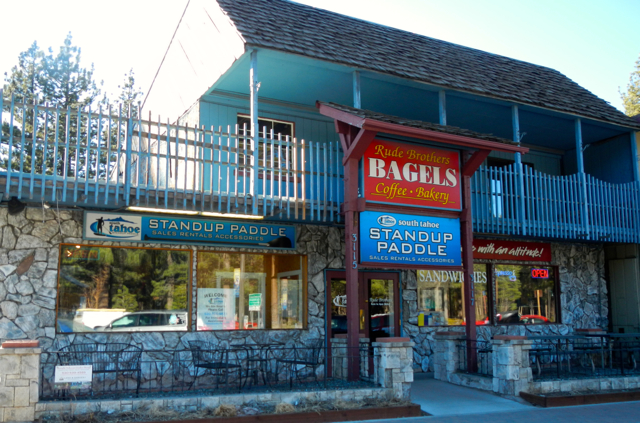
Property ownership change means tenants are moving on Harrison Avenue in South Lake Tahoe. Photo/LTN

Property ownership change means tenants on Harrison Avenue in South Lake Tahoe must move. Photo/LTN

By Kathryn Reed

Harrison Avenue in South Lake Tahoe is about to be transformed again.

This time it will be the building that houses South Tahoe Stand Up Paddle and Rude Brothers Bagels. Locals John Cefalu and Mike McKeen closed escrow on the property last month and are in the process of renovating the building.

Renovation also means displacing the tenants.

“Because of the requirements the city has and building codes we are going to have to go through with some extensive demolition,” Cefalu told Lake Tahoe News. Plus, the building will need sprinklers put in.

All of this work can’t be done while tenants are in the building.

Rude Brothers got the news last week and has until the end of the month to move out. The paddleboard company is moving to the back of the building on a month-to-month lease that is valid through the summer season.

Lisa and Jim Gosh have owned the bagel shop for more than a dozen years, while the business has been in that location for more than 20. (Steve Rude started the business.)

“Right now Jim and Lisa are looking for a new location,” shop manager Andrea Reber told Lake Tahoe News. “We need a lot of room.”

She said with all of the equipment it will be hard to find the right place. Large mixers are in the back for making the bagels every day, even the cream cheese is made on location.

Chris Brackett, owner of the SUP shop, had hoped to purchase the property, but he said he lost the bidding war.

Bob Koser was Brackett’s original landlord. He passed away in November 2014. They had known each other since Brackett was a kid. For six years he managed the property for Koser.

Koser left the building to Small Victories Ministries in Illinois with the idea the organization would have sustained income through the rents, Brackett said. That clearly didn’t happen. The group instead sold the property to the highest bidder – the Cefalu-McKeen partnership.

“We will make it work. We will just have to,” Brackett said of working out of the smaller space in the back and not having a street front location. Long-term, though, he is considering all of his options.

Cefalu said he isn’t sure if the current tenants would be asked back. It depends on what the exact designs are. Dave Goldman has been hired as the architect.

The building is so old is must go through the historic site review as mandated by the Tahoe Regional Planning Agency.

Cefalu described it as more like blight than historic. He remembers the front of the building being here when he came to the lake in 1957. The back was added on since then.

The apartment on the second floor has been demolished.

“I did verify that a demolition permit has been issued but it is only for interior demo work. We do not have any submittals that indicate how the space will be reconditioned or what it will be. We also do not have any applications for exterior changes,” Hilary Roverud, deputy director of development services with the city, told Lake Tahoe News.

Cefalu said the goal is to begin the substantive work on April 1 and be done by Aug. 1.

“We hope it will be an amenity and improve the appearance of the whole area with what I’ve done and what we intend to do,” Cefalu said. “There is still a lot more work to be done with other properties. I hope it becomes contagious with the other properties nearby that need improvement.”

Cefalu owns the Globin Building with the laundry facilities out front. McKeen owns the building occupied by Pinnacle realty.


Body of South Shore man pulled from Tahoe

The fully clothed body of David Mark Flynn was recovered near Timber Cove Pier on Feb. 29.

The cause of death is undetermined pending toxicology reports, according to the El Dorado County Sheriff’s Department.

Flynn, 53, was a resident of South Lake Tahoe.

The police department told Lake Tahoe News there were no outward signs of trauma.

The surface temperature of the lake this time of year is usually between 40 and 50 degrees.

— Lake Tahoe News staff report


Snippets about Lake Tahoe

tahoe donner·      According to USA Today’s Readers’ Choice Contest, Tahoe Donner Cross Country Ski Area is the third best cross country ski resort in the United States.

·       Tourism is Nevada’s No. 1 industry, employing 474,000 Nevadans and generating more than $3 billion in tax revenue for the state.

·       The League to Save Lake Tahoe hired Erica Mirich as director of development. Most recently she served as senior director of annual giving for the Stevenson School in Pebble Beach. She had previously been director of development for Lake Tahoe School in Incline Village.

·       El Dorado County Area Agency on Aging and the El Dorado County Commission on Aging’s annual Senior of the Year award will be presented May 17. Here is an application to nominate someone.


Rummage sale to benefit American Legion

American Legion Auxiliary Post 795 of South Lake Tahoe will have a rummage sale March 4-5.

Hundreds of items will be for sale including clothing, toys, electronics, antiques, household items and more.

It will be from 9am to 5pm each day, at the American Legion Hall, 2748 Lake Tahoe Blvd., South Lake Tahoe.

For more information, contact Carol Olivas at 530.307.0132 or 530.544.1306.


Nevada wants students to design welcome signs

High school artists have the opportunity to leave their mark on Nevada by redesigning the state’s welcome signs.

The Nevada Department of Tourism and Cultural Affairs in partnership with the Department of Education and the Department of Transportation is coordinating the contest that runs throughApril 25.

The contest will be conducted within Nevada’s high schools and is primarily aimed at students enrolled in the CTE Level 2 or higher graphic arts courses, although each school may determine eligibility.

Approximately 50 entry points exist on Nevada’s major interstate freeways, state highways and small roadways bringing people into the state. Because of the natural and cultural diversity of the state, the entry points will be divided into four regions. Designers are asked to convey the most important resources of the selected region while conveying the overarching brand, Nevada: A World Within. A State Apart, in their designs.

Entrants will be provided a toolkit with specific components that need to be included.


Each participating school will select up to five finalist designs that will be submitted to a review committee composed of professional graphic artists and state representatives. Three finalists from each region will be selected at which point the public will be able to choose the winning design via an online voting tool.

The winning designs will be installed on Nevada’s roadways beginning in the summer of 2016.

For more information and contest rules, go online.