EDSO deputy arrested on DUI charges — again

Updated 4:15pm

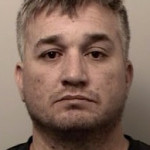
El Dorado County sheriff’s Deputy Tony Broadfoot has been arrested on charges of driving under the influence twice in nine days.

Tony Broadfoot

Tony Broadfoot

As of Saturday afternoon he was still in jail in Placerville on $250,000 bail.

These two arrests come after his initial DUI arrest on Dec. 8.  That incident occurred in South Lake Tahoe. At that time he was placed on paid administrative leave.

The latest two arrests – Feb. 25 and March 4 – were made by California Highway Patrol officers out of the Placerville office. According to CHP Sgt. Ryan Houdeshell, Broadfoot rolled his vehicle Feb. 25 on Highway 50 near Ice House Road. He was not injured. On March 4, it was also an accident, though Houseshell did not have the specifics. No one was injured. This occurred on South Shingle Road in Shingle Springs.

Sheriff’s Lt. Matt Underhill had no comment other than to say Broadfoot was on leave at the time of the latest DUIs.

— Lake Tahoe News staff report


Calif. parks, wildlife areas would benefit in Obama’s budget

By Michael Doyle, McClatchy Washington Bureau

California gets its share, and then some, from the Obama administration’s $4 trillion budget proposal delivered Monday to a skeptical, Republican-controlled Congress.

There’s money for restoring the Sacramento-San Joaquin Delta, likely to survive congressional winnowing. Proposed upgrades at places like Yosemite National Park will probably find Capitol Hill favor, as well, along with funding for Central Valley flood control and dam improvements.

The budget, for instance, offers $3.5 million to complete the Army Corps of Engineers’ design and engineering studies for protecting the Sacramento area’s Natomas Basin. It provides tens of millions of dollars to upgrade Folsom Dam northeast of Sacramento and improve the safety of the earthen Isabella Dam in eastern Kern County. These projects enjoy bipartisan support.

Read the whole story


I-Did-A-Run returns to Tahoe Donner

As part of North Lake Tahoe’s SnowFest 2016, the 12th annual I-Did-A-Run returns to Tahoe Donner on March 13 at the Tahoe Donner Downhill Ski Area.

Dogs of all shapes and sizes will compete in this timed dog pull race. The event pits dog against dog in a race against the clock, pulling sleds over a snow-covered course. Prizes are awarded to the speediest finishers among four weight divisions.

Registration takes place at noon the day of the event and the race starts promptly at 1pm. Entry per dog is $20 and includes a goody bag. Proceeds benefit the Humane Society of Truckee-Tahoe.

For complete event details, go online.


Snippets about Lake Tahoe

 Smokey Bear and U.S. Forest Service Lake Tahoe Basin Management Unit Fire Prevention staff, Bill Sanders and Jacob Ruano, visited a Head Start class in South Lake Tahoe last week to teach the pre-kindergarten students about fire safety and fire prevention.  Photo credit:  Katie Oliver, Head Start.

Smokey Bear and U.S. Forest Service Lake Tahoe Basin Management Unit Fire Prevention staff, Bill Sanders and Jacob Ruano, visited a Head Start class in South Lake Tahoe  to teach the pre-kindergarten students about fire safety and fire prevention. Photo/Katie Oliver

·       Lake Valley Fire Protection District received the Automotive Service Excellence Blue Seal of Excellence Certification for its maintenance shop.

·      How Supplements Can Complement Traditional Medicine is the topic of an April 6 lecture that will be presented by Amy Smith of Barton Family Practice. The free lecture is from 6-7pm in the Aspen Room at Lake Tahoe Community College.

·       There will be a South Lake Tahoe design guidelines workshop March 9 from 5-7pm at Lake Tahoe Airport.

·       Truckee Department of Public Works recently launched YourGOV. For more info, go online.


Anderson snars 5th U.S. Open title

By USSA

VAIL, CO – The American slopestyle snowboarders reigned supreme at the 35th edition of the Burton U.S. Open on Friday. Kyle Mack (West Bloomfield, Mich.) scored his first major slopestyle win and fellow Michigander Eric Beauchemin (Grand Blanc, Mich) finished right behind him in second. On the women’s side Jamie Anderson (Meyers) took home her third-consecutive U.S. Open title and Karly Shorr (Milford, Mich) took second.

Anderson’s win was her fifth overall U.S. Open title, and she clinched with trademark style on her first run, which included a tailslide to 270 on one of the bigger rail features and a textbook frontside 720.

“I personally try to come out here and see what works for me,” Anderson said of her run. “I try to stay true to what I want to do.”

Shorr took second with a solid first run to earn her first U.S. Open podium. She appreciated the 2016 course, which featured unique lines and options that allowed the riders to be creative.

“It was the most fun course I’ve ridden in a long time,” Shorr said after her first run. “Any chance I get to do something different I always try. I actually haven’t landed a run at the US Open in a couple of years so I’m just so thankful.”

The other three American women in the field were unable to put a full run down: Jessika Jenson (Rigby, Idaho) finished seventh, Hailey Langland (San Clemente) was eighth and Julia Marino (Westport, Conn.) was 12th.

It was the first time an American man has topped the slopestyle podium at the U.S. Open since Eric Willett (Breckenridge, Colo.) won in 2011. Mack earned one of the sport’s most-prized titles with a run that included back-to-back triple corks, including a first-in-competition triple cork Japan. Mack, who first competed at the U.S. Open at the age of 7, was thrilled.

“It’s been an 11-year journey,” Mack said. “To win here in Vail is amazing—I couldn’t be more hyped. It’s pretty much a dream come true to win this.”

Beauchemin (clad in a head-to-toe Teenage Mutant Ninja Turtle outfit) had a nearly flawless run to take second to his good friend. “I’m so hyped for my boy Kyle,” he said. “We’re really good friends so we’ve been riding together for a long time. There are a lot of good riders that come out of Michigan because they love snowboarding so much. It’s crazy – there must be something in the water.”

It was a strong showing for the American men: Redmond Gerard (Silverthorne, Colo.), fifth; Brandon Davis (Mammoth Lakes), sixth; Chris Corning (Arvada, Colo.), seventh; Lyon Farrell (Haiku, Hawaii), 10th; Nikolas Baden (Steamboat Springs, Colo.), 14th; Brock Crouch (Mammoth Lakes), 15th; Chas Guldemond (Reno), 19th; Ryan Stassel (Anchorage), 20th; Eric Willett (Breckenridge, Colo.), 21st; Judd Henkes (San Diego), 27th; Shaun White (Carlsbad), 31st.


STHS to open individual classes to WHS kids

Classes in the Tahoe Arts and Design sector at STHS are expected to be popular with WHS students. Photo/Kathryn Reed

Classes in the Tahoe Arts and Design sector at STHS are expected to be popular with WHS students. Photo/Kathryn Reed

By Kathryn Reed

Starting this fall students at Whittell High School should be able to take individual classes at South Tahoe High School.

The school boards of the respective districts are slated to vote on the agreement at their March 8 meetings.

While inter-district transfers between the Nevada and California districts have been available for a price for years, the ability to take select classes would be new.

The impetus to offer this to WHS students came from the group that was assembled more than a year ago to deal with parental dissatisfaction with how things were going at the Stateline school. One of the issues was lack of electives. With Whittell being such a small school, only so many classes are available.

“We are targeting juniors and seniors looking to build their academic resumes,” Teri White, superintendent of Douglas County School District, told Lake Tahoe News. “In order for it to work out we have to free the student up for almost two periods because of driving there and back.”

This means the student needs flexibility in their day to make it work, and also why they may only want to take one class at STHS.

Students will be required to provide their own transportation.

The Douglas school board this year approved the calendar for next fall, which now aligns with Lake Tahoe Unified School District. This will help with students who want to take classes in both states.

Whittell students will only be admitted to a STHS class if there is room, so there is no threat to a STHS student being displaced.

WHS students have Fridays off, so depending on which South Tahoe class they take, it may mean going to school five days a week.

While LTUSD will make money off of the students, Superintendent Jim Tarwater said the reason to do this “is to take care of kids.”

“I want those kids to compete in whatever college they want to go to,” Tarwater told Lake Tahoe News.

It will cost $3.63 a day, or a little more than $300 per class. For students on the Nevada side who go to STHS full time it costs $5,224.

Neither superintendent would venture a guess as to how many students might take advantage of this opportunity that will take effect in the 2016-17 school year – assuming the two boards approve it – but guessed it wouldn’t be that many.


Opinion: Arthur Ashe’s life a story about the long game

By Patricia A. Turner

We tend to recognize heroes like Arthur Ashe in a kind of short-hand—first African-American to win a singles tennis titles at Wimbledon, the U.S. Open, and the Australian Open; first African-American to be selected to represent the U.S. at the Davis Cup; and, at the university where I teach—UCLA—one of the most famous alums, period.

But these accolades aren’t the main reason I teach a seminar focusing on Ashe’s life. The trajectory of this tennis player’s life—from his birth in the Jim Crow South of the 1940s to his untimely death from AIDS in 1993—brings much of the American century to life for my students, with all the complexity that gets lost when we think of these people solely as the achiever of milestones. And, perhaps because recent history is often the most neglected history, it is also the vital missing link in explaining to my students where we’re coming from as a society, and providing them with exemplars as they face similar challenges in their lives.

Even though Ashe’s name is mentioned by every campus tour guide and promotional video of any length about UCLA, and even though students go to a wellness center named in his honor when they are sick, students were quick to admit on their first day in my class that their understanding of Ashe’s legacy was confined to a hazy notion that he was the black man who clicked off a bunch of firsts in the world of tennis. Some knew that he had died of AIDS; some knew that he was a social activist.

In my class, we start Ashe’s life journey in the 1940s, with the family home in Richmond, Va., where his industrious and devoted father accepted a job as caretaker for Brook Field, Richmond’s only park for Negroes, in the vernacular of the day. The job, which came with a house and proximity to tennis courts, embodied the era’s “separate but equal” doctrine.

In Richmond, blacks could not say that they were denied the amenities afforded whites. Their park had a tennis court, too, although the trappings of tennis were largely unattainable to most of Richmond’s African-American community. But sports became the special lubricant—and motivator—in Ashe’s life. Young Arthur thrived by having tennis courts in his backyard and the attention of one of the only black coaches of the era, but he beat his local opponents too easily. Since the segregated school system precluded him from playing whites, his father agreed with a coach’s recommendation that his son should spend his senior year in St. Louis, where race would not restrict his range of tennis opponents.

Today, most parents are loath to move for fear of incurring the wrath of teenagers separated from their friends and the rituals of graduation. But Arthur Ashe Sr.—Arthur’s mother had died when he was 6—split up his close family of three in order to expand Arthur’s opportunities. And it worked. A stellar senior year in St. Louis positioned him for offers of tennis scholarships. Inspired by the example of Jackie Robinson and wooed by legendary tennis coach J.D. Morgan, Arthur Ashe entered UCLA in 1962.

In Ashe’s undergraduate days, the word service did not evoke SAT tutoring programs or planting community gardens. Service meant the armed forces, and male college students lived with the knowledge that they could be dispatched overseas quite readily. In addition to perfecting his tennis game and focusing on his studies, Ashe enlisted in the ROTC. This commitment required a post-graduate obligation that Ashe fulfilled at the next stop on his life journey: West Point. His superiors allowed him to advance his tennis game.

His younger brother Johnnie, on the other hand, was in Vietnam, like so many other young men of his generation. In fact, fearful that Arthur might have to do a tour of duty, Johnnie re-enlisted, making the case to his superiors that if one Ashe brother was getting his mail in Vietnam, the other should be allowed to stay stateside. Safe from enemy fire, the older brother Arthur was a second lieutenant who worked as a data analyst and tennis coach at West Point.

While Ashe was playing tennis and pursing his military obligations, other African- American young people were engaged in direct political action and at times he faced withering criticism for not joining in the struggle. Indeed he was booed at a speaking engagement at Howard University because the students were incensed that he had played tennis in Johannesburg, South Africa.

Ashe’s complex relationship with South Africa would come to exemplify some of the schisms in how Americans of the civil rights era thought about racial progress. During that era, any ambitious tennis player was expected to prove his or her mettle in the prominent South African matches. Even though he was a college graduate, a prize-winning tennis player, and member of the American military, Ashe could not get a visa to play there until the 1970s. His decision to play there after he finally succeeded in obtaining a visa riled members of South Africa’s white apartheid establishment as well as anti-apartheid activists here at home. Ashe shared their disdain for what he called “the abyss that is South African apartheid.” During the years when he transitioned from being a tennis player to being a tennis coach, he worked behind the scenes advocating that the United States exert its influence toward dismantling apartheid. When he took more public stances, such as getting arrested outside the South African Embassy in Washington in 1985, the bad publicity likely contributed to his being fired as captain of the Davis Cup team.

Unbeknownst to him, tennis fan Nelson Mandela was following his career and reading Ashe’s books in his cell on Robben Island. Upon his release, he identified Arthur Ashe as the American he most wanted to meet.

He encountered controversy again in 1992 when he announced that he had contracted HIV, the virus that causes AIDS. Ashe had become infected years earlier from blood transfusions necessitated by heart attacks at a relatively young age. But this was an era when the stigma against HIV and AIDS was severe—because it was assumed that only gay men or IV drug users got the disease. Ashe’s ability to deal with his diagnosis in private was shattered when USA Today shared with him its plans to “out” his HIV status, forcing him to announce his illness in a hastily arranged press conference. A colleague down the hall from me stopped buying that newspaper the day she heard about its role in Ashe’s life, and she still holds a grudge more than two decades later. But Ashe didn’t shy away from his association with the disease once the news became public: He was an activist to the end. Ashe dedicated himself to AIDS awareness and used his visibility to draw attention to the plight of black South Africans and Haitian refugees.

When I contemplate the character traits I want this generation of college students to embody, Ashe provides a good checklist. Not only was he a tennis star of the first order, he also wanted to help the next generation, establishing junior tennis leagues and coaching the U.S. Davis Cup team. Ashe took being a student-athlete, and not just an athlete, quite seriously throughout his life, and wanted to influence how the public looked at African-Americans. He crafted the first major study—three volumes in length—of African-American sports history. He also penned numerous op-ed essays and several other books, including his best-selling autobiography, “Days of Grace”. He was a shrewd businessman who knew how to take the comparatively modest tennis purses of his day and invest them prudently. He married once and well, to Jeanne Moutoussamy-Ashe. Once engaged in an issue, he persevered.

To be sure, much has changed since Ashe’s time: My students don’t have to worry about a military draft, and if they are so unfortunate as to be diagnosed with HIV, there are medications to extend their lives. But their times are turbulent as well; issues of race, class, war, and disease continue to shape 21st century life. If they can learn from Ashe’s life how to sustain personal and professional integrity, how to handle setbacks with grace, and how to play the long game, they will lead lives of distinction and purpose.

Patricia A. Turner is a faculty member at UCLA and serves as dean and vice provost of Undergraduate Education. She is the author of four books, including “Crafted Lives: Stories and Studies of African American Quilters”.


Robot animals helping in the hunt for poachers

By Karin Brulliard, Washington Post

Two men in Maryland recently achieved Internet infamy when they were temporarily banned from hunting after they’d used crossbows to shoot a deer on state land.

Or so they thought.

The men had actually fallen prey to the ruse of a state-owned robotic deer, one of a growing number of remote-controlled decoys being used by American wildlife law enforcement to stop poachers. Across the nation, a small army of deer, elk, bear, turkey, fox and wolf dummies has been deployed to catch people who hunt in the wrong place, in the wrong season or otherwise illegally.

Read the whole story


EPA bans pesticide used on Calif. crops

By Geoffrey Mohan, Los Angeles Times

Federal regulators said Tuesday they will ban a pesticide widely used on California crops such as almonds and alfalfa, saying it imperils aquatic insects that are the food source of fish.

The U.S. Environmental Protection Agency on Tuesday filed an intent to cancel registration of all products containing flubendiamide, most commonly used in Belt, manufactured by Bayer CropScience, based in Germany. The chemical is also used in products made by Nichino America.

Canceling the registration would prohibit any further sales of products that include the ingredient.

Read the whole story


Caesars CEO granted initial approval for gaming license

By J.D. Morris, Las Vegas Sun

Caesars Entertainment Corp. CEO Mark Frissora received initial approval for a gaming license from state regulators this week after he sought to put to rest any concerns about his contentious exit from his last job.

The Gaming Control Board unanimously recommended a license for Frissora, who was named the next chief executive of Caesars about a year ago and officially took the reins of the company in July.

Board members were ultimately satisfied with Frissora’s responses to questions about the stormy end to his tenure at Hertz Global Holdings Inc., the rental-car company he led for eight years.

Read the whole story