Opinion: Stop telling me my active daughter might get hurt

By Leslie Kendall Dye, Washington Post

At school pickup, I stand outside the chain-link fence that separates the kindergarten playground from the parents. Our 5-year-olds walk in orderly lines from the building to the yard. They blink in the afternoon sun, disoriented after many hours indoors.

The bell rings and, freed from their teachers, the children run with sudden energy to the yard’s small jungle gyms. The gate swings open to usher us in. Some kids enjoy the slides, others play hopscotch or draw on the concrete with chalk, and a few curl into their parents’ or babysitters’ laps to release the tensions of the day.

My child runs straight for the 15-foot fence and begins scaling it. Picture a cross between Spider-Man and the Flash, and you have my daughter. I consider it my greatest achievement that I have never lost her; her agility is matched only by her speed. I often place a large red bow in her hair as a visual tracking device. It helps me spot her dangling from trees or hanging upside down from scaffolding. Once we leave our apartment, I am always trying to catch up with her.

Read the whole story


UCLA helped break the color barrier in college athletics

By James W. Johnson

The arrival of five athletes, all African American, on the UCLA campus in the late 1930s would prove to be a moment of destiny, not just for college sports but for the United States.

These five men could have been called the original Fabulous Five. And that designation was no exaggeration, because they went on to change the cultures of professional athletics, entertainment, the civil rights movement, and politics.

The athletes who played together in the 1939 school year were:

• Jackie Robinson, who would break the color barrier in Major League Baseball in 1947 and become a prominent advocate of racial equality after his baseball years.

• Kenny Washington, who took down the color barrier of the National Football League when he played for the Los Angeles Rams in 1946.

• Woody Strode, who would join Washington with the Rams and later become an accomplished actor in movies such as “Spartacus,” “Sergeant Rutledge,” and “The Professionals.”

• Ray Bartlett, who would go on to serve on the Pasadena Police Department (at that time, only the second African American) and as a prominent Los Angeles area civic leader.

•  And then there was the fifth, Tom Bradley, who would transform Los Angeles into a global city during his 20 years as mayor. He also would make history as L.A.’s first black mayor, and the first in a major city that had a white majority.

At UCLA, these athletes came to know each other, creating a bond of fellowship that lasted their entire lives.

The decision to recruit a roster of African-American football players came after UCLA had experienced a 20-year drought on the gridiron. At the time, this recruiting decision represented a bid for competitive advantage, since most schools, including rival USC, were uninterested in recruiting black players in that era. Washington and Strode came first to UCLA in 1936, and were followed by Robinson, Bradley, and Bartlett, who would team up in 1939.

Their recruitment helped create an accepting atmosphere at UCLA for African Americans. That was a challenge. African Americans numbered only 50 of the university’s 9,600 students that year. At the time, the campus was predominantly a commuter school. All five athletes lived at home, as no blacks were allowed to reside in Westwood, the neighborhood surrounding the campus where some students lived. For social activities, they would attend a club for African Americans called the Sphinx.

Nonetheless, the school was an oasis in a more hostile environment. “UCLA was the first school to really give the Negro athlete a break,” Bartlett said. Strode later said: “Whatever racial pressure was coming down in the city of Los Angeles, the pressure was not on me in Westwood. We had the whole melting pot, and it was an education for all of us. […] I was just like any other athlete. And I worked hard because there was always the overriding feeling [that] UCLA really wanted me.”

Bradley was convinced that UCLA played a vital role in setting a standard of acceptance for black athletes, and ultimately for African Americans as students and leaders. “Some of the schools with which UCLA had an affiliation did not permit blacks to compete on the same teams,” he said. “And UCLA administration made the decision that no school that would discriminate against its athletes could any longer compete in athletics with us.”

But Jackie Robinson wasn’t so sure that all was as cozy as Bartlett, Strode, and Bradley saw it. He remarked during his UCLA years that he was treated like a hero when playing in front of a huge crowd on the football field, but as soon as the game was over he was simply Jackie Robinson, the Negro.

What is clear is that that recruitment of the athletes was news off campus as well. Nationally, by the late 1930s, no more than 38 African Americans suited up for major college football across the country—none in the South.

“Three African-American players out of eleven in the starting lineup was highly unusual for the time,” says Kent Stephens, curator and historian for the College Football Hall of Fame in South Bend, Ind.

UCLA’s roster of black players on the football team made it the most racially integrated squad in college football history.

“We have yet to find another single coach in the history of football that has had the guts to play three of our race at one time and have [four] on the squad,” a reporter for the Chicago Defender, a newspaper for black readers, wrote later in the year.

In contrast to the four football players, Tom Bradley, who had been an all-city football player at John H. Francis Polytechnic High School, received an academic scholarship. He eventually decided against playing for the football team, preferring to focus on competing in the 440-yard run, the 880 races, and the 1,600 relay in track. That race fit perfectly his tendency to be something of a loner. He later said: “The whole business of competition—in track, particularly, because you’re kind of one-on-one in track—involves a kind of discipline you have to develop for yourself …. I think it really became part of my lifestyle.”    

But Bradley did have teammates on the track-and-field team, including the four star football players, who competed in track during the spring. There were three other black runners on the team—Tom Berkley, Bill Lacefield, and James LuValle, who ran at the so-called Nazi Olympics in 1936 and became a scientist and an administrator at Stanford. These athletes formed lifelong fellowships that included several reunions.

The best athlete of the group, Jackie Robinson, lettered in four sports at UCLA, the only Bruin to accomplish the feat. Robinson won the NCAA championship in the long jump (then called the broad jump) while also leading the Pacific Coast Conference in scoring one year for the basketball team. His worst sport was his future professional avocation: baseball, in which he batted .097 and committed 10 errors in his single season.

Many of the other athletes excelled in multiple sports. Bartlett also played four sports but didn’t earn a letter in all like Robinson. Washington threw the shot put, and Strode the discus and shot put. Washington played baseball as well. Rod Dedeaux, who coached USC baseball for 45 years and scouted for the Dodgers, said he thought Washington had a better arm, more power, and more agility than Robinson. (Washington got a tryout with baseball’s New York Giants in 1950, but by then he was past his prime.)

Each of the athletes had his own life, shaped by the fact that they lived at home and held down part-time jobs along with other personal responsibilities. Robinson tended to avoid social activities on the UCLA campus. Bradley and Strode joined different black fraternities, while Bartlett and Washington concentrated on academics, as did Bradley. None of the athletes graduated in four years. What held them together was their dedication to sports.

Of the five, Robinson was the one who most vigorously battled racial discrimination throughout his entire life. The other four, while acutely aware of the racial climate in their lives, adopted a more passive approach of “going along to get along,” which was the safest mode of operation in those days.

Robinson devoted a great deal of his life after he broke the color barrier in baseball to working for civil rights. Strode had little to do with the civil rights movement. He believed that what he accomplished on the field and life was the best way to break down prejudice. Bradley fought discrimination in the Los Angeles Police Department and as mayor, while Washington and Bartlett worked within the political system to seek racial equality.

Some relationships among the five were closer than others. Robinson and Bartlett, who grew up together in Pasadena, were lifelong friends. (Bartlett represented Robinson, who died in 1972, as grand marshal of the 1999 Rose Parade.) Strode and Washington were like brothers; Washington was emphatic that the Rams sign Strode if they wanted him to play. And Bradley and Bartlett were in frequent touch as they became policemen and civic leaders in Los Angeles.

Their legacies remain strong today.

James W. Johnson is the author of “The Black Bruins: The Remarkable Lives of UCLA’s Jackie Robinson, Woody Strode, Tom Bradley, Kenny Washington, and Ray Bartlett” (University of Nebraska Press, 2018).


CHP seizes large quantity of illegal drugs

A driving under the influence stop ended with the confiscation of 7 pounds of marijuana, more than 10 pounds of methamphetamine, several thousand dollars and other indicators of drug sales.

A California Highway Patrol officer pulled the vehicle over just after midnight April 21 on Highway 50 near Schnell School Road in Placerville.

During the stop the officer developed probable cause to search the car. The driver was arrested and all contraband seized. The name of the suspect was not released.

“To put it in perspective, this amount of methamphetamine alone could be enough for approximately 228,000 individual doses,” CHP said on their Facebook page.

— Lake Tahoe News staff report


Marijuana industry poised for supercharged growth

By Trevor Hughes, USA Today

America’s fast-growing marijuana industry appears poised for supercharged growth after winning what cannabis entrepreneurs see as approval from the Trump administration to forge ahead.

The legal marijuana market was already growing exponentially despite fears of a federal crackdown under Trump and Attorney General Jeff Sessions, but Trump’s signal that he’ll respect state legalization may swing open the floodgates by reassuring traditional investors, entrepreneurs and local lawmakers that it’s OK to jump in.

Across the nation, risk-takers have poured billions of dollars into the industry while knowing they could be arrested by federal agents at any moment.

Read the whole story


Work along Hwy. 28 about to resume

Work on Highway 28’s share-used path, highway safety, accessibility, and water quality is expected to resume April 30 and continue through the fall.

Daytime and nighttime single lane closures will take place on Highway 28 from the southern end of Incline Village to three miles south of Sand Harbor State Park throughout the summer.

Motorists should anticipate delays of up to 20-30 minutes with one-lane flagger controlled closures. A majority of the work will occur Sunday night through Friday afternoon.


Snippets about Lake Tahoe

·      Physiatrist Gregory Burkard Jr. has joined Barton Health as an interventional pain and sports medicine physiatrist, which a physician that treats a variety of medical conditions affecting the brain, spinal cord, nerves, bones, muscles, joints and more.

·      Douglas County Library in Minden will host South Lake Tahoe author JoAnn Conner on May 8 at 5:30pm. She will discuss her books and sign copies of “Heartwood” and “The Mountain.” The Minden Library is located at 1625 Library Lane. 

·      The law offices of Adam Spicer and Lacey Van Etten are now at 2269 James Ave., South Lake Tahoe.

·      Grammy Award-winning country artist Steve Wariner will perform at the Red Dog Saloon in Virginia City on May 18 at 7pm. Tickets are $40 and available online.

·      South Lake Tahoe was voted No. 3 on Travelocity’s list of the 2018 Best Small City Road Trip Destinations.


Nevada’s wild horse giveaway plan fizzles

By Benjamin Spillman, Reno Gazette-Journal

Nevada’s controversial plan to find a private owner for more than 2,500 horses roaming near Reno fizzled out.

The Department of Agriculture this week announced it received zero responses to a request for proposals from private groups interested in taking ownership of horses living on the Virginia Range.

With no one willing to take ownership of the animals, the decision for how best to manage them will go back to the state’s Board of Agriculture.

Read the whole story


Report: Nev. ballot measure could increase energy bills

By Colton Lochhead, Las Vegas Review-Journal

The Energy Choice Initiative on the ballot in November promises to bring cheaper energy options to Nevadans by opening the state up as a competitive market.

But according to a new report from state utility regulators, most Nevadans would see higher monthly energy bills for roughly a decade before seeing any cost savings.

That’s in large part because NV Energy, by far the state’s largest electricity supplier, would likely have to divest many of its power plants and power generating assets across the state, leaving ratepayers on the hook for between $4 billion and $6 billion in any financial losses incurred by the company as part of implementing Question 3, according to the report from the Public Utilities Commission published Wednesday.

Read the whole story


Bill Morgan — 1934-2018

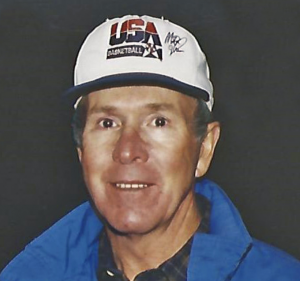
Bill Morgan

Bill Morgan, the former leader of the Lake Tahoe Basin Management Unit and Tahoe Regional Planning Agency, died April 14, 2018, at his home in Alpine County. He was 84.

In 1975, Bill was appointed the forest supervisor of the Lake Tahoe Basin Management Unit, which the U.S. Forest Service had recently established to manage the federal government’s landholdings with the goal of preserving the area’s natural resources and Lake Tahoe’s pristine water quality.

During his time at the LTBMU, he redirected the federal government’s land management policy in the basin from one of timber management to one of restoration and recreation. He also helped manage the federal government’s extensive land acquisition program in the basin. In 1965 only 47 percent of the basin was federally owned. This increased to 65 percent by 1980 to about 78 percent presently. One of the most significant land acquisitions made at that time was the purchase of two casino developments on the South Shore that Bill helped orchestrate to prevent their construction. Other acquisitions included Bliss/Shakespeare Point, Zephyr Cove, Round Hill Pines, and lands acquired under the 1980 Burton-Santini Act. He was also instrumental in furthering the historic preservation of the estates near Camp Richardson.

It was during this period that the recently formed Tahoe Regional Planning Agency was struggling to develop its own land management program for public and private lands. Battered by opposing political forces and legal challenges from environmentalists and property right advocates, the agency was on the verge of being disbanded. Having accomplished much at Lake Tahoe with the U.S. Forest Service, Bill retired early from that agency to work for the TRPA, which he viewed as being critical to protecting Lake Tahoe’s environment.

On April Fools’ Day 1985 he assumed the position of executive director with the embattled organization with the charge of developing a new Regional Plan to end a 1984 court order that had imposed a moratorium on further development in the basin affecting private landowners of more than 15,000 vacant lots around the lake. As he took the helm, Bill formed a consensus building team to help guide the development of the plan. After two years of intense work, the plan was completed. On July 15, 1987, a federal judge lifted the building moratorium order after accepting the new TRPA Regional Plan that would guide land-use in the Tahoe basin for the next quarter century. Those who worked with Bill on the plan labeled him as “the right man for the time”.

President Ronald Reagan and Sen. Paul Laxalt (who as governors of the states of California and Nevada earlier had created the TRPA) sent Bill personal notes of appreciation for his work in resolving the planning conflict.

When Bill retired from the TRPA on Sept. 30, 1989, he was given a piece of the original “consensus building table,” which he fashioned into a coffee table that remained a fixture in his living room until the time of his passing.

Over the years, that table was the site of many more epic battles between family and friends playing cribbage, poker, Jenga, and many other games.

It has been said that Bill’s ideas resolved many of the long standing issues at Tahoe and led eventually to a spirit of cooperation among the various interest groups that survives to this day.

In 1990, Bill moved to Woodfords in Alpine County with his wife, Carole, where they designed and built a home, Memdewee Down. It was at this home overlooking the distant snow-capped peaks that he chose to spend his final moments. During his “retirement” years, Bill served on the Alpine County Planning Commission, Tahoe Rim Trail Association, and the Lake Tahoe Baikal Institute. He also worked as a consultant to the Russian government on Lake Baikal environmental issues on behalf of the U.S Agency for International Development shortly after the dissolution of the Soviet Union in the early 1990s.

William A. Morgan was born March 16, 1934, in Sault Ste. Marie, Mich., to Luella (Bell) and William C. Morgan. He was the youngest of three children, with sisters, Mary Lou (Blanchard) and Mildred (Galinski). Bill spent his early years growing up in Michigan’s Upper Peninsula where he developed a passion for the natural environment. Hiking and canoeing with the Boy Scouts were two of his favorite activities. He earned the rank of an Eagle Scout.

At the age of 17, after graduating from high school, he and his high school buddies spent the summer trekking across Canada to Alaska on the crude roadway system that spanned the region, sleeping in the wide open spaces under the stars. This adventure further reinforced his love and respect for nature. Upon his return, he enrolled at Bay City Junior College.

Unsure of what he wanted to study, he left school after one year and enlisted in the U.S. Army for two years during the Korean War, leaving with the rank of sergeant. His time in the military left him with an appreciation for the work of teams and for the sacrifice and devotion of service members. After his discharge, he returned home to Michigan and enrolled at Central Michigan University and later Michigan State University. It was at Central that he became reacquainted with a high school friend, Carole Punches, whom he married in 1957. Two years later, daughter Stacey (Foster) was born, and Bill graduated from MSU with a bachelor’s degree in civil engineering.

Following college graduation, Bill joined the U.S. Forest Service as an engineer and moved with his young family to California where they were stationed first on the Klamath and then Angeles national forests. While stationed at the Angeles National Forest, sons Craig (1962) and Eric (1964) were born. In 1965, Bill and Carole moved the family to Grass Valley, where Bill served as the forest engineer for the Tahoe National Forest for 10 years.

In Grass Valley, Bill and Carole were active in the community, engaged with their church (Peace Lutheran, of which they were founding members), Boy Scouts, and their children’s sports. Bill and family traveled extensively across the wilderness areas of the U.S., Mexico, and Canada camping, hiking and fishing.

Travel, writing, and fitness were also life-long passions of Bill’s. He and Carole traversed the world, sometimes with friends, exploring North America, as well as Europe, Asia and Polynesia. But it was always the Sierra that they returned to as home. He wrote and published six books: five fiction and one (his last) a nonfiction account of his time with the U.S. Forest Service and the TRPA at Lake Tahoe. His writings reflect the landscapes and experiences of his life through a variety of genres including adventure, science fiction, memoir, and saga. He also was a past contributor to the Record Courier. A regular tennis player, hiker, skier, canoer, and snorkeler, Bill enjoyed all sports—especially those involving his children and grandchildren. Up until the last weeks of his life, he was engaged in healthy and friendly competitive contests.

Throughout his life, Bill Morgan championed public access to the outdoors and wild spaces while ensuring the preservation of such spaces for future generations. He was a consummate problem solver and worked tirelessly to bring opposing interests together using consensus building techniques while developing win-win solutions.

He is survived by his wife Carole of 61 years, daughter Stacey (Martin Foster), sons Craig (Michaela) and Eric (Susan); grandchildren Riley Kennedy (Sean), Christian Foster, Alexandra Morgan, Jack Morgan, Max Morgan, Cameron Morgan, and Nicole Morgan.

A celebration of life will be at the Carson Valley United Methodist Church in Gardnerville on April 28, 2018, at 10am.

The family is sincerely appreciative of the love and care from members of the Carson Valley United Methodist Church and from Barton Home Health and Hospice (South Lake Tahoe). In lieu of flowers, the family asks that individuals consider supporting these organizations. The family has also established the William Morgan Foundation for Environmental Excellence to recognize and support services and activities that promote appreciation, access, and sustainability for natural spaces.


Comments sought on EDC mental health update

The El Dorado County Health and Human Services Agency, Behavioral Health Division is seeking public comment on the 2018-19 Mental Health Services Act annual update.

The draft update provides information on current and new MHSA programs, and budgets for three fiscal years through 2019-20. MHSA components in the update include: Prevention and Early Intervention; Community Services and Supports; Workforce Education and Training; Innovation; and Capital Facilities and Technology Needs. 

Comments may be submitted in writing through May 18 via email to MHSA@edcgov.us or via postal mail to: Health and Human Services Agency, Behavioral Health Division, MHSA Project Team, 768 Pleasant Valley Road, Suite 201, Diamond Springs, CA 95619.

A public hearing will be hosted by the El Dorado County Mental Health Commission after the close of the 30-day comment period.