Opinion: Importance of not driving while sleepy

By Janelle Fallen Dunham

The switch to daylight-saving time often means losing an hour of sleep for many people.  The California Highway Patrol  joins the National Sleep Foundation in observing National Sleep Awareness Week, March 6-12, to highlight the importance of drivers being aware of the potential dangers of the time shift.

“Many people have a hard time adjusting to the time change, and it can affect their driving,” CHP Commissioner Joe Farrow said.  “Even the most careful drivers become confused and use poor judgment when they are sleepy.”

Last year in California, sleepy or fatigued drivers were involved in 5,447 collisions, in which 40 people died.  The National Highway Traffic Safety Administration conservatively estimates that 100,000 police-reported crashes are the direct result of driver fatigue each year, resulting in an estimated 1,500 deaths, 71,000 injuries, and $12.5 billion in monetary losses.

Cognitive impairment after approximately 18 hours awake is similar to having a blood alcohol content of .05 percent, research by the National Sleep Foundation (NSF) has found.  The NSF studies also show that after 24 hours awake, cognitive impairment is similar to a blood alcohol content of 0.10 percent – higher than the legal limit in the U.S.

Two out of every five drivers admit to having fallen asleep at the wheel at some point, research by the American Automobile Foundation shows, with one in ten drivers saying they have done so in the past year. More than a quarter of those surveyed said they continued to drive even though they had difficulty keeping their eyes open.

“The only safe driver is an alert driver,” Farrow said.  “We ask all California drivers to be alert, awake, and prevent crashes.”

The NSF recommends that individuals aged 18-64 get seven to nine hours of sleep a night. Stimulants like coffee, energy drinks, and lights from electronic devices all may interfere with natural sleep/wake cycles.

The mission of the CHP is to provide the highest levels of Safety, Service, and Security to the people of California.

Janelle Fallen Dunham works for the California Highway Patrol.


Hotel rooms might come without a closet or desk

By Scott Mayerowitz, AP

LOS ANGELES — Hotels are going for a new minimalist look to attract younger guests, but the move has left some experienced travelers angry, wondering how they’re expected to get work done without a desk.

Younger travelers, hotels note, just want a clean and efficient space to stay. They spend less time in rooms and like to socialize and work in vibrant lobbies with a sense of community.

So carpets are being replaced by easy-to-clean laminate floors. Tubs are being ripped out in favor of glass showers. And instead of working at a desk, guests are increasingly expected to use glorified window sills or oversized TV trays.

If those “flexible workspaces” aren’t conducive to creativity, hotels are hoping to nudge guests to bring their laptops to the lobby, where they might buy a glass of wine while typing away.

But for seasoned travelers who enjoy working in the quiet of their rooms this has caused major headaches.

“Flexible, I have no problem with. Unusable, is what I have a problem with,” says Don Wright, 59, a computer consultant from Lexington, Kentucky.

Often, these surfaces aren’t “bigger than a sheet of paper,” he says, adding that a laptop might fit, but not also a binder full of documents.

Wright has spent up to 200 nights a year in hotels and understands that many make changes to cater to younger travelers. But he can’t imagine any millennial deciding not to stay in a hotel because the room has a desk. But for older road warriors, a lack of a desk is a deal breaker.

“When you are 25 all is well and you can roll up in a ball and sit anywhere,” Wright says. “But when you turn 45, 50 or older, your body doesn’t like those types of positons.”

It’s such a concern that frequent traveler forums online list desk-less hotels to avoid.

Charles Kron, a 51-year-old insurance company training consultant from Atlanta, criticized Marriott in one such discussion for “moving away from being a business hotel chain.”

On one trip, he used the ironing board as a desk.

Heading to the lobby isn’t a solution.

“I’m not on the road to be social,” says Kron, who spends 150 nights a year traveling. “I’m on the road to get work done.”

Marriott CEO Arne Sorenson says guests no longer want a full dresser, closet and desk. Removing some items gives rooms a greater sense of space. Add a big TV, fast Wi-Fi and they are happy.

“We can go too far if we say no work surface is the approach,” Sorenson says. “That’s not what we are doing. Increasingly, we settle in a place where there is a desk. It’s a smaller desk. It might sometimes be a flexible space.”

Sorenson says the goal is to make rooms feel more modern.

Take the bathroom. Historically, it was a small space with a door that swung in. By swapping the tub for a shower and converting the door to slide into the wall, the space feels larger.

“People expect a better bath experience than they expected 25 or 30 years ago,” Sorenson says. The redesigned rooms are “very much like that experience you have at home.”

While Marriott has taken most of the heat from road warriors for removing desks at some properties, it isn’t alone. Several chains have been pushing new designs that upend the traditional room.

At Best Western’s new Vib brand, bed headboards double as desks. Closets have been replaced with hooks on the wall and instead of a dresser there are drawers under the bed. Hilton’s new Tru won’t have closets. Instead there will be an open space with hangers and hooks on the wall. And the desk is replaced with a chair that includes a spot for a tiny laptop or tablet. Starwood’s Aloft brand also skips out on the closet, instead offering some hangers behind a curtain in a built-in wall in the bathroom.

While hotels say this is what customers want, there is also a cost-savings. The big hotel chains don’t own most of their properties but license out rights to them. And the owners and developers are pushing the parent companies to cut costs.

“They are more concerned about the (construction) cost, because they don’t have enough time to make that up if we hit a downturn,” says Best Western CEO David Kong. “People can’t make the numbers work.”

That’s one of the reasons Hilton’s Tru will cost about $84,000 a room to build, compared to $110,000 for its Hampton Inn brand. And Best Western just launched a new brand, Glo, which will cost $65,000 per room for construction.

These rooms are also easier to clean meaning hotels can pare down their housekeeping staff.

“This industry is starting to figure out what is efficient,” says Scott Berman, who looks at the hotel industry for consulting and accounting firm PwC. “It begins with labor.”



Wounded Warrior fires execs over spending accusations

By Associated Press

WASHINGTON — The board of Wounded Warrior Project, one of the nation’s largest veteran support groups, has fired two top officials amid news reports accusing the group of wasteful spending.

According to a statement released on behalf of Wounded Warrior Project, chief executive officer Steve Nardizzi and chief operating officer Al Giordano are no longer with the organization. CBS News reports the two were fired after a Thursday afternoon meeting in New York.

READ: Wounded Warrior Project Board of Directors Statement

According to CBS, Wounded Warrior Project spends 40 to 50 percent of its money on overhead including extravagant parties while other veterans charities have overhead costs of 10 to 15 percent. The CBS report also talked to former employees who accused the organization of making money off their injuries.

One former employee told CBS that how Wounded Warrior Project spends money is equivalent to “what the military calls fraud, waste and abuse.”


CHP officer hurt on Donner Summit

By Mark Glover, Sacramento Bee

A California Highway Patrol officer sustained “major injuries” after being struck Saturday afternoon by an out-of-control sport-utility vehicle in wintry conditions along westbound Interstate 80 near Donner Summit, according to CHP officials.

The injured male officer, who was taken to a hospital in Reno, has not yet been identified.

CHP Lt. Sven Miller said the incident happened about 2:25pm at the Castle Peak off-ramp. Miller said the officer was outside of his vehicle when a Toyota SUV went out of control and struck the officer.

Read the whole story


As Americans take up populism, Supreme Court embraces business

By Noam Scheiber, New York Times 

WASHINGTON — The Supreme Court vacancy created by the death of Justice Antonin Scalia highlights a growing rift between the country and the nation’s highest court on questions of economic power and support for big business.

And that gap, legal experts say, is unlikely to be significantly narrowed by the kind of justice President Barack Obama — or the next president, Democrat or Republican — is expected to nominate.

Americans have grown substantially more populist in their outlook over the past 15 years, according to some measures of public opinion, like whether they are satisfied with “the size and influence of major corporations” and whether the government should “redistribute wealth by heavy taxes on the rich.” Indeed, if the presidential primaries are any indication, there is perhaps no more potent force in U.S. politics today than economic populism.

At the same time, some argue that the Supreme Court under Chief Justice John G. Roberts Jr. has become perhaps the most business-friendly court in recent history. A 2013 study by Lee Epstein of Washington University in St. Louis, William M. Landes of the University of Chicago Law School and Judge Richard A. Posner of the 7th U.S. Circuit Court of Appeals in Chicago ranked justices according to their rulings in cases involving business. The findings, which Epstein and Landes updated through the 2014-15 term for this article, show that six of the 10 most business-friendly justices since 1946 sat on the Supreme Court at the time of Scalia’s death.

Read the whole story


Parole denied for man who shot EDSO deputy

An El Dorado County man convicted of attempted murder on a police officer had his parole denied this month. It was the eighth time he was turned down.

A jury convicted Brian Montgomery, now 49, in 1991. He was sentenced to seven years to life, plus eight years. He is in the Solano State Prison.

On Dec. 4, 1990, El Dorado County sheriff’s Deputy Robert Pepper pulled Montgomery over for speeding in the Mt. Aukum area. Montgomery, who was 25 at the time, had been doing meth for several days and had the ingredients for making methamphetamine in his car. He shot the officer 11 times with .22-caliber automatic rifle.

Pepper survived, though despite wearing a bulletproof vest, he suffered bullet wounds to the chest, shoulder, side, abdomen, and back.

Pepper, now retired, spoke to the parole board by phone urging Montgomery not be released early.

d


Snippets about Lake Tahoe

parking·      South Lake Tahoe has put in an electric vehicle charging station in the Heavenly Village parking garage on the first floor next to the elevator. For those with electric vehicles, open a ChargePoint account online.
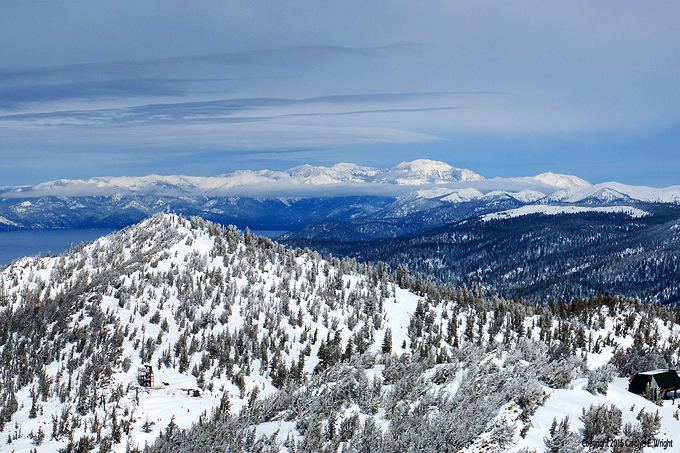
·       Squaw Valley Alpine Meadows Mountain Concierge is open at the Reno-Tahoe International Airport seven days a week from 6am-8p offering ski tickets, retail merchandise, sports equipment demonstrations and a guest lounge.

·       MyVHO.com, an automated platform for vacation rentals, is now providing Lake Tahoe WorldMark vacation rentals on the South Shore.

·       El Dorado County has redesigned its website.

·       Here is the Sierra roadwork schedule from Caltrans for next week.


Tensions rise over who gets Calif. water

Snowmelt and rain water issues are beginning to boil into political controversy in California. Photo Copyright 2016 Carolyn E. Wright

Snowmelt and rain water issues are beginning to boil into political controversy in California. Photo Copyright 2016 Carolyn E. Wright

By Ryan Sabalow and Dale Kasler, Sacramento Bee

With prolonged and steady rain falling on Northern California for the first time in weeks, tensions are rising over how to manage the stormwater flows now streaming through the Sacramento-San Joaquin Delta.

Saying too much water is flowing out to sea, U.S. Sen. Dianne Feinstein on Friday called on operators of the federal and state water projects to pump more water south through the Delta to drought-stricken farms and cities in Central and Southern California.

Federal regulators painted a starkly different scenario, saying they are shipping as much water south as legally allowed under the environmental restrictions imposed by the Endangered Species Act. Fisheries officials cited recent surveys showing that smelt and the winter-run Chinook salmon are on the brink of extinction.

Read the whole story


Placer dedicates funds to improve Tahoe

The Placer County Board of Supervisors voted this month to fund 11 in the Lake Tahoe Basin.

Money will come from grants and transient occupancy tax revenues.


The 11 new projects are:

  • Truckee River Trail restoration: The project will strengthen and improve various reaches of the Truckee River Trail between 64-acres Park and the entrance of Squaw Valley resort.
  • Tahoe City ice rink: Establishes a seasonal ice skating rink in the Tahoe City Public Utility District’s Winter Sports Park, scheduled to open next winter.
  • Truckee River access trail: The project will connect the north end of the existing shared-use trail at Squaw Valley Road north to the Placer County line at the town of Truckee near West River Street. The total trail distance is about 8 miles.
  • Tahoe City mobility improvements: The project will improve the lakeside shared use trail connection between Commons Beach and Fanny Bridge, parking and pedestrian access to Tahoe City’s downtown business core and pedestrian crossing facilities.
  • Squaw Valley bike trail and staging area rehabilitation: The project finalizes the rehabilitation of the asphalt surfaces of the Squaw Valley bike trail and the trail staging area located within Squaw Valley Park.
  • North Tahoe shared-use trail: Facilitates permitting of a trail connection between the Cedar Flat neighborhood and the North Tahoe Regional Park. The project extends the multi-use trail network in eastern Placer County by 6 miles, linking residential, commercial and recreational uses.
  • Tahoe Truckee Area Regional Transit bus shelter: Provides an attractive, durable and protective bus shelter for transit riders along the Tahoe Truckee Area Regional Transit route in the eastern Placer County region. The smart shelter uses GPS technology giving transit riders real-time bus arrival information.
  • Water trailway interpretive signage: Signage will provide useful water safety and resource conservation tips, as well as navigable paddle routes and distances to locate public beach access to shoreline businesses, nearby hiking trails, historic sites, lodging and campgrounds at six public launch landing areas within the eastern Placer County region.
  • Martis Valley trail design and construction” The project will provide a 9-mile, 10-foot-wide. multipurpose trail connecting Northstar Village to the Town of Truckee, and ultimately the Tahoe basin.
  • Solar-powered message boards” Installs a solar-powered message board at Squaw Valley-Alpine Meadows ski resorts, providing traffic updates, wildfire alerts, avalanche hazards, snow removal activity, mountain conditions and parking conditions.
  • Historic Donner Summit Gateway welcome sign and visitor kiosk” The project implements the first of two phases to install a welcome sign and visitor kiosk at the historic Donner Summit Gateway.


University jazz combo to play at STHS

The Pacific Jazz Combo will perform at South Tahoe High School’s theater on March 18 at 7pm.

The Pacific Jazz Combo comprises students from the University of Pacific Conservatory of Music. The group’s musical selections range from classic jazz masterpieces arranged by the members to original compositions.

Tickets are $15 for adults and $10 for children and will be available at the door. Money supports Tahoe Arts Project.

The Pacific Jazz Combo will be performing in the South Shore schools the week of March 14-18.