Rebel farmers create new food label

By Lisa Rathke, AP

THETFORD, Vt. — Was your tomato grown in dirt or water? Organic shoppers might notice additional labels this summer that will give them the answer — and tell them whether their choices align with what a rebellious group of farmers and scientists deem the true spirit of the organic movement.

About 15 farmers and scientists from around the country met in Vermont late last month to create the standards for an additional organic certification program, which they plan to roll out nationally to between 20 to 60 farms as a pilot this summer.

Read the whole story


Audit calls for Calif. to address homelessness problem

By Doug Smith, Los Angeles Times

California’s top auditor Thursday sharply criticized the state’s response to homelessness, recommending more spending and a stronger state role.

“California should do more to address homelessness,” the audit concluded. “California has more people experiencing homelessness than any other state in the nation, and it does a poor job of sheltering this vulnerable population.”

Other states with large homeless populations spend more per capita to shelter them and have single statewide entities dedicated to addressing homelessness, it said.

Read the whole story


Tahoe City Golf Course celebrating 100 years

By Kurt Althof

Tahoe City Golf Course, the oldest course at Lake Tahoe, will celebrate its centennial anniversary during the 2018 season with a variety of events and specials. 

Designed by May “Queenie” Dunn-Webb, golf pro and course manager in 1918, this year’s celebrations pay tribute to female athletes, pioneers and North Lake Tahoe History.

To kick off the special season, May 11-13 green fees for 9 holes will be 50 cents, a typical rate for golf after the turn of 20th century. 

On June 8, the course will host putting and driving contests for all ages using hickory stick putters and throwback equipment. Following the contests, Tahoe historian Mark McLaughlin will deliver a historical presentation on the Tahoe City Golf Course. Admission is free and subject to space available. 

On June 9, the course will host the Two Bills Heritage Golf Tournament with proceeds benefiting the Red Cross and the Tahoe City Recreation Association.  

On Aug. 19, in a nod to female-influenced beginnings, the greatest female golfer of this generation, Annika Sorenstam, will provide a junior golf clinic and demonstration followed by a Q&A and photo session. 

Following the demonstration, the course will host its inaugural family golf tournament encouraging generations to come together and form teams for this special community event. 

Throughout the season, every Tuesday (excluding July 3) will be May Dunn Day, offering a 9-hole lady’s rate of $19.18. Similarly, every Thursday (excluding July 5) is Throwback Thursday with 9-hole pricing of $19.18 all day for all golfers.

In addition to specials, the course will be the temporary home to a portion of golf historian Rick Lund’s extensive collection of historical golf equipment and memorabilia. The exhibit’s centerpiece will be a junior golf club made by and carrying the May Dunn-Webb name.   

Tahoe City Golf Course, originally the Tahoe Tavern Links, has a rich history in the Sierra. At the turn of the century, a railroad spur line brought guests to the Tahoe Tavern in Tahoe City. As the Tavern and the sport of golf gained in popularity a portion of the Tavern’s extensive holdings were set aside for a golf course.  The Tahoe Tavern commissioned the course in 1917, designed and built by May “Queenie” Dunn-Webb of the infamous Scottish golf family, the Dunns. First built as a 6-hole course with sand greens, the Tavern Links became 9 holes and 2,765 yards in 1921. The 9-hole tract has remained ever since, although the actual layout was altered in the 1940s.

The Tahoe City Golf Course was host to big money games in the 1950s, with players such as Bing Crosby, Bob Hope, the Mills Brothers, Ken Venturi, Harvey Ward, Frank Sinatra, Dean Martin, Sammy Davis Jr. and Andy Williams. 

For 100 years the course has provided a fantastic golf experience for everyone, from the rich and famous to aspiring junior golfers. The course has also given back to the community since its inception, hosting numerous charity events, including the first ever fundraising tournament benefiting the Red Cross in August 1918.   

Through several sales of the Tahoe Tavern, its outlying and separately deeded parcels were divvied up among the partners. Through this process the golf course became the property of Gordon and Pat Hyde in 1946. Just two years later, in 1948, the Hyde’s sold to Carl Bechdolt Jr. and wife Elsie. The course remained with the Bechdolt family until February 2012 when a consortium of public agencies led by the Tahoe City Public Utility District purchased the course, converting it into a public municipal course for the enjoyment of the community and its visitors.

Kurt Althof works for the Tahoe City Public Utility District.


Air pollution getting worse in El Dorado, Placer counties

By Molly Sullivan, Sacramento Bee

Sacramento, El Doraod and Placer counties have among the most polluted air in the United States.

In a report by the American Lung Association released this week, the city of Sacramento is fifth in the nation for ozone pollution, jumping up three spots from last year. Los Angeles and three Central Valley cities outrank Sacramento for pollution and average numbers of bad ozone days.


Placer, El Dorado, Nevada and Sutter counties also received “F” grades for having more than three unhealthy air days per year, according to the regional summary from the report. Yolo County received a “D.”

Read the whole story


Tahoe athletes inducted into ski hall of fame

Three Tahoe area athletes were inducted into the U.S. Ski & Snowboard Hall of Fame this month.

The locals were:

·      Six-time X Games gold medalist Shaun Palmer of South Lake Tahoe.

·      Steve McKinney, a legendary world-record speed skier from Squaw Valley. He was honored posthumously.

·      Hermann Gollner, a skiing pioneer and coach at Sugar Bowl and Squaw Valley.

The five other inductees were ski mountaineering brothers Michael and Steven Marolt of Aspen; world freestyle champion Ed Ferguson of Washington; U.S. cross country coach Marty Hall; and U.S. Ski Team trustee and foundation leader Thom Weisel.


Snippets about Lake Tahoe

·      Registration is open for the 35th annual Tahoe Tennis Classic at Zephyr Cove Tennis Club on July 26-29. More information is available online.

·      The Nevada Department of Agriculture urges horse owners throughout the state to vaccinate against West Nile virus. WNV can cause severe illness in a horse’s brain, spinal cord and nervous system.

·      Placer County planning commissioners on April 26 are scheduled to consider a conditional use permit for Verizon to install 75-tower disguised as a tree near Brockway Golf Course in Tahoe Vista.

·      South Lake Tahoe Earth Day Festival is April 28 from 10am to 3pm at Bijou Community Park.

·      The California Natural Resources Agency released a final report that recommends adding 37 miles of the upper Mokelumne River to the California Wild and Scenic Rivers System. The study report is available for review online.


Sierra mountaintop lab tracks some of the worst weather in U.S.

By Mike Wolterbeek

Winds that tear weather gauges from their mountings and blizzards that bury chairlifts – this is the kind of weather that hits Donner Summit, and holds great interest to climatologists, meteorologists, hydrologists and water supply managers as well as creates one of the best regions for skiing in the world.

While this winter has been mild in comparison, strong winter storms like the 10 atmospheric river events that moved through the Northern Sierra Nevada region during the 2016-17 winter season are not uncommon. Those systems regularly generated 173-mile per hour winds and delivered more than 700-inches of snowfall, with the snowpack reaching depths of more than 20 feet. The extreme weather was recorded in part by new instruments and technologies placed on a mountaintop in a collaboration between the UNR’s Nevada State Climatologist’s Office and Sugar Bowl Resort.

Scientists at the College of Science and officials at the Lake Tahoe area ski resort partnered to study regional weather and the impacts of climate change in the Northern Sierra by way of installation of three weather stations at the resort. The installation collects and provides important weather-related information that can be viewed by the public, updated every 10 minutes, and is shared with the National Weather Service, U.S. Forest Service and Sierra Avalanche Center daily. It can be viewed online.

In addition, the data collected provides Sugar Bowl Resort with important details relevant to their avalanche control and slope grooming operations.

“Less than an hour from the university’s campus in Reno, the nearly 8,400-foot summit of Mt. Lincoln is an ideal location for high-elevation climate observations,” said Douglas Boyle, associate professor in the Department of Geography in the College of Science and director of the Nevada State Climate Office.

“The university is interested in long-term monitoring of the weather and climate variables with the primary goal of observing changes in atmospheric winds, the associated high-elevation orographic-based precipitation, and the snowpack; the primary source of water for rivers, reservoirs, aquifers, agriculture, and millions of people in northern California and the east side of the Sierra Nevada.”
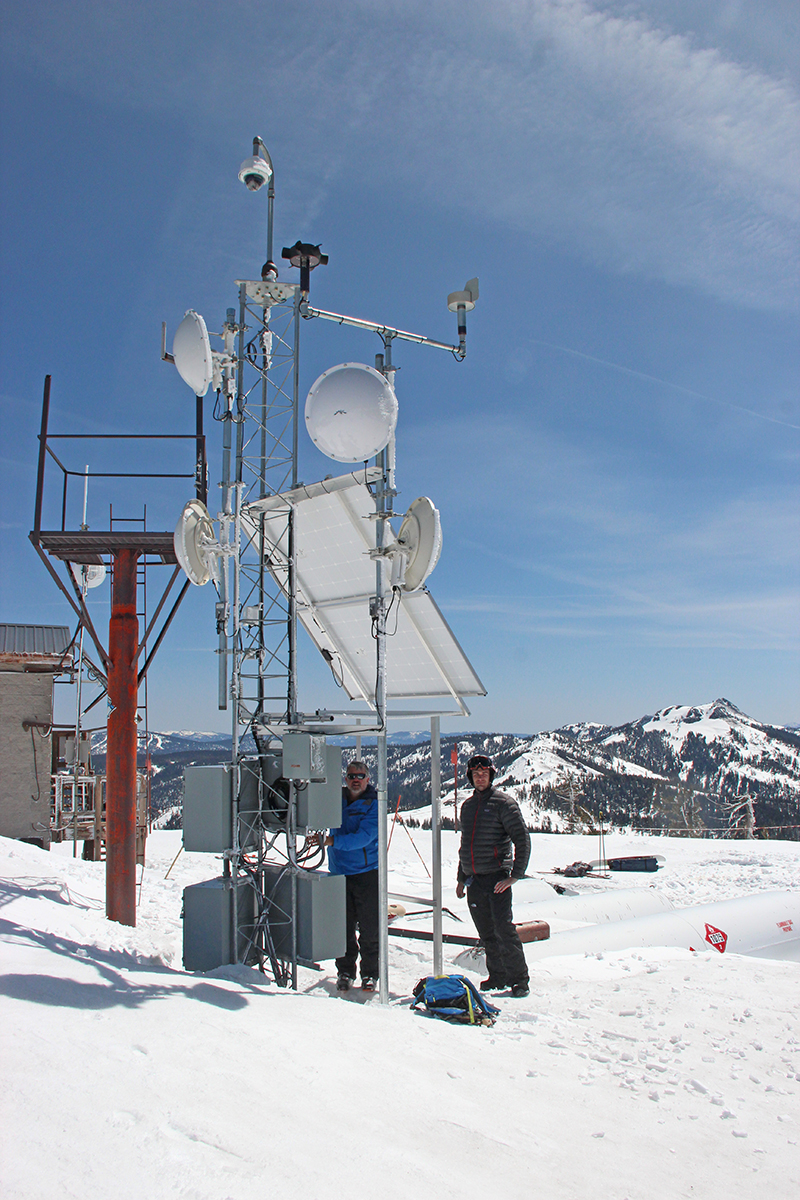
Nevada State Climatologist and Associate Professor Doug Boyle, and graduate student Paul Fremeau inspect one of three extreme weather stations at the crest of the Sierra Nevada at Sugar Bowl. Photo/UNR

The Donner Summit area, where Sugar Bowl is located, has climate records that go back to the late 1800s and there are twice-daily records at the Sugar Bowl Ski Resort that go back for decades. It is one of the longest continuous ski resort snow-recording sites in the country, and the ski resort continues the record keeping.

The new weather stations are operated by an internet-based system that uses the university’s AlertTahoe private high-speed microwave linked system that transmits real-time data, photos and video to scientists, public safety officials and Sugar Bowl’s professional ski patrol. The high-definition cameras have been installed at all three weather station locations at the resort. The mid-mountain station is at 7,558 feet and the base station is at 6,978 feet. These locations were selected in coordination with the Sugar Bowl Ski Patrol to best represent areas with snow across the entire resort to assist in decision-making for avalanche control and forecasting throughout the region.

“Sugar Bowl benefits from this partnership by gaining access to accurate real-time observations of weather and snow conditions that can assist with our operational decision-making and communications to our guests,” Greg Dallas, president and CEO of Sugar Bowl Resort, said. “Science-based snow reporting also offers the most consistent and authentic data available. We intend to use it to be even more transparent as it relates to our daily snow reporting. We also appreciate the value it brings to our entire region as the university team and other organizations receiving this data study the impacts of climate change in the Sierra.”

The partnership between the university and Sugar Bowl dates back to May 2014 when the university’s climate office was granted a 10-year permit to conduct high-altitude climate monitoring within the privately held property of the Sugar Bowl Corporation along the Sierra Crest near Donner Summit. Part of the 10-year permit includes the opportunity for university faculty to take advantage of this high-elevation climate observation network for educational purposes.

“This project has, and will, continue to serve as an excellent outdoor laboratory for studying mountain weather and climate,” Boyle said. “Since 2014, dozens of undergraduate and graduate students from the University have had the opportunity to visit and work with our weather sites at Sugar Bowl to learn about monitoring extreme weather and climate conditions. Feedback from students has been overwhelmingly positive.”

Since October 2016, the science team has been observing and recording air temperature, relative humidity, wind speed, wind direction, barometric pressure, precipitation, snow depth, water content and snow surface temperature automatically at the three Sugar Bowl Resort sites. Automated precipitation sensors were installed this year and the installation of automated water content, snow depth, and net solar radiation sensors will be installed early this summer.

“Sugar Bowl has been an amazing partner and collaborator on this project,” Boyle said. “Together, we have already learned a lot about the challenges associated with keeping these real-time observations available during extreme weather conditions, including transmitting microwave signals through 30- to 40-foot snow drifts, AC power outages, and heavy ice riming issues on the mountaintop equipment.

In spring 2016, the climate office partnered with Graham Kent, a geosciences professor and the Nevada State Seismologist at UNR, to include these weather/climate sites at Sugar Bowl Resort in the Nevada Seismological Laboratory’s multi-hazard monitoring and communications network that includes earthquakes, wildfire and extreme weather observations.

The state-of-the-art camera system, part of the AlertTahoe fire camera network, also provides real-time data, photos and video to first responders, scientists, public safety officials and other interested parties, and offers the ski area access to weather-related data that assists with their avalanche forecasting and mitigation, and snow reporting accuracy. UNR’s Climate Office installed, maintains and operates the equipment.

The wilderness internet network includes 25 fire cameras along the Sierra crest as far south as Mammoth Lakes and BLM lands in Northern Nevada. Another 10 cameras have already been funded and slated for installation this spring and summer. The addition of the extreme weather observations in the network will provide much needed real-time weather information to better understand avalanche conditions in the Sierra, snow levels over mountain passes, and aviation conditions in the region.

Mike Wolterbeek works for UNR.


Road Beat: Each Lexus seems better than the last

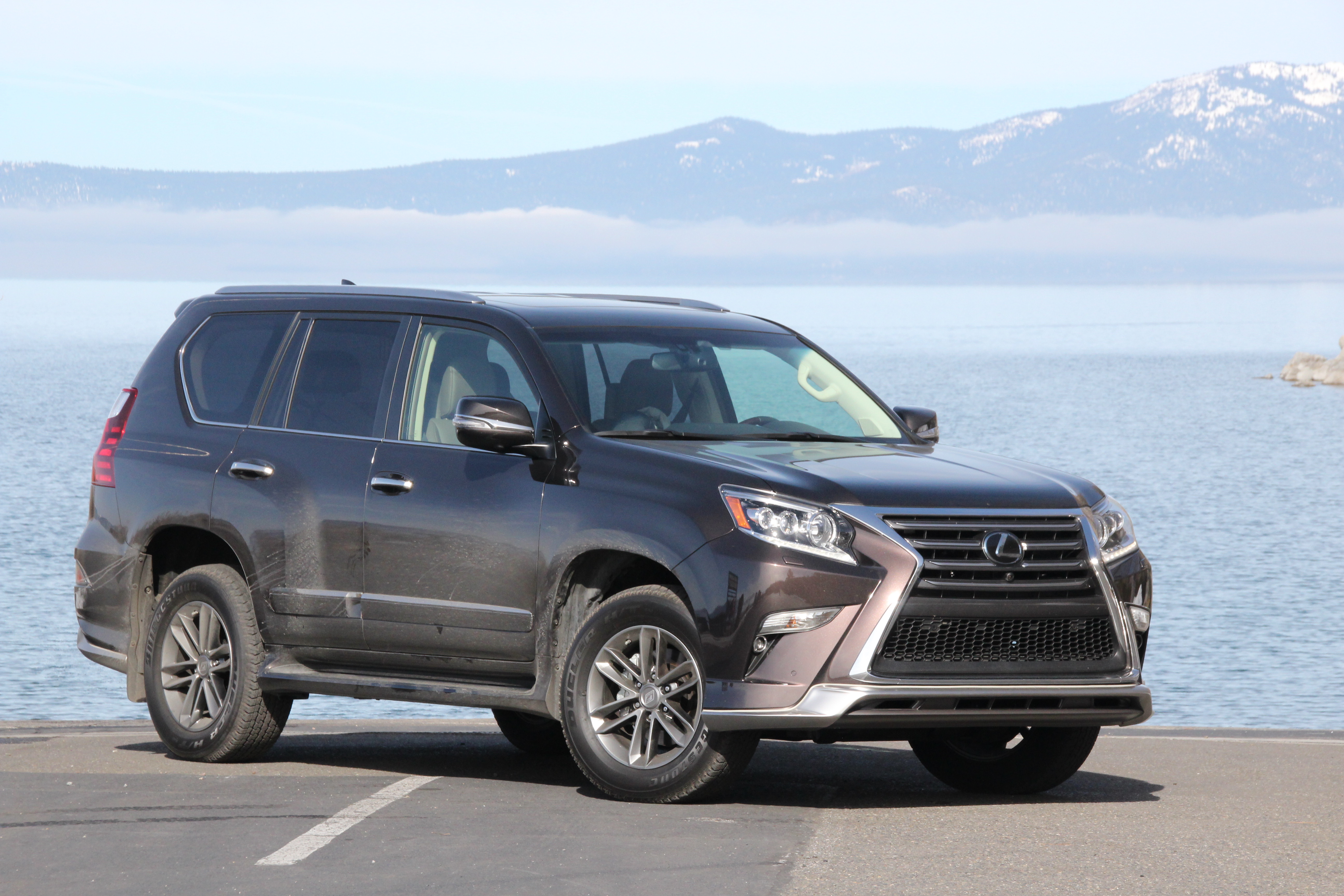
The 2018 Lexus GX460 will have you wondering if this is the best ride you’ve ever had. Photos/Larry Weitzman

By Larry Weitzman

I don’t have an answer, but this new GX460 midsize Lexus SUV seems to be the smoothest and best riding Lexus the Road Beat has ever tested. And I am including all Lexuses tested, including the unbelievably smooth ES300h. Each one seems to be an improvement over the prior Lexus tested. And that is improving on a bar that is already sky high.

Loosely based on the Toyota 4Runner, the GX becomes an almost entirely new ride that shows no resemblance to its would be, at best, second cousin. (Probably more like a fourth cousin). By loosely based, the GX shares wheelbases (110 inches and the basic chassis set up with an almost identical track at 62.4 inches). Suspension is a state of the art double wishbone up front and a four link well controlled live axle in the rear. Yes, the rear set up is non-independent, but in this case a super well controlled system which uses a Toyota/Lexus Kinetic Dynamic Suspension System (KDSS) which reduces body lean (head tossing) without making the ride feel stiff. More on that later.

Of course, while both the 4Runner and GX are two box designs, they are totally different with the GX getting a L-finesse look via the signature Lexus front end which in this case looks great, perfect proportions, muscular fender shapes and a great window line incorporating the GX themed rear window kink. It is a beautiful vehicle finished with exquisite Lexus quality. And with a co-efficient of drag at 0.35 it’s pretty slick to the wind.

Specifications
Price $52,850 to about $75,000
Engine
4.6L DOHC, 32 valve V-8 301 @ 5,500 rpm
329 lb.-ft. of torque @ 3,500 rpm
Transmission
Six-speed torque converter automatic
Configuration
Longitudinal front engine/AWD
Dimensions
Wheelbase 109.8 inches
Length 192.1 inches
Width 74.2 inches
Height 74.2 inches (with roof rack)
Ground clearance 8.1 inches
Weight 5,130 pounds
GVWR 6,600 pounds
Track (f/r) 62.4/62.4 inches
Steering lock to lock 3.0 turns
Turning circle 38.1 feet
Fuel capacity 23 gallons
Cargo capacity 64.7 cubic feet
Wheels 18X7.5 inches
Tires P265/60X18
Tow capacity 6,500 pounds
Coefficient of drag 0.35
Performance
0-60 6.73 seconds
50-70 3.64 seconds
50-70 uphill 5.32 seconds
Top speed — Who cares? It will cruise effortlessly, quietly and smoothly well above all legal speed limits in the United States.
Fuel economy
EPA rated 15/18/16 mpg city/highway/combined. Expect 16-17 mpg in rural country driving and 21 mpg on the highway at legal speeds.

Under the gorgeous hood is a 4.6L DOHC 32 valve V-8 with all the bells and whistles that cranks out 301 horses at a low 5,500 rpm, plus a solid 329 pounds of peak twist at just 3,500 rpm. It is connected to a silky-smooth six-speed torque converter auto cog swapper that drives all four wheels all the time. For serious work, GX gets an electronic locking two speed center differential. It has the capability to go just about anywhere a mountain goat might. But that first scratch on its incredible paint finish will be a killer. Let’s be honest, most GXs will rarely see anything but pavement, but when the weather turns really bad or the paved road ends even with foot deep ruts, the GX can keep on going without fear or considering its fabulous ride quality, without much disturbance to its occupants.

Excellent performance is about guaranteed by the aforementioned fab, super smooth and sounding V-8. A dead stop to 60 mph at full tilt boogie will arrive in just 6.73 seconds and that’s in spite of the anti-gravity forces created by its 5,130 pounds of mass. Passing is also equally satisfying with 50-70 mph runs of 3.64 and 5.32 seconds on the level and up a steep grade. GX gets it done. The throttle and tranny are very responsive. It is rated to tow 6,500 pounds and doing so should be a non-issue.

The EPA rates the GX at 15/18/16 mpg city/highway/combined or only a 1 mpg improvement over its slightly bigger brother the LX570 with a more powerful 5.7L V-8 of 381 horses. While the GX does a bit better than what the EPA says it should do by about two mpg, it’s better than its bigger brother. At 70 mph in a two-way run on a level highway, the GX averaged 21.1 mpg or about 2 mpg better than the LX. In a 200-mile run from Placerville to Carson City and return the GX averaged 20 mpg. Overall in 500 miles of testing the average was 16.8 mpg. Compared to a behemoth from the late 1950s or 1960s, this is remarkable fuel economy, especially considering it would just about blow the doors off most muscle cars, but hey, this is the 21st century. I’ll leave the political commentary to your imagination. Let’s just say I love this GX and most everything about it.

Handling is aided by reasonably quick electric power steering rack (3.0 turns lock to lock), big 18 x 7.5-inch alloys shod with meaty 265/60 rubber and the ability to tailor ride and handling from normal, sport and comfort. It makes this big Lexus becomes an easy handler with plenty of cornering power. It comes standard with all the electronic wizardry and during some aggressive corner exercises it actually intervened even though the GX was not even close to letting go. Most, if not all, GX drivers will never get to that point, but at least you know it’s really there and working.

Quiet is the key word for the GX, so much so even the muting is muted. And then there is the ability to absorb bumps. It’s about the best the Road Beat ever encountered and I recently said that about a related vehicle, the Land Cruiser. The GX has the edge here, that’s how good it is. My tester was the GX Luxury which adds Adaptive Variable Suspension and Adjustable Height Control with the former undoubtedly contributing to its incredible ride quality. The engine spins a low 1,750 rpm at 70 mph and this is one silent, smooth automobile.

Safety is everywhere. GX has just about every acronym, especially with the Driver Support package ($4,340) which also adds the Mark Levinson sound system. I already mentioned how the vehicle stability control system works, it does, maybe intervening a little too early for my tastes, but it works. Headlights are excellent especially with intelligent high beam control (low beams are LED).

Other items worth mentioning are the hill decent control, pioneered in the GX plus other systems of raising and lowering ride height and more.

Inside is all Lexus with extreme quality everywhere. Sublime seating is semi-aniline soft, thick leather. Seats are heated and cooled plus the steering wheel is heated. Materials on the doors, console, dash and elsewhere are some of the best ever encountered. Instrumentation is complete with a big tach and speedo flanking a center trip/info center.

The center stack while appearing complex is easy to use and there is no mouse. Looking at all the off-road system switches, there is probably no room. Thank goodness for small favors.

Being a square, upright SUV, cargo capacity is large at almost 65 cubes. Just have a look from the big, left side opening tailgate door.

Pricing for the GX the Luxury unit starts at $63,230 plus $995 for the luxo suite on the boat from its assembly plant Aichi, Japan. My tester had 10 grand in options, including a dual screen rear entertainment system ($1,970), a $1,950 Sport Design package, a Driver Support package ($4,340) which adds the Mark Levinson Sound System, radar cruise, auto high beams and some other good features and with some other smaller items brings the price of admission to $75, 072. Perhaps the real value is in the base GX which starts at about $53,000. It’s a superb vehicle any way you price it.

Larry Weitzman has been into cars since he was 5 years old. At 8 he could recite from memory the hp of every car made in the U.S. He has put in thousands of laps on racetracks all over the Western United States.


Shade gardening does not have to be boring

By Melinda Myers

A shady spot provides welcome relief from the summer heat; but it can make growing a beautiful garden a bit more challenging. Take heart, your landscape may receive more sunlight than you suspect and if not, there are quite a few shade-tolerant plants you can grow.

Evaluating the sun and shade patterns throughout the day, season, and year is a good place to start. Sun-loving bulbs need lots of sun early in the season before most trees leaf out, while other plants need sunlight throughout the growing season. If you work all day, you may assume those shady spots in the morning and evening never light up, so take some time to evaluate the sun and shade conditions throughout the season.

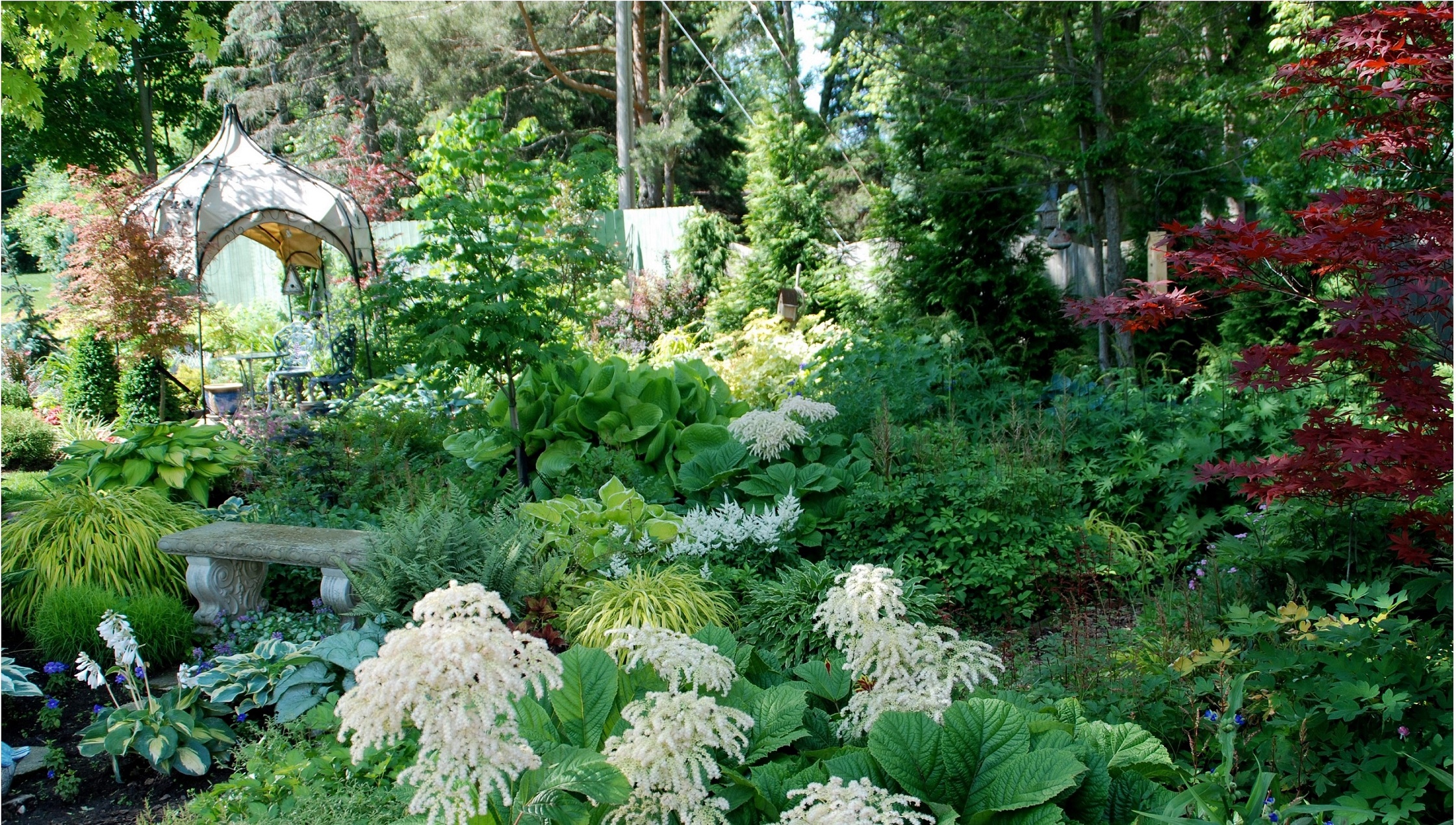
Utilize a variety of shade-tolerant plants in shade gardens to add beauty and interest to the landscape. Photo/Melinda Myers

Make a list of plants that you have had success with and those that failed in the shady location. Use these to help you select or avoid plants with similar light requirements. For example, if peonies bloom and tomatoes produce fruit this area receives quite a bit of sunlight, perhaps more than you thought.

If your landscape is too shady to grow the plants you desire, try increasing the sunlight reaching ground level plantings. Hire a certified arborist to thin the overhead tree canopy. They have the training and experience to do the job safely and correctly. You don’t want to damage the health and structure of established trees, so critical to the beauty of your landscape.

If there’s too much shade to grow even shade-loving plants, consider mulch to keep the mud in place, permeable pavers and a table or chair for relaxing, or a few steppers and moss to create a moss garden.

Once you’ve made your selections and planted your garden, you need to adjust the care to compensate for the limited light conditions. Plants growing under large trees or overhangs need to be watered more often, especially the first year or two until they become established. The dense canopy of many trees and impervious overhangs prevent rainfall from reaching the ground below. Plus, the extensive root systems of trees and shrubs absorb much of the rainfall that does make it through, so check soil moisture several times a week and water thoroughly as needed.

Tree and shrub roots can also compete with plantings for nutrients. Use a low nitrogen, slow release fertilizer like that promotes steady above and below ground growth. The 85 percent organic material further helps improve the soil. Apply slow release fertilizers at planting and once again for annuals mid-season. Fertilize new and established perennials in early spring and again in mid-summer as needed.

Avoid high nitrogen, quick release fertilizers that promote lush succulent growth that is more susceptible to insects and diseases. And with limited light as a potential plant stressor, this can increase the risk of problems.

When planting under or near trees be careful not to kill them when creating your shade garden.  Adding as little as an inch of soil over the roots can kill some tree species. And deep cultivation can damage the feeder roots critical for water and nutrient absorption since the majority grow within the top 12 inches of soil.

Here is a list of just a few shade-tolerant perennials to consider:

Woodland Wildflowers

Spring Flowering Bulbs

Grape hyacinths

Checkered lilies

Camassia

Daffodils

Virginia Bluebells

Perennial Flowers

Ajuga

Astilbe 

Barrenwort (Epimedium)

Bleeding Heart

Bugbane/Snakeroot (Actaea)

Columbine

Coral Bells

Deadnettle (Lamium)

Ferns

Foam flower (Tiarella)

Ginger (Asarum)

Hostas

Japanese Forest Grass (Hakonechloa)

Lungwort

Sedges

Siberian Bugloss (Brunnera)

Variegated Solomon Seal

Toadlily (Tricyrtis).

As always make sure the plants also tolerate your region’s climate. And once you start reviewing the internet and plant catalogues you may find it difficult to narrow down your choices to fit in your new shade garden.


Melinda Myers has written more than 20 books, including “Small Space Gardening” and “The Midwest Gardener’s Handbook.” She hosts the Great Courses “How to Grow Anything” DVD series and the nationally syndicated “”Melinda’s Garden Moment TV and radio segments.


Waterfall season at Tahoe a roaring sensation

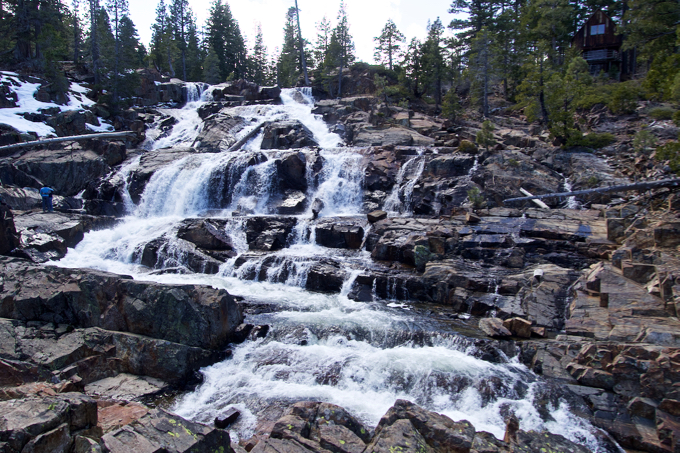
Glen Alpine Falls is at the far end of Fallen Leaf Lake. Photo/Kathryn Reed

By Kathryn Reed

With the burst of moisture in March and April, it is making waterfall season rather glorious right now.

The peak runoff usually doesn’t hit until later in May in the Sierra, so the rush of water should be flowing strong for several weeks, if not well into June. Plus, the temperature is supposed to be in the high 60s this week, which will just make the snow melt all that much faster. That’s a good thing for waterfall enthusiasts.

On the South Shore there are several waterfalls worth seeing. And not all of them require putting on a pair of hiking boots.

Glen Alpine Falls is raging. The multiple strands of water tumble down in ribbons across a wide swath of granite.


To get there, take the bumpy Fallen Leaf Lake Road until the falls come into view. Last weekend it was passable without four-wheel drive, but the El Dorado County maintained road is in horrible condition. Lots of other people last Saturday had the same idea, so it was a bit crowded at this gateway to Desolation Wilderness.

Up the road on Highway 89 is Eagles Falls. The lower falls are just off the road and descend into Emerald Bay. The upper falls are on the other side of the highway and require walking.

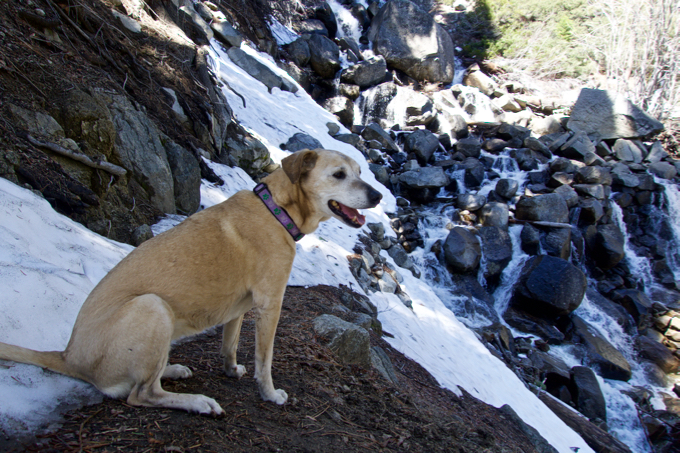
AJ runs out of trail at Hawley Grade Falls. Photo/Kathryn Reed

With this being the off season, it was surprising to see all the vehicles parked in the provided parking, along the highway and in ways that could have kept tow trucks busy.

Another fall that is worthy of a short hike is Hawley Grade Falls. It, though, also requires going down a poorly maintained county road in Meyers. Take South Upper Truckee Road almost to the end. There’s parking on the right.

Don’t let the mild river coming down the trail deter you. The reward at the end is well worth the climb – about a 900-foot elevation gain. Plus, it’s not that far. The few patches of snow are easy to traipse over with trail shoes.

The water is coming from Echo Lake, crossing under Highway 50. It empties into the Upper Truckee River, which in parts was raging a week ago.

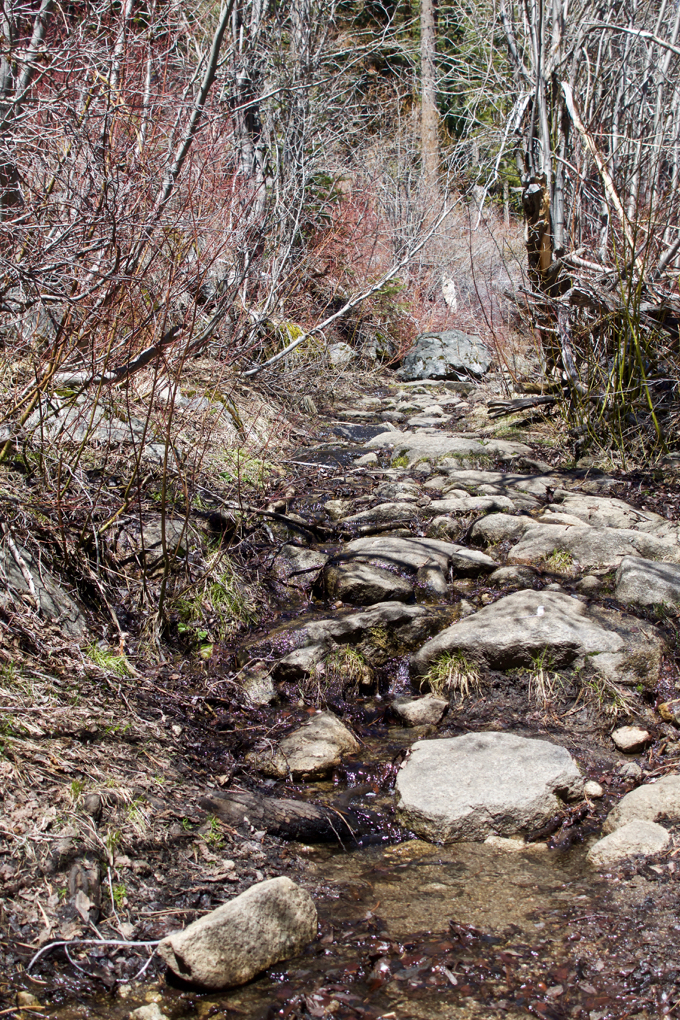
The Hawley Grade trail is wet in many parts, with the red manzanita branches adding color. Photo/Kathryn Reed

It looks like it will be a while before mountain bikers can safely cross Hawley Grade Falls to get to the other side. In summer, this is a popular trek.

The Hawley Grade was part of the Pony Express Trail in 1860. A granite plaque at the start of the trail explains some of this history.

For those who want easy drive-by falls, there are two along Highway 50 through the American River Canyon. One is Bridal Veil Falls. People often can be seen there taking pictures as well as filling up on water. Horsetail Falls is visible while driving west. This body of water comes from Aloha Lake and looks like a horse’s tail.