Roadwork delays West Slope developments

By Ben van der Meer, Sacramento Business Journal

Winn Communities is looking for an extension on entitlements for three housing projects in El Dorado County. But it’s not because of lagging confidence in the market, or even a lack of labor.

Rather, the company wants to complete needed road infrastructure first, saidGeorge Carpenter, a company vice president.

Carpenter said the three projects all got their tentative maps approved in 2005, before the housing meltdown of a few years later.

Read the whole story


Trees deal with climate change better than expected

By Tatiana Schlossberg, New York Times

The bend-don’t-break adaptability of trees extends to handling climate change, according to a new study that says forests may be able to deal with hotter temperatures and contribute less carbon dioxide to the atmosphere than scientists previously thought.

In addition to taking in carbon dioxide during photosynthesis, plants also release it through a process called respiration. Globally, plant respiration contributes six times as much carbon dioxide to the atmosphere as fossil fuel emissions, much of which is reabsorbed by plants, the oceans and other elements of nature. Until now, most scientists have thought that a warming planet would cause plants to release more carbon dioxide into the atmosphere, which in turn would cause more warming.

But in a study published Wednesday in Nature, scientists showed that plants were able to adapt their respiration to increases in temperature over long periods of time, releasing only 5 percent more carbon dioxide than they did under normal conditions.

Based on measurements of short-term temperature responses in this study and others, the scientists expected that the plants would increase their respiration by nearly five times that much.

Read the whole story


Snippets about Lake Tahoe

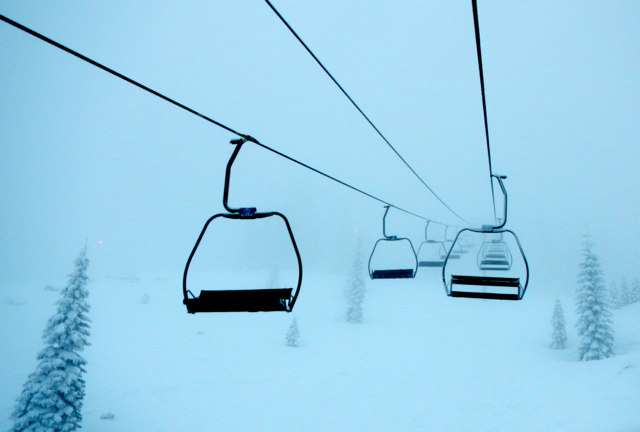
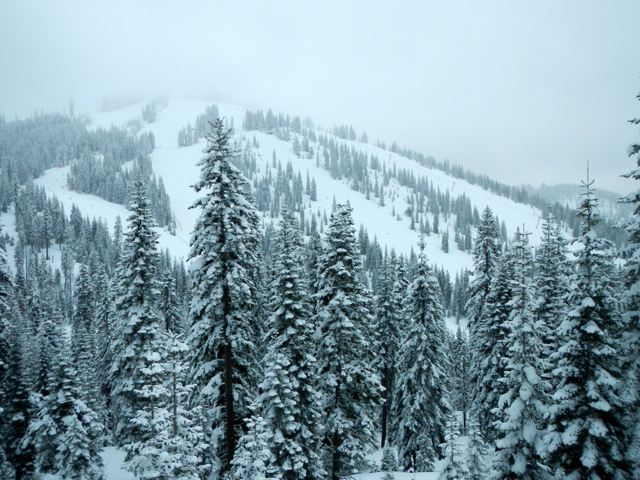
alpine·       Alpine Meadows and Squaw Valley expect to keep lifts running into May.

·       North Tahoe Public Utility District needs members for the Recreation and Parks Commission. For additional information and the application, go online.

·       Music, mountains and brews return to Squaw Valley Alpine Meadows for the second annual WinterWonderGrass Tahoe festival April 1-3. For more info, go online.

·       Choices for Children’s Day of the Young Child is June 4 from 10am-2pm at Lake Tahoe Community College. For more info, call 530.541.5848.

·       Here are the El Dorado-Tahoe and Sierra roadwork schedules for this week from Caltrans.


Winter to make brief return appearance

The calendar says spring so that means it is going to snow in Tahoe.

Winds are expected to increase today as the storm moves in. Rain will precede the white stuff, with snow levels starting today above 8,000 feet.

More rain and snow in the basin is expected Monday and into the night. According to the National Weather Service in Reno, the heaviest snow will be March 21 between 4 and 8pm. A chance of snow will linger into Tuesday

— Lake Tahoe News staff report


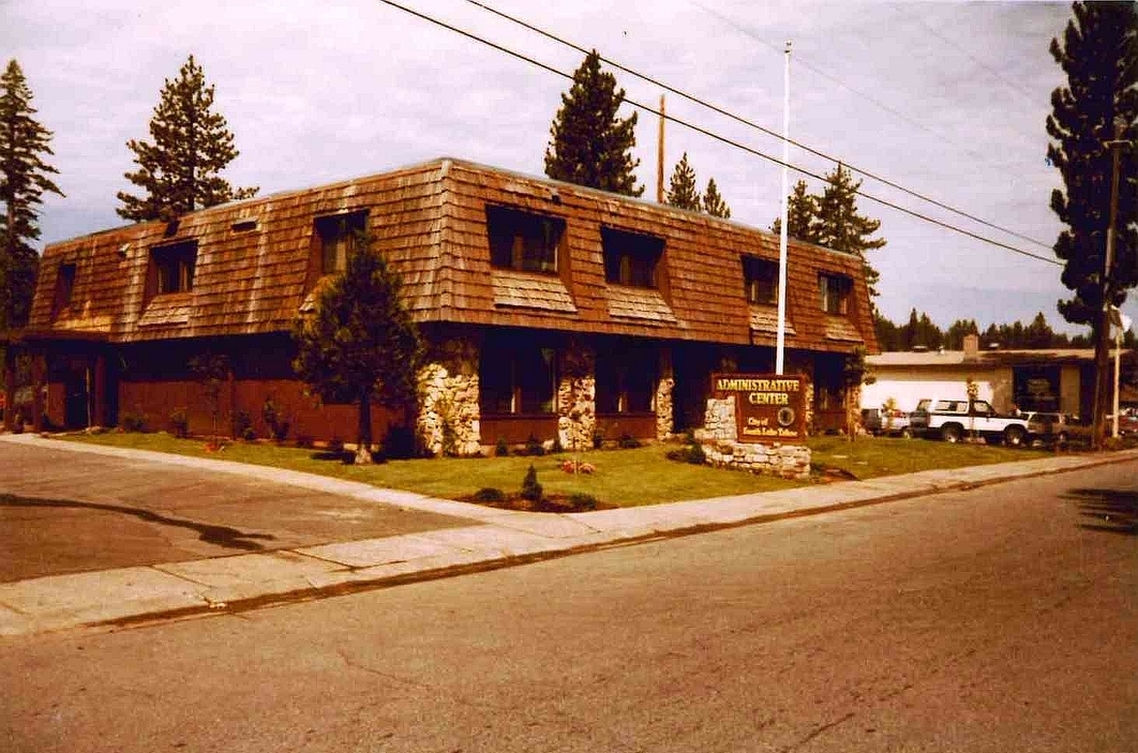
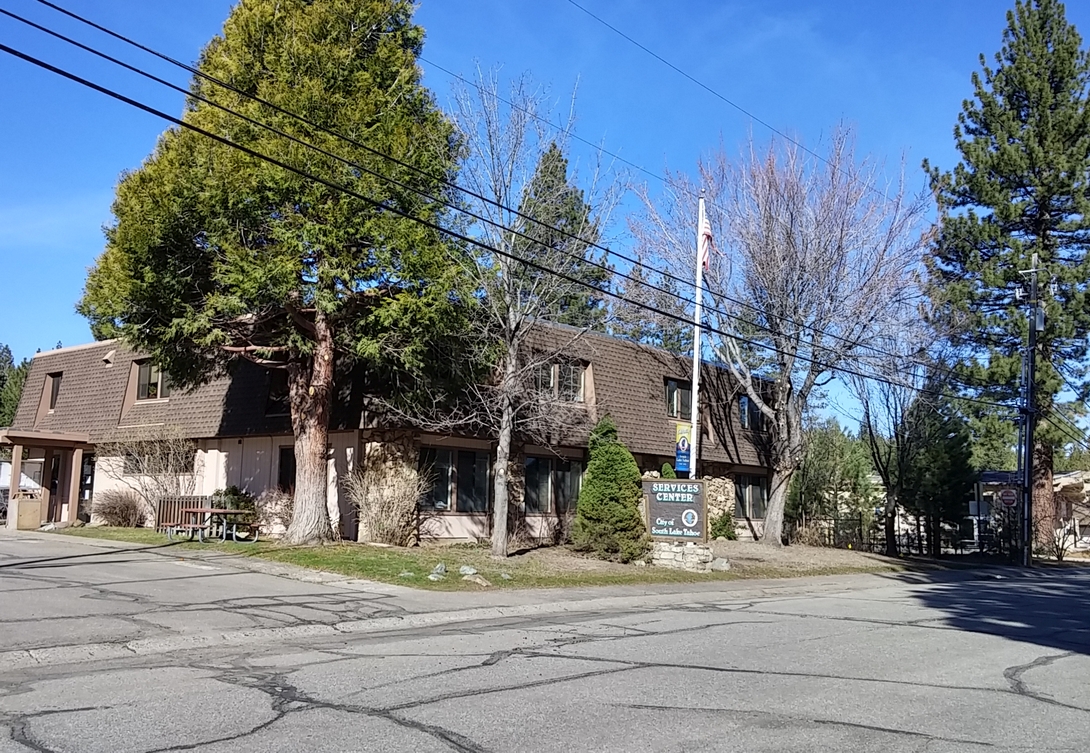
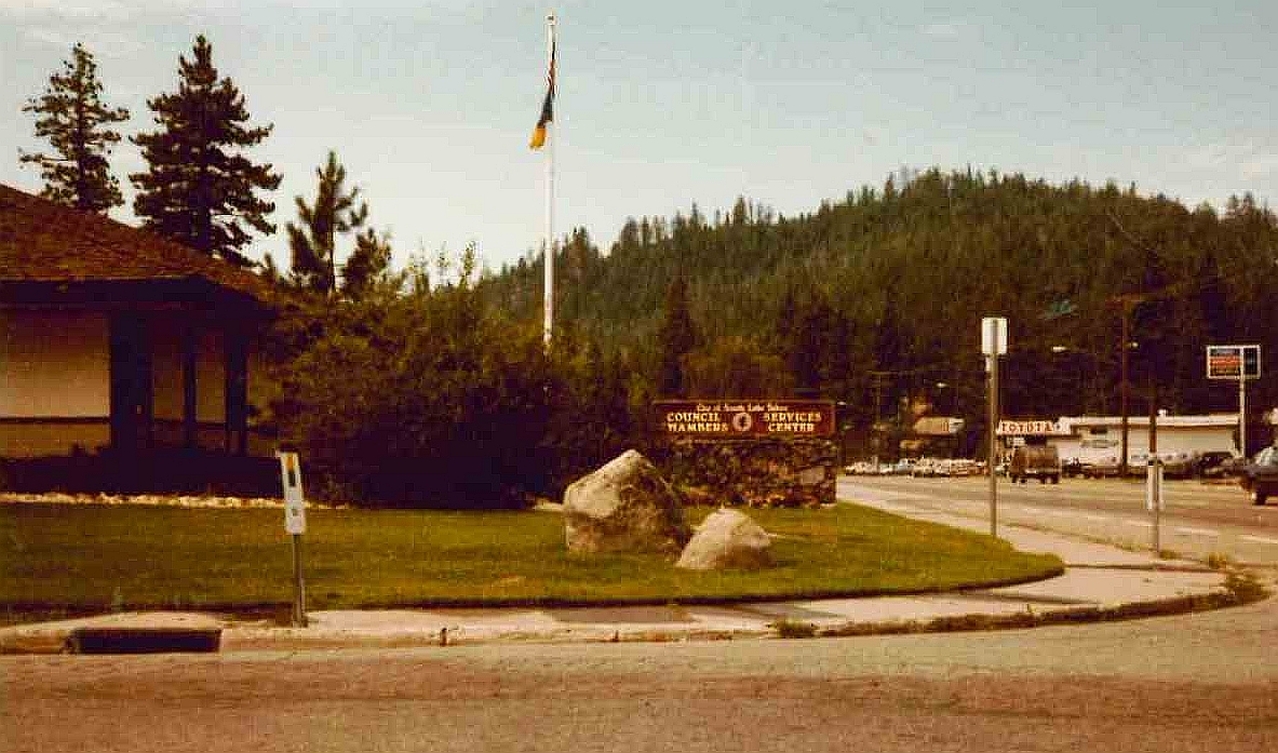
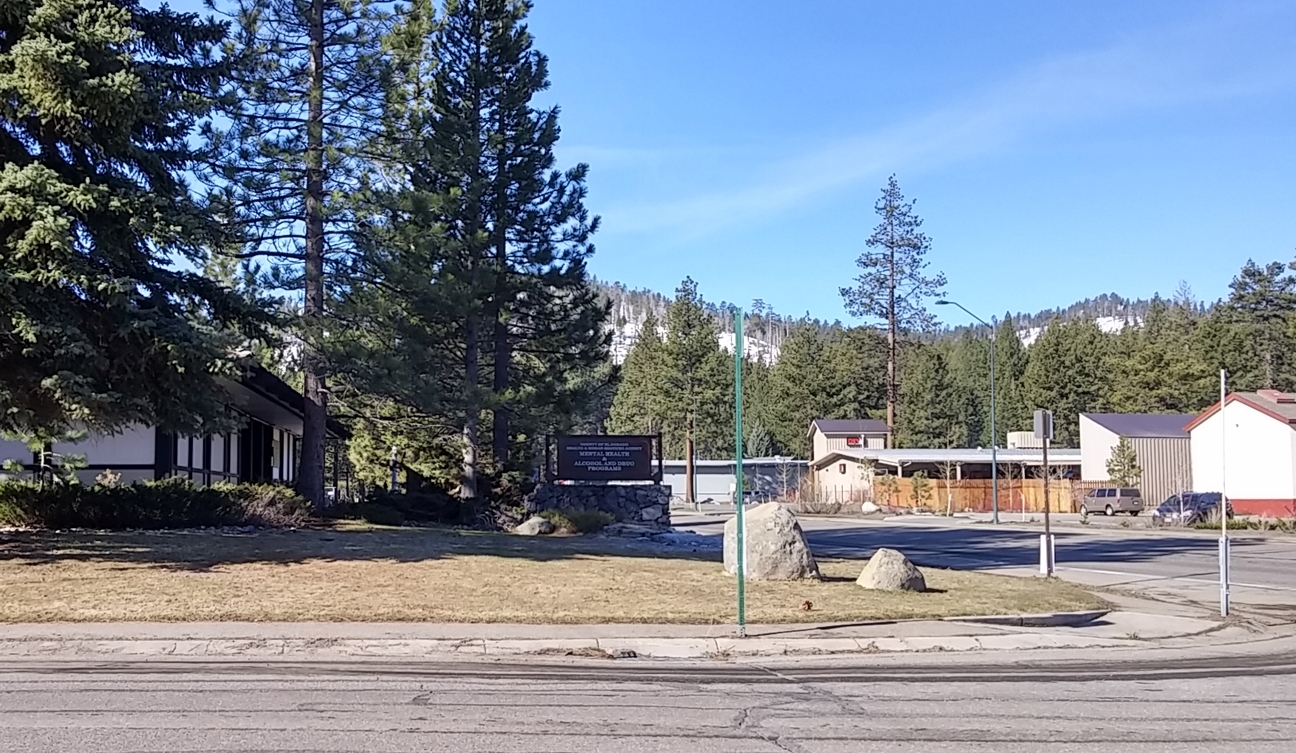
Then and now: SLT and Tata Lane

South Lake Tahoe's administrative center in 1984. Photo/South Lake Tahoe

South Lake Tahoe’s administrative center in 1984. Photo/South Lake Tahoe

In May of 1969, the city of South Lake Tahoe issued a building permit for a new office building at 1052 Tata Lane. The final inspection was February 1970, with the U.S. Forest Service as the owner and occupant.

Next door to the right was Don Weir’s Dodge dealership which later became Bernie Kass’ Tahoe Dodge and Datsun. It is now the Kmart Garden, Appliance & Furniture store.

In December 1982, the city pulled a permit for interior remodel and the 1052 Tata Lane building became the city administrative center.

South Lake Tahoe services center in 2016. Photo/Bill Kingman

South Lake Tahoe services center in 2016. Photo/Bill Kingman

South Lake Tahoe City Council chambers in 1984. Photo/South Lake Tahoe

South Lake Tahoe City Council chambers in 1984. Photo/South Lake Tahoe

In 1984, the City Services Center and the City Council chambers were at the corner of Tata Lane and Lake Tahoe Boulevard. Previously, this building housed the Pacific Telephone Business and Retail Offices when it was built by Pacific Telephone in the 1960s. The large display room, where one could select which Princess or wall or desk phone you wanted installed by PacTel, eventually became the City Council chambers.

El Dorad County offices occupy the building today. Photo/Bill Kingman

El Dorad County offices occupy the building today. Photo/Bill Kingman

The city administrative offices and council chambers moved to the airport and now this building houses El Dorado County Mental Health, Alcohol and Drug Treatment Programs.

So impressive in these photos is the trees growth.

My thanks to Judy Finn, associate planner for South Lake Tahoe, for her assistance.

— Bill Kingman


Mt. Shasta — small ski resort delivers big fun

Mount Shasta Ski Park is California's newest resort, having opened in December 1985. Photo/Kathryn Reed

Mount Shasta Ski Park is California’s newest resort, having opened in December 1985. Photo/Kathryn Reed

By Kathryn Reed

MCCLOUD – Mount Shasta Ski Park received the best 30th birthday present it could – snow. So much white stuff has fallen this season that the original planned closing date of March 12 has been moved to April 17.

This North State resort has had a couple tough years. It was open for four days in 2013-14. And while the resort allowed 2013-14 pass holders to use their pass last season, by January 2015 the resort was closed because of lack of snow.

The resort has snowmaking, but there are variables that are beyond its control like drought, rain instead of snow and having a mountain that mostly faces south.

This season the privately-held ski resort has had three of its busiest days since it open in 1985.

Fifty-five percent of the terrain is intermediate. Photo/Kathryn Reed

Fifty-five percent of the terrain is intermediate. Photo/Kathryn Reed

This is the second ski resort on the mountain. The first was known as Mt. Shasta Ski Bowl and was located at the end of Everitt Memorial Highway. It was open from 1959-78. Avalanches were a constant problem. The last year it was open an avalanche took out the main chairlift.

Most of the skiers who come here are from the Redding area. The resort doesn’t even market to Bay Area riders.

“This mountain is one of the best family mountains in the state,” Michael Smith, report spokesman, told Lake Tahoe News. “Because of the mix of skiing we have it caters to families much better.”

Looking at the resort from the parking lot it’s reminiscent of Homewood Mountain Resort where it doesn’t appear there is much terrain. Once on the mountain that myth is dispelled. It is also a bit like Sierra-at-Tahoe in that there aren’t many lifts. Again, once on the mountain one realizes the lifts are strategically located.

Shasta’s three chairlifts service 32 trails, 425 acres, with 1,435 vertical feet.

Earlier this month the resort hosted 30 high school teams that were competing in the California Nevada Interscholastic Ski and Snowboard Federation Championships.

Conditions were such that the lights for night skiing were on because visibility was sketchy. With the white stuff coming down, a thin layer of powder covered what had been groomed runs. It was light and fun to make fresh tracks even in mid-morning.

Mark the bartender pours one of the 13 beers that are on tap. Photo/Kathryn Reed

Mark the bartender pours one of the 13 beers that are on tap. Photo/Kathryn Reed

The lodge was full of people eating and drinking. The weather was too yucky to enjoy the deck, which was nearly doubled in size in 2013.

Thirteen beers are on tap – most from surrounding breweries. They are rotated, with the brewmaster sometimes on hand to share his expertise.

While there has been talk for 15 years of expanding the resort north into the Grey Butte area of the mountain, there is no publicized time line of when this might happen. Smith said with the resort not making money for three years, that type of capital investment isn’t in the works right now.

The price for skiers is reasonable — $39 for an adult mid-week ticket, $54 on Friday-Saturday-Sunday and holidays.


Opinion: Diversity in state, national parks important

By Richard Rojas Sr. 

During my more than 30-year career as a California state park ranger, I was known as the diversity guy because I was one of the few Latinos to wear the park ranger uniform.

Similar diversity deficits exist across most park systems. The National Park Service workforce is only 5 percent Latino, a paltry representation. And that lack of diversity among rangers is, unfortunately, matched by a lack of diversity among the people who visit the park.

While we often think about parks as places for preservation—and they are—I am convinced that the parks’ ability to change and to reflect the country’s diversity is the defining issue for the future of the nation’s public lands. In this as in so much else, California is our best hope for the future.

California parks are rich in natural splendor and cultural heritage. The state’s 279 parks preserve nearly 1.6 million acres of winding coastlines and pristine wilderness, and offer more than 15,000 campsites and 4,500 miles of trails for the public to visit and explore.

Anyone who has stood amongst California’s towering redwoods, hiked the desert landscape, or experienced stunning mountain vistas knows that nature is transformational. As a park ranger, I heard stories from people who found inner peace, and walked away with a sense of responsibility for our natural treasures.

Yet, among these stories, what always stood out to me were the voices that were missing.

A survey commissioned by the National Park Service in 2009 found that only 28 percent of African-Americans and 32 percent of Latinos reported visiting a national park in the last two years, compared to 53 percent for whites. Similarly, a visitor survey found that Latinos represent only 11 percent of Yosemite visitors, even though they represent 38 percent of the population in California.

Unfortunately, the California State Parks system doesn’t track visitor information, but during my time as a ranger it was obvious that many are being left out of this quintessential experience. The diverse California we see in our communities is not the California you see in campgrounds and on hiking trails.

Diversity matters for several reasons. We need every Californian—and every American—to be a champion for our parks systems. When budget cuts loom, resources for parks are typically first on the chopping block—and in California, cuts have led to the closing of parks and reductions in hours and maintenance. We’ve also seen Californians of all kinds support parks. Over the last decade, voters approved almost $10 billion in statewide, park-related bonds, with polls showing overwhelming support from Latino and black voters.

Last year, a commission created by Gov. Jerry Brown published the Parks Forward recommendations aimed at increasing access to the outdoors. The report aims to have the demographics of park visitors reflect those of state residents by 2025.

To reach the report’s ambitious goals, several immediate steps are necessary.

We need to make park staff more diverse so that visitors from all walks of life see themselves as part of the parks experience. The California Department of Parks and Recreation assembled a transformation team that has made it a priority to hire staff that reflects the demographics of the state.

The department also needs to scrub outdated rules that can discourage people from visiting. For example, state campgrounds only allow for eight people and two cars per campsite. That’s a huge deterrent for people seeking space for multi-generational family events or group activities.

We can no longer expect people to find their own way to the outdoors. One promising demonstration project will build partnership with local organizations to get residents who don’t traditionally visit state parks into our parks, both urban and wilderness. In Los Angeles, the department has partnered with organizations such as Latino Outdoors to invite first-time campers to new popular overnight events at Rio de Los Angeles State Park. In his proposed budget, Governor Brown committed almost $700,000 to pilot this idea in Los Angeles and the Bay Area.

The parks of the future need to become social gathering places. Surveys indicate that people want to picnic, play, congregate, and explore in the outdoors. Providing these opportunities can be as easy as installing more benches and reconfiguring campsites to accommodate bigger groups. But understanding that our parks are not currently serving the needs of all Californians is the first step in making them welcoming spaces for all.

Richard Rojas Sr.  is board chairman of Latino Outdoors, a Latino-led organization that focuses on conservation and the environment. He was a California state park ranger for more than 30 years.


Cereal, a taste of nostalgia at a crossroads

By Kim Severson, New York Times

King Vitaman and I were tight when I was young. Sweetened cereals were a rarity in my house, so beating my siblings to breakfast was the only way to make sure the king and I would have some time together.

I got up early to follow his animated adventures on the back of the box. Even the ingredient list, with its parade of unintelligible words and the promise of a full day’s supply of vitamins and iron, seemed endlessly fascinating. I was rapt until the bowl was empty and his sugarcoated golden crowns had turned the milk to syrup.

Now, I watch my young daughter stare at her cereal box in the morning, pondering a stalk of organic wheat or the plight of a koala. I wonder if she will ever have the sentimental pleasure of her own King Vitaman.

Breakfast cereal, both as a cultural marker and a profit center, is at a crossroads. Since the late 1990s, its popularity has been slowly fading. Sales, which totaled $13.9 billion in 2000, dipped last year to about $10 billion.

Read the whole story


Gaming regulators OK licensing for Caesars CEO

By Richard N. Velotta, Las Vegas Review-Journal

The Nevada Gaming Commission unanimously approved the licensing of Caesars Entertainment President and CEO Mark Frissora on Thursday despite two new issues raised since the state Gaming Control Board’s favorable suitability hearing for him earlier this month.

Frissora, the former top executive for Hertz Global Holdings, spent more than an hour taking questions from commissioners about his departure from that company as well as two new concerns.

Commissioners questioned Frissora about two issues: a U.S. Bankruptcy Court-ordered report issued Tuesday that said Caesars and its private equity backers could be on the hook for $5 billion in damages; and a matter raised in a public-comment period about problems that former company executives have experienced with their pension funds.

Read the whole story


Calif. pension obligations nearly $64 billion

By Associated Press

California has nearly $64 billion in pension debt that eventually must be paid to current and former teachers and state workers — a figure more than $20 billion higher than previous estimates, state Controller Betty Yee reported Friday.

Yee disclosed the higher pension liability for the first time in California’s comprehensive annual financial report, using a new calculation aimed at more accurately reporting the government’s financial responsibilities. It reflects the state’s unfunded retirement debt as of June 30, 2015.

The “net pension liability” reflects the state’s unfunded retirement costs as of June 30, 2015. California had previously reported a different figure, the “unfunded actuarial liability,” which was $40 billion a year earlier.

Under requirements of the Governmental Accounting Standards Board, state and local governments nationwide are using the new calculation to report their unfunded pension debts. They also must now be included on the balance sheet alongside other government debts, such as bonds, claims, judgments and long-term leases.

As a result, California ended the year $175 billion in debt, up from $119 billion the prior year.

The new rules will increase transparency, Yee said in a statement, “which will in turn focus local and state governments on ensuring they adequately plan for these important long-term obligations.”

Yee said she expects other employment-related benefits, such as retiree health care costs, to be reported in future years, further driving up the deficit on California’s balance sheet.

The new reporting requirements allow state lawmakers and local government leaders to make more informed decisions about pension benefits, said state Sen. John Moorlach, R-Costa Mesa, a certified public accountant who has been publicly highlighting pension costs as they’re reported by local governments.

“I’m embarrassed that my profession failed to make this requirement 30 years ago,” Moorlach said. “Now most states are in pension-plan debt up to their eyeballs, and the problem is ubiquitous.”

The financial report said California collected $117 billion in revenue during the last fiscal year. That was up 12 percent from the previous year, mostly from a sharp uptick in personal income tax collections. The general fund had enough cash at the end of the fiscal year to pay for 20 days of operations, up from 16 a year earlier, the report said.