Joint effort lands repeat offenders in jail

Operation Safer Streets culminated with eight people being arrested on charges of violating conditions of their supervision and four non-supervised individuals were arrested for allegedly committing new crimes.

Operation Safer Streets was a multi-agency collaborative effort to perform personal contacts on high-risk offenders under the supervision of the Division of Parole and Probation. It took place March 18-19 in Douglas, Washoe, Carson and Lyon counties.

Officers performed 74 home contacts, four employment contacts, four field contacts, 40 drug tests, and 28 K-9 searches.  In addition to meeting with offenders, officers performed 48 personal contacts with members of the community to verify offender compliance.


Grassroots effort under way to change SLT

By Kathryn Reed

Creating a voice for the 80 percent in the middle, not the fringe on either side. That was the impetus to bring together a group of about 50 people on Tuesday. The discussion was all about how to make South Lake Tahoe better.

While Jamie and David Orr of Tahoe Mountain Lab facilitated the meeting, they didn’t take ownership of it per se. Their goal was to get people to discuss issues in a positive way that leads to action. It’s not that the group as a whole will do something – or it might. Talking about change and how to make it happen was the bulk of the discussion.

“This meeting is to build trust in the community,” David Orr said to the packed group at the American Legion on March 23.

Building trust started with listening and sharing.

It was a diverse group who came out, with most admitting they met new people that night, and learned a thing or two.
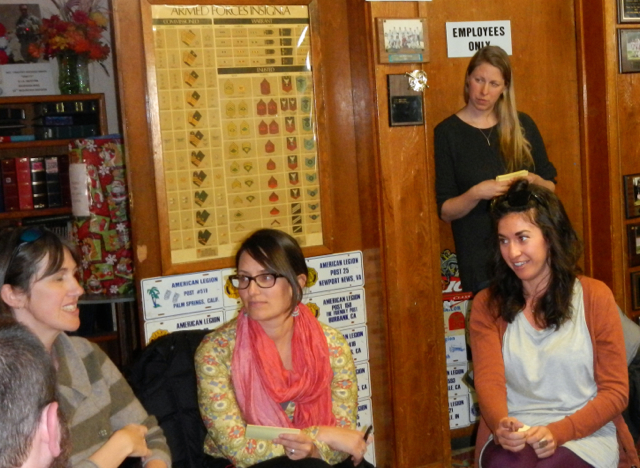
Jamie Orr, standing, listens as people discuss what they want for the future of the South Shore community. Photo/LTN

Jamie Orr, standing, listens as people discuss what they want for the future of the South Shore community. Photo/LTN

Everyone was asked to name one local issue they care about. The answers included: education, poverty, economic development/sustainability, recreation, affordable housing, divisiveness in the community, environment, strong community, homeless veterans, broadband Internet, pet welfare, climate change, clean energy, children, blight, the number of voters – or lack thereof, bear boxes, natural resources, higher education, and health care.

Seven smaller groups were formed – with the goal of people splitting up from friends – and they were to address two questions:

·       How can I as a person make an impact on the community?

·       How can this group make an impact on the community?

It was a collegial gathering, with some people leaving eager and inspired to bring about the change they envision, while others looked at things a bit more skeptically.

City Councilman Austin Sass told his group and the larger one it’s great people want the council to do X, Y and Z, but at most he receives three emails a week from people about an issue. So, while people might want change, they aren’t talking to the people who can help make it happen.

At the end of the night individually people were asked to either talk about what they heard that they like that was not their idea/concern or what they will commit to do going forward.

Answers included: people in El Dorado County want better ways to impact city issues, getting people to vote, create a publication for new residents, paying more attention, finding two people to run for City Council, getting friends involved, helping groups to collaborate — building trust and bridges, accountability, communication, political action, reach out to the City Council, and get Latinos involved.

The consensus was to meet again. Next time it will be a different organizer.

“It’s time to get to work,” Jamie Orr said as the meeting ended.


Letter: Oxygen depletion needs to be addressed

To the community,

As I walk through Tahoe neighborhoods and open spaces, I can’t refrain from glumly noting stumps where once trees stood. Before the Angora Fire of 2007, trees were cherished and protected from cutting. Since then they have been deemed hazardous and under assault by many.

Trees in my neighborhood alone have been removed by the USFS, the fire department, California Tahoe Conservancy, Liberty Utilities and developers. Elsewhere, DOT has removed trees along roads. The city of South Lake Tahoe took out many to develop Lakeview Commons at El Dorado Beach. California and the western states have lost thousands of acres of forests from fires. Otherwise, many trees are stressed or dying from drought and pests. Global deforestation is widespread.

We should be alarmed by the loss of trees both here where we live and around the globe. Trees and phytoplankton are the two most important sources of the oxygen we breathe; 10,000 years ago, forests covered twice the land area of today. The trees back then produced twice the oxygen of contemporary forests. Researchers have determined that during the dinosaur era, the atmosphere was far richer in oxygen. It comprised 30 to 35 percent of the atmosphere, whereas now it is slightly less than 21 percent.

Climate change resulting from increasing levels of CO2 is much in the news these days. I have never once come across a discussion of oxygen depletion. However, there are people who are concerned. The Scripps Institution of Oceanography at La Jolla has been measuring steadily declining oxygen levels since 1985 (see http://scrippso2.ucsd.edu/). Other European researchers are also seeing a decline. Oxygen is falling two to four times faster than CO2 rises. NASA has noted in the north Pacific that oxygen producing phytoplankton concentrations have alarmingly dropped 30 percent compared to the 1980s. Nearly 150 dead zones in the world’s oceans have been identified. These are likely caused by discharged sewage, industrial waste and fertilizer runoff. Also causing oxygen depletion is wide-spread deforestation, increasing fires and tree mortality.

We lose three oxygen molecules for each CO2 molecule that is produced by burning fossil fuels. A 30 percent increase in CO2 has occurred since the beginning of the Industrial Age. Depletion of oxygen will continue until we stop burning hydrocarbons faster than the environment can absorb the byproducts and replenish oxygen. Forests are extremely important in this process and need to be intelligently managed.

Sufficient oxygen is needed for body health to keep cells, organs and the immune system functioning efficiently. Oxygen deficiency for humans is set at 19.5 percent. Below that, loss of consciousness and death can occur. Air is less pure in polluted cities than in the Sierra. Current reduced levels in cities may be contributing to the development of cancers and other degenerative diseases. It is clearly in everyone’s best interest to be stewards of trees, to protect and encourage their growth, not get rid of them.

Monitoring CO2 in relation to climate change is not enough. It may become critically important for life on earth to ensure a sufficient supply of oxygen. It can’t go on like this if we expect to live here.

Liana Zambresky, South Lake Tahoe


Crossblades, a snowshoe-ski hybrid

By Erme Catino, Outside

If a snowshoe and a backcountry ski had a baby, you’d get something like the Crossblade, which was released last month at ISPO 2016, Europe’s ski trade show.

Like a snowshoe, this thing’s principally meant for going uphill. But it eschews metal teeth in favor of a smaller version of a climbing skin that you’d attach to backcountry skis. At the top of the hill, just unclip the rigid platform holding the skin, flip it over, and reattach it to the base of the blade to reveal a smooth surface with metal edges (unlike touring skis where you take the skins off).  Adjustable bindings work with either winter hikers or ski boots.

When you’re on hard snow, the base and metal edges ski a lot like snowblades (those incredibly dorky, miniature twin-tip skis for rent at your local hill). But when you’re in deep snow, the Crossblades sink to their wider, upper platform, turning them into powder boards for a little better float. You’d flounder in waist-deep fluff, but they might be fun in six inches or less of fresh.

Read the whole story


Teens become educators about perils of smoking

Incline High School students on Thursday will become teachers.

Teens Against Tobacco Use is a program that allows students ages 14-17 to mentor younger students about the dangers of smoking.

IHS leadership students have been working with Lisa Sheretz of the American Heart Association to expand smoke free environments where people work, learn, live and play in Incline Village.

The teens will work with 200 Incline Elementary School fifth-graders on March 24.

Research indicates that peer pressure and initial experimentation with tobacco starts as early as the age of 10 years of age.


Timeshare hard sell comes roaring back

By Gretchen Morgenson, New York Times

For more than 25 years, Mary Ann Gutierrez, 77, has spent several weeks a year in South Lake Tahoe, often playing host to her children and grandchildren at one of two timeshare units she owns.

When she checked into one of the properties last year, she was stopped at the front desk. A $100 gift card would be hers if she attended a presentation by Diamond Resorts International, the company that owns the resort. But first she had to fill out some papers and supply her credit card information.

The gift card came with a cost, as Gutierrez soon learned. For five hours, she said, Diamond representatives pushed her to give up both of her timeshare deeds, including one at the nearby Tahoe Beach & Ski Club, a resort that Diamond does not own. With the upgrade and membership in Diamond’s ownership points system, they said, she would keep her maintenance costs low and could use her points at other resorts in the company’s network. It would cost just $30,000 upfront, they said.

Even when representatives suggested her maintenance fees would rise if she didn’t switch, Gutierrez kept declining, saying that the cost was too high. Undeterred, the Diamond representatives suggested that she ask her children to pay for the upgrade. She continued to say no and, at last, they let her go.

“They weren’t going to let me out that door,” Ms. Gutierrez said. “I was shaking, I was so nervous.”

The feeling turned to shock, however, when a Diamond representative handed her a record of a voided charge in the amount of $4,840 on her credit card. The representatives had been so certain that she would agree to the offer that they had charged her card for the down payment — even though she had not given approval.

Read the whole story


Suspected serial bank robber sought by FBI

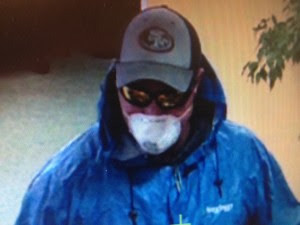
This man is wanted in connection with multiple bank robberies.

This man is wanted in connection with multiple bank robberies.

The FBI is seeking information that may lead to the apprehension of an armed and dangerous bank robber who has robbed seven banks in Northern California and may have cased one bank.

Dubbed the “Bad Breath Bandit” for his use of a disposable paper face mask during the commission of most of the robberies, the suspect is a Caucasian male who stands approximately 6-feet tall, weighs between 210-250 pounds, with a medium build, and has dark hair.

He is wanted in the following robberies:

  • June 17, 2014: Tri-Counties Bank located at 305 Railroad Avenue in Nevada City (possible casing); Bank of the West located at 460 Brunswick Road in Grass Valley
  • Sept. 25, 2015: Umpqua Bank located at 7843 Highway 99 East in Los Molinos
  • Nov. 13, 2014: Tri Counties Bank located at 9411 Midway in Durham
  • Feb. 5, 2015: 22712 Main St. in Columbia
  • March 30, 2015: Tri Counties Bank located at 305 Railroad Road in Nevada City
  • May 18, 2015: U.S. Bank located at 236 Main St. in Chester
  • March 21, 2016: El Dorado Savings located at 6310 Highway 193 in Georgetown.

— Lake Tahoe News staff report


Bay Area man convicted of robbery in SLT

A jury this week convicted a Bay Area man in the armed robbery of people outside the CVS drug store in the Bijou Center in South Lake Tahoe.

Adam Sanford

Adam Sanford

Adam James Sanford, 32, of Hayward was convicted of two counts of robbery, two counts of attempted robbery, four counts of assault with a semiautomatic firearm, as well as special allegations for use and discharge of a firearm and use of a deadly weapon in the commission of a robbery.

Officers started looking for Sanford after two South Lake Tahoe men called about 7:10pm Nov. 13 to say one of their wallets had been stolen by a man brandishing a gun and long-bladed knife. They were near the CVS. Then there was a report about the same time of the suspect firing at least one round after robbing two Tahoe basin residents at the rear of the Tahoe Beach Retreat Hotel. Officers nabbed Sanford after they saw him walk across Highway 50 to the Safeway parking lot.

At the time he was on probation from Sacramento County for burglary.

Sanford is scheduled to be sentenced April 18 in El Dorado County Superior Court.

— Lake Tahoe News staff report


Sierra to host annual Buckle Up for Big Air

The Buckle Up for Big Air-Slopestyle event, in remembrance of Sierra-at-Tahoe team rider Greg Taylor Smith, is March 26 at the resort.

A favorite event with locals, it’s fun while raising awareness about seat belt safety and the ever-present need to buckle up whenever you’re in a car.

Topping off the day will be live music from Fish out of Water featuring all-original rophunk raehop (Rock, Funk, Reggae + Hip-hop) jams.

Awards and safety demonstration will follow the event.

The event starts at 8am.


Obama seeks more coordination on dealing with drought

By Darlene Superville, AP

WASHINGTON — President Obama on Monday directed the federal government to come up with a less reactionary and more long-term strategy for dealing with drought.

About 12.5 percent of the continental U.S. was experiencing drought as of mid-March, said Alice Hill, a key Obama aide on this issue.

That translates into more than 39 million people, or about one-eighth of the U.S. population, living with drought in the lower 48 states, mostly in the West and with much of California suffering through its fifth year of dryness.

Obama issued a presidential memorandum and separate action plan Monday that sets forth a series of goals for the federal government. They include sharing more information about drought risks with state, regional, tribal and local authorities, and improving coordination of federal drought-related activities.

Drought affects the food supply and infrastructure, hurts the economy and increases energy costs, according to the action plan. Drought conditions are also expected to become increasingly more severe due to climate change. Combating climate change is a top environmental priority — as well as a legacy issue — for Obama, who has tackled the matter on a variety of fronts.

“With climate change, we know that drought will intensify and continue to cause us significant challenges,” Hill said in a telephone interview with the Associated Press, explaining some of the rationale behind the president’s call for a more comprehensive and less reactionary strategy for coping with drought.

The goals contained in the action plan are to be carried out using existing resources.

Federal agencies last year pledged $110 million in drought aid after Obama met with governors and other leaders from seven Western states: Arizona, California, Colorado, Montana, Oregon, Wyoming and Utah.

The White House hosted a “water summit” on Tuesday, which was World Water Day, to raise awareness of the importance of safe, sufficient and reliable water resources.

Obama’s drought initiatives were released as he traveled in Havana on a historic, three-day visit to Cuba.