California to spend billions on reservoirs

By Dale Kasler, Sacramento Bee

California took a big step Friday toward launching a new multibillion-dollar wave of reservoir construction.

After being accused of being overly tightfisted with taxpayer dollars, the California Water Commission released updated plans for allocating nearly $2.6 billion in bond funds approved by voters during the depths of the drought. The money will help fund eight reservoirs and other water-storage projects, including the sprawling Sites Reservoir in the Sacramento Valley and a small groundwater “bank” in south Sacramento County.

In its new blueprint, which remains tentative, the Water Commission nearly triples the amount of money it will spend compared to a preliminary allocation it put out in February.

Read the whole story


TAL hosting art exhibit at LTCC

Participants in El Dorado County Wellness Center programs will have a chance to show off their artistic skills in the Each Mind Matters art exhibit hosted by the Tahoe Art League.

The exhibit will take place at Lake Tahoe Community College from April 30-May 4, in recognition of Mental Health Awareness Month.

The art that will be on display has been created through Art Angels, a program of the Tahoe Art League. Each week Charisse Sotto, a volunteer with the Art League, teaches Wellness Center participants various techniques in artistic expression. Funded by the South Lake Tahoe Endowment, a fund of the El Dorado Community Foundation, together with the Art League, the program develops artistic skills, and allows participants to focus on a positive, creative process that builds confidence and pride in their accomplishments.

Lake Tahoe Community College Art Director Phyllis Shafer will be the jurist.

An artists’ reception and awards ceremony will be April 30 from 6-8pm in the commons area of the college.


Snippets about Lake Tahoe

·      North Tahoe Public Utility District is hosting a get-together May 1 at 5:30 at North Tahoe Event Center in Kings Beach to offer tips on ways to prepare irrigation systems and landscaping for summer. The district will talk about rebates that are available as well.

·      Bass Camp presents music DJ/producers Claptone, along with Dirtybird Recording artists Justin Jay and Dateless, on May 4 at Cargo Reno. Advance tickets are $25, plus taxes and fees. Must be at least 18 to attend.

·      At the April 24 meeting the Truckee Town Council will be a request to use funds generated by Senate Bill 1 for the 2018 and 2019 slurry seal projects.

·      Placer County Board of Supervisors is accepting applications from young people who wish to serve as one of 18 members of the Placer County Youth Commission for the 2018-19 term. For more info, go online.

·      Here are the El Dorado-Tahoe and Sierra roadwork schedules for the week from Caltrans.


Migratory bird policy undermines century of conservation

By Amanda Rodewald, The Conversation

The Trump administration has announced a position on protecting migratory birds that is a drastic pullback from policies in force for the past 100 years.

In 1916, amid the chaos of World War I, President Woodrow Wilson and King George V of Great Britain signed the Migratory Bird Treaty. The Migratory Bird Treaty Act (MBTA) wrote the treaty into U.S. law two years later. These measures protected more than 1,100 migratory bird species by making it illegal to pursue, hunt, take, capture, kill or sell live or dead birds, feathers, eggs and nests, except as allowed by permit or regulated hunting.

This bold move was prompted by the decimation of bird populations across North America. About 5 million birds, especially waterbirds like egrets and herons, were dying yearly to provide feathers to adorn hats, and the passenger pigeon had just gone extinct. Fearing that other species would meet the same fate, national leaders took action.

Now the Interior Department has issued a legal opinion that reinterprets the act and excludes “incidental take” – activities that are not intended to harm birds, but do so directly in ways that could have been foreseen, such as filling in wetlands where migrating birds rest and feed. Why? For fear of “unlimited potential for criminal prosecution.” As the argument goes, cat owners whose pets attack migratory birds or drivers who accidentally strike birds with their cars might be charged with crimes.

But the MBTA has not been enforced this way. It is applied to cases of gross negligence where potential harm should have been anticipated and avoided, such as discharging water contaminated with toxic pesticides into a pond used by migratory birds. This new reading of the law means that companies will escape legal responsibility and liability for actions that kill millions of birds every year.

Pollution, development and habitat loss kill birds

Purposeful killing is only one of many threats to migratory birds. Habitat loss, invasive species, pollution and collisions with buildings take heavy tolls on many species. According to the U.S. Fish and Wildlife Service, every year more than 40 million birds are killed by industrial activities or structures such as power lines, oil pits, communication towers and wind turbines. The 2010 Deepwater Horizon oil spill in the Gulf of Mexico killed more than 1 million birds in a single event.

Seventeen former Interior Department officials representing every presidential administration from Nixon through Obama have written a memo expressing deep concern about the new policy. As they explain, the MBTA has given industries a strong and effective incentive to work with government agencies to anticipate, avoid and mitigate foreseeable death or injury to birds.

For example, it prompted energy companies to install nets above pits where they store waste fluids from oil drilling. Because these pits look like water sources, birds often land on them and can become trapped and die. Installing nets over the pits has cut annual bird deaths from roughly two million birds yearly to between 500,000 and 1 million. Not perfect, but a meaningful improvement.

Global citizens, global consequences

Because migratory birds don’t recognize international boundaries, the consequences of reinterpreting the MBTA may be felt across borders. In one year, an individual warbler may spend 80 days in Canada’s boreal forests, 30 days in the United States at resting and refueling sites during migration, and over 200 days in Central America.

At the Cornell Lab of Ornithology, we have constructed maps and animations using data collected by volunteers for eBird, the world’s fastest-growing biodiversity database. These references illustrate how migratory birds connect countries. Many spend the year in locations that span the Western Hemisphere.

The eastern-breeding magnolia warbler, for example, spends winters in areas in the Yucatan Peninsula and Central America that are fractions of the size of its breeding range. Seeing how densely these birds are clustered in their winter habitat shows us that each acre of that territory is important to their survival.

Similarly, most populations of the western-breeding western tanager overwinter in Mexico. By identifying where bird populations winter in this way, we can better target conservation actions to protect species throughout their annual cycles.

Still at risk

Today we know much more than early conservationists did about the value of birds. Healthy bird populations pollinate crops and help plants grow by dispersing seeds and preying on insects. Migratory birds also contribute billions of dollars to economies through recreational activities like hunting and birdwatching. And they connect us with nature, especially through the dazzling spectacle of migration.

Conserving migratory birds requires effective protection both in the United States and through international agreements and partnerships. The most important threats are loss and degradation of habitat, which can be caused by land conversion – for example, clearing forests for farming – or by climate change.

In the 2016 State of North American Birds report, an international team of scientists assessed the conservation status of 1,154 birds across Canada, the United States and Mexico. They found that over one-third of all North American bird species are at risk of extinction without meaningful conservation action.

Birds associated with oceans and tropical and subtropical forests year-round are in the most dire straits. More than half of North American seabirds are declining due to pollution, unsustainable fishing, energy extraction, pressure from invasive species and climate change. Birds that rely on coasts, arid lands and grasslands also are in serious decline.

There are no easy solutions, but new science is supporting responses. Transformational citizen science projects like eBird are developing vast data sets to help pinpoint where conservation action should focus. Bird conservation groups and government agencies have formed international teams to eradicate invasive predators on islands that are critical to breeding seabirds and drafted multinational agreements to clean up large floating mats of garbage in our seas that can choke, trap or poison seabirds and other animals.

Birds are a shared resource among nations. Where governments have acted, they have successfully protected migratory birds and the habitat they depend on. In my view, the Trump administration’s shift would abdicate U.S. leadership on migratory bird conservation and undermine public good for private profit.

Amanda Rodewald is a professor and director of conservation science at Cornell Lab of Ornithology, Cornell University.


Drug take-back event in Truckee

There will be a free medication take-back day in Truckee and on April 28 at the Gateway Shopping Center from 9am-1pm.

This is an opportunity to drop off unneeded or expired prescription and over-the-counter medications safely, effectively, and anonymously. Put pills into a zip-lock bag.

There are also permanent drug bins at the Truckee Police Department and the Placer County Sheriff’s Office-Tahoe station.


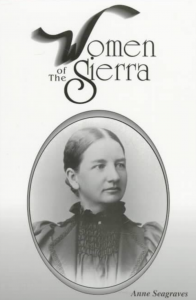
Book review: ‘Women of the Sierra’ a good history lesson

By Kathryn Reed

History is filled with the stories of men, their exploits, accomplishments and lives in general. Women have never garnered the same amount of ink.

Anne Seagraves in her book “Women of the Sierra” (Wesanne Publications, 1990) attempts to change that. She brings to life 15 women who many have probably never heard of. Though some of the last names, like Celio, are familiar, with descendants still part of the South Shore community.



Most of the women Seagraves features lived during the mid-1800s to the turn of the century. It was a much different time in the Sierra. It was really the Wild West. Modern conveniences some cities enjoyed at the time were not brought to this area until much later.

At 173 pages, it is a pretty quick read. While it’s not the best written book, the stories captured me. I can’t imagine enduring the hardships of that era. The strength of these women is admirable. The fact that so many worked beyond the home and even divorced surprised me.

After reading the segment on Allison “Eilley” Orrum it makes me want to visit the Bowers Mansion in Carson City. I didn’t know the history of that estate until reading this book.

While it was a man’s world, these women proved they could hold their own – were their husband’s equals if not more.

This is definitely a great glimpse into the lives of some incredible women. Many would be worthy of book devoted to just them.

The black and white photos were a wonderful addition.


Drones, e-bike restrictions in Tahoe basin

Technology like drones and e-bikes are restricted in some areas of the Lake Tahoe Basin.

Drones are prohibited from all Nevada and California state parks.

Wilderness areas are also drone-free zones. Locally this would pertain to Desolation, Mt. Rose and Granite Chief wilderness areas.

The Federal Aviation Administration also has a ban of drones in a five-mile radius from an airport, which includes Lake Tahoe Airport and Truckee-Tahoe Airport.

Drones are permitted on U.S. Forest Service land assuming it does not conflict with the above criteria.

When it comes to e-bikes, the Forest Service allows them on trails where other motorized vehicles are permitted. However, the maximum speed is 20 mph.

The Tahoe Rim Trail and Lake Tahoe Nevada State Park do not allow the electronic bikes.

— Lake Tahoe News staff report


Tahoe Tails — Adoptable Pets in South Lake Tahoe

Bud

Bud is a young German shepherd/Labrador mix. He likes to play with other dogs and didn’t chase the cat that he met at the shelter. He’s a big, energetic boy who would do best with an active family.

Bud is neutered, microchipped, tested for heart worm, and vaccinated. He is at the El Dorado County Animal Services shelter in Meyers, along with other dogs and cats who are waiting for their new homes. Go to the Tahoe animal shelter’s Facebook page to see photos and descriptions of all pets at the shelter. 

Call 530.573.7925 for directions, hours, and other information on adopting a pet. 

For spay-neuter assistance for South Tahoe residents, go online


Alcohol sales to be allowed at Lakeview Commons

By Kathryn Reed

Alcohol will be allowed on a regular basis at Lakeview Commons starting in May.

This is a big departure from South Lake Tahoe’s rules that have been on the books for years that banned alcohol sales or consumption at city parks except under special occasions, like the Thursday Live at Lakeview events.

A glitch of sorts is what has led to the change in policy.

When the request for proposals for a concessionaire at Lakeview Commons were sent out they said alcohol was allowable. Sierra-at-Tahoe, the winning bidder, budgeted for the sale of beer and wine.

Attorney Sergio Rudin with the law firm of Burke, Williams and Sorensen at the April 17 City Council meeting said there are three general exceptions to the city’s alcohol ban, of which it would be possible for Sierra to qualify under at least one.

A South Lake Tahoe employee works to get Lakeview Commons spruced up for the summer season. Photo/Kathryn Reed

The council and staff ultimately allowed the deal to go through, with Rudin acknowledging a code amendment may be needed to make everything legit. He also said the RFP was never reviewed by his office.

Lauren Thomaselli said the original RFP sent out five years ago mentioned alcohol as a possibility, but staff didn’t allow it. It’s not known why it was left in the document or who was responsible.

This time the winning bidder, though, had those sales as part of their proposal and no one brought it up as an issue until last week when the contract was about to be signed.

“We are not looking to put alcohol on the beach. It’s a little footprint outside the building,” John Rice, general manager for Sierra, told the council.

He explained how he would have staff on site to ensure people limited their consumption to a cordoned off area.

Rice also said, “If they bought beer from us, we are responsible for that person. We are exposed for our liquor license and liability as well.”

Another concern of council was the possibility of Sierra’s beer sales negatively impacting the beer garden during Live at Lakeview during the summer. Rice said he and that promoter have an existing relationship, and that they will depend on each other to be successful, as opposed to being competitors.

Sierra hopes to open the food stand in mid-May and run through at least Labor Day.

Scott Justice, who runs the resort’s food and beverage operation, plans to bring the same high quality fare skiers are used to to the lakefront setting.

A main goal is not to replicate what is already offered in the Harrison Avenue area. Tortas will be a main feature. Vegetarian options will be available. Common staples people expect at a venue like this will be available – like nachos, hot dogs and pizza.

Something different will be Taiwan ice, which Justice described as being between shaved ice and ice cream.

“We also want to do catering there, so guests at Lakeview have a catered meal” Justice said.

He envisions providing a meal with wine or beer, with a view of the lake.

“That’s a pretty rare opportunity, especially for someone camping across the street. It will be a value for those folks,” Justice told Lake Tahoe News.

The goal, he said, is to be nimble and adjust as necessary with offerings as the season progresses.


Opinion: Orange County, the new Gotham

By Joe Mathews

Why does a place as big and beautiful as Orange County behave in ways so small and ugly?

In recent weeks, county supervisors first voted to oppose state sanctuary laws, thus aligning themselves with President Trump, who has targeted California in a campaign of lies and mass deportation, and against the county’s own immigrant families.

Joe Mathews

Then the county abandoned a plan to house hundreds of homeless people in temporary shelters in Huntington Beach, Laguna Niguel, and Irvine, after protests from people in those cities.

Protecting its own immigrants and providing housing for its own people shouldn’t be a heavy lift for a wealthy county with 3.2 million people—more than the populations of 21 states. Orange County, the sixth most populous in the United States, is one of the richest jurisdictions on earth, with a bigger economy than Greece or Portugal.

But the recent decisions on immigrants and the homeless weren’t surprising. Orange County has an especially bad case of a California malady: Our local governments simply can’t meet the challenges and standards of our diverse and globally oriented communities.

“We think of ourselves as Mayberry,” says Fred Smoller, a Chapman University political scientist who studies Orange County, “when we really are closer to Gotham City.”

The decisions on immigrants and the homeless reflect Orange County’s fundamental confusion about itself. County officials often portray themselves as weak, playing the victim. On immigration, they somehow saw themselves as targets of a state bullying them (albeit to protect their own immigrants). In the homeless case, the official pretense is that Orange County and its cities can’t afford to house a few thousand homeless people.

Logic is often twisted. In opposing the immigrant sanctuary laws, the county supervisors portrayed themselves as honoring federal supremacy—even if it means collaborating with mass deportations that increasingly target non-criminals. But when supervisors dropped the homeless plan, they posed as defenders of local sovereignty, as a federal judge demands action on the homeless.

There are dangers to this Mayberry complex. By clinging to its self-image as a collection of NIMBY-ish small towns, Orange County has made itself profoundly vulnerable to mismanagement and corruption.

Two decades ago, local officials couldn’t stop treasurer Robert Citron until his bad investments bankrupted the county. More recently, the county has failed to confront public official corruption in its law enforcement structure, even after its previous sheriff went to prison.

 A long-running scandal has shown that both the district attorney’s office and the sheriff’s department “secretly operated unconstitutional scams with jail snitches to win convictions, hid exculpatory evidence from defendants and juries, and, when necessary, committed perjury in hopes of masking the cheating,” as the OC Weekly put it. Judges have condemned the misconduct, which so far has led to the dismissal of 18 cases for murder, attempted murder, and felony assault.

But the district attorney and sheriff haven’t lost their jobs. Instead, these same county law enforcement agencies now claim to be defending California from criminals by siding with the Trump administration’s mass deportation strategies. It’s right to be cynical about this. Is Orange County using the immigration issue to distract from law enforcement’s own troubles? Or, even worse, are the sheriff and the district attorney trying to curry favor with federal authorities and thus blunt federal investigation into their own misconduct?

The county’s Mayberry complex doesn’t just hurt people caught up in the criminal justice system, or the homeless or immigrants. It has given Orange County a government that’s out-of-step with the desires of the people who live there. In a new Chapman University survey of 706 Orange County residents, 83 percent of respondents said they wanted to find a way for undocumented immigrants to stay, and 64 percent said immigrants “contribute more than they take” from the economy. The same poll found that assisting the poor and homeless was the second biggest issue in the county among residents (with 24 percent citing it).

California Democrats have fantasies of turning the historically Republican Orange County into a blue place that will support a statewide progressive agenda. That won’t happen, and it shouldn’t. Th poll shows that Orange County’s residents are very much in the middle, disgusted with Washington, D.C., and with both parties, and worried about their kids and the cost of housing and living here.

Ideally, Orange County could pursue a moderate path that is true to its people’s real views, which embody a practical California libertarianism:  skeptical of costly regulation while championing entrepreneurialism, immigrants, open government, limits on law enforcement, and preservation of its natural treasures.

But that would take a county with new leadership that thinks in ways as big and beautiful as Orange County itself.

Joe Mathews writes the Connecting California column for Zócalo Public Square.