Upgrades coming to campgrounds in Crystal Basin area

By Cathy Locke, Sacramento Bee

Two popular Eldorado National Forest campgrounds in the Crystal Basin Recreation Area are slated for improvements as part of $150 million in projects tied to the Sacramento Municipal Utility District’s hydroelectric operations on the Upper American River.

Upgrades to existing facilities as well as some new improvements are planned this spring and summer at the Sunset and Azalea Cove campgrounds near Union Valley Reservoir as well as to the Gerle Creek Reservoir area.

Read the whole story


Lake Tahoe groups support fight against invasive species

By Associated Press

A conservation group and a coalition of municipal drinking water providers at Lake Tahoe have pitched in to try to stunt the growth of invasive aquatic plants that can degrade water quality and rob the lake of its famed clarity.

The Tahoe Fund and the Tahoe Water Suppliers Association recently reached their fundraising goal to buy more than 150 bottom barriers and other resources to support the Tahoe Resource Conservation District in fighting the invasive animals and plants.

Read the whole story


How the USFS grows millions of seedlings each year

By Greg M. Peters, Forests

Tucked into the Douglas fir and ponderosa pine forests of Northern Idaho sits the quaint lakeside town of Coeur d’Alene. The former lumber town is now a popular tourist destination drawing families from across the Pacific Northwest and beyond. Gone are the pounding mills, replaced with fancy lakefront hotels and bustling shopping centers.

But it’s not hard to find relics of the region’s once-thriving industry: Huge logs chained together to form breakwaters protect marinas and lakeside restaurants scattered around Lake Coeur d’Alene—the region’s main tourist draw. In the sprawling Idaho Panhandle National Forest that nearly surrounds the town, century-old stumps the size of boulders rot beneath a canopy of trees that themselves seem a hundred or more years old.

Both the stumps and the forest’s now abundant trees provide clear evidence of a century of forest management that has played out in this quiet corner of America.

Read the whole story


Lampe Ranch now on National Register of Historic Places

The National Park Service has listed the Wilhelm Lampe Ranch in Gardnerville in the National Register of Historic Places.

The NPS also approved a special report on ranching in Douglas County and Carson City (formerly named Ormsby) County. The report, called a multiple property documentation form, provides a history of ranching in the area, and establishes registration requirements for historic ranches, making it easier for property owners in the area to nominate their eligible agricultural property to the National Register. The National Register is the nation’s official list of places worthy of preservation, recognizing important places and potentially qualifying them for certain grants and tax incentives.

Carson and Eagle Valleys have long been home to people making a living from the land, beginning with the Washoe and Paiute. Euro-American settlement on Washoe lands began in the 1850s alongside Mormon settlement and travel along the California Trail to the gold fields of the western Sierra. The earliest settlers made their living from trading, mostly selling food and hay to those headed to California.

As Nevada experienced its own gold and silver booms by the 1860s, farmers and ranchers supplied mining towns and camps instead. Since that time, amid ebbs and flows in produce markets, extended droughts, and other challenges, agriculture has been an important part of the regional economy in northwest Nevada. Today, dozens of historic ranches dot the Nevada landscape between Douglas County and Carson City, many of which are still in use.

Among these was the Wilhelm Lampe Ranch in southeast Gardnerville, a 5-acre remnant of what was once a 300-acre operation. Lampe purchased the ranch in 1872, mostly growing alfalfa and raising dairy cattle and sheep, but supporting other crops, including wheat and barley. Lampe became a prominent leader in the German immigrant community of Carson Valley, becoming the land donor in 1885 for the establishment of the Lutheran Church’s first building, just south of his ranch.

Under the operation of Lampe’s son, William, in the early 1900s, the ranch grew to more than 300 acres. The ranch also includes unique architectural landmarks, including the latest known construction of a Gothic Revival ranch house in Carson Valley, and an impressive barn that has been previously highlighted on the annual barn tours of the Douglas County Historical Society.

Today, most of the former lands of the Lampe Ranch have been development for neighborhoods and churches, but the main complex and a small section of farmland remains, although berries have replaced the alfalfa. Jack and Diana Jacobs operate the Jacobs Family Berry Farm at the property, and continue to preserve this important piece of Carson Valley’s history.


Exclusive hiking boot fitting in Tahoe City

Alpenglow Sports and Tecnica Boots will host an Italian-styled happy hour and custom boot fitting event with famous designer Federico Sbrissa on May 2 from 5-7pm.

Tecnica has recently released Forge technology, the first ever thermo-moldable custom hiking, backpacking and trekking boot technology. Forge has revolutionized custom boot fitting and has been awarded the coveted Editor’s Choice Award from Backpacker magazine as well as Outside magazine’s Best in Show.

To celebrate the launch, Tecnica is flying in Italian boot designer and creator of Forge technology Federico Sbrissa from Italy. He has a long and storied career in product design, will be on hand to custom fit boots with two cutting-edge fit stations.

Alpenglow and Tecnica will celebrate the event by providing prosecco, prosciutto, melon, gelato and other Italian treats, as well as other adult beverages from Sierra Nevada Brewing Company.

The Forge comes in either a leather or synthetic version.


Caregiver classes in El Dorado County

The El Dorado County Health and Human Services Agency, Senior Health Education Program and Family Caregiver Support Program are putting on a series of classes titled Powerful Tools for Caregivers.

This six-week program will be from 2-3:30pm each Wednesday from May 25-June 29 at the Placerville Senior Center.

The training will provide caregivers aged 60 or older with tools and strategies to assist them in handling the unique challenges they face. The series topics include:

  • May 25 – Taking Care of YouJune 1, 2018 – Identifying and Reducing Personal Stress
  • June 8 – Communicating Feelings, Needs, and Concerns
  • June 15 – Communicating in Challenging Situations
  • June 22 – Learning From Our Emotions
  • June 29 – Mastering Caregiving Decisions

Participants are encouraged to attend all six sessions; certificates of completion will be presented at the end of the series. The training is comprehensive and evidence-based. Respite is available to qualified caregivers; pre-authorization is required.

Class size is limited and registration is required. The training series is offered at no cost; donations are accepted. Call 530.621.6192 to register or for questions.


Students spearhead plastic straw ban in Lake Tahoe

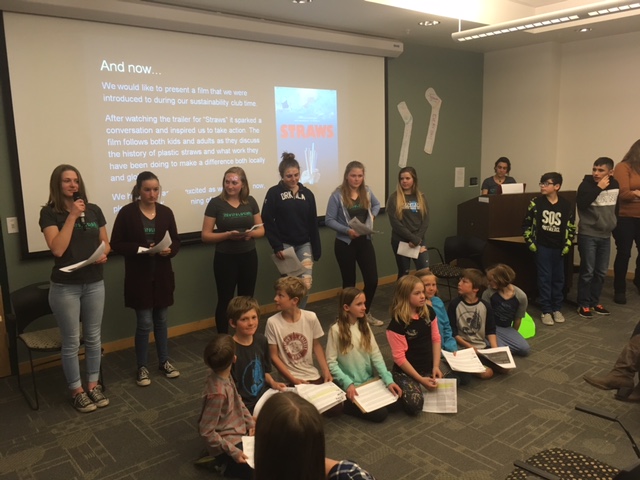
Students explain why plastic straws are bad for the environment. Photo/Terra Breeden

By Terra Breeden

INCLINE VILLAGE – It is estimated that more than 500 million single-use plastic straws are used and thrown away in the United States every day. That’s enough straws to wrap around the Earth 2.5 times.

Single-use plastic straws are cheap and easy to produce, but they are a menace to the environment. Billions of the seemingly insignificant, plastic tubes are buried in landfills and tossed in the ocean annually. Scientists predict that by 2050 there will be more pieces of plastic in the ocean than fish.

Lake Tahoe youths are mobilizing to cut down on plastic consumption. Students from a variety of schools and programs have united to spearhead the movement to raise plastic-straw-awareness and ban the use of other single-use plastics like Styrofoam containers and shopping bags at restaurants and other businesses around Lake Tahoe.

“There are so many people supporting this communitywide movement,” director of SWEP Ashley Phillips said. “But students are smart, creative, and they problem-solve in ways adults don’t. They have powerful voices to use.”

At Sierra Nevada College on April 19, students from the Sierra Watershed Education Partnership (SWEP), SOS Outreach program, and Sierra Expeditionary Learning School (SELS) united with Incline Village General Improvement District, League to Save Lake Tahoe and UC Davis TERC in an event called The Last Straw. The goal was to create plastic-straw-awareness in Lake Tahoe. The event highlighted the student’s work in the community and featured a documentary film on the history of plastic straws.
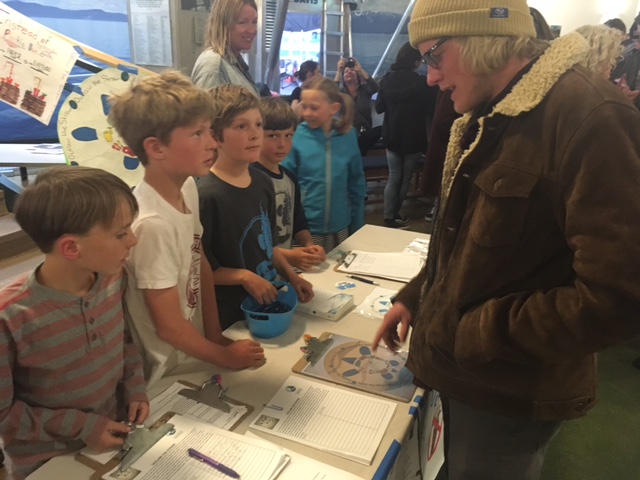
Youngsters educate adults about plastic. Photo/Terra Breeden

“We were all working on this single-use plastic awareness event in our communities and decided to combine forces. I love giving the kids the ability to showcase their work,” IVGID Resource Conservationist Madonna Dunbar told Lake Tahoe News.

The Lake Tahoe youths have done a lot of legwork to further their cause. Students from each of the programs formed coalitions to teach the community about the danger of single-use plastics, going to restaurants and businesses in South Lake Tahoe, Incline Village, Tahoe City, Kings Beach, and Truckee. They went to restaurants throughout the basin with proposal letters and created slogans and logos for their anti-straw campaign. Their goal was to persuade Lake Tahoe restaurants to stop using plastic straws, or at least make them available for guests upon request only.

“The kids did the work. They went out into the community and gave the presentations. They learned how to go from a concept to implementation and have touched all corners of the Lake Tahoe community,” Dunbar said.

Their movement has been a success. Over the past three months, SOS Outreach students have reached out to 45 restaurants in South Lake Tahoe and 12 restaurants in Kings Beach and Incline Village. The SOS Outreach students were inspired by the SWEP youths, who had already taken action by contacting 25 restaurants in Truckee and Tahoe City. Together, students from each of the programs have touched almost the entire Lake Tahoe community.

So far, due to their efforts, Northstar and Mountain Slice Café have agreed to go completely straw-free. Many other restaurants from around the lake have decided to make single-use plastic straws available to guests by request only.

Part of South Lake Tahoe’s Polystyrene ban that the City Council approved this year includes restaurants having to ask people if they want a straw – not having it be automatic.

When 4th- and 5th-graders from SELS heard about the other students’ campaign, they started their own Outlaw the Straw movement and gave a presentation at the Lodge at Tahoe Donner. The 9- to-11-year-olds’ next goal is to attend a Truckee community meeting and get a ban on single-use plastics made into law.

“We believe this is the next step for our eco-conscious town,” 10-yearr-old SELS student Ben Martin said. “Our blue planet is unique and special.”

The event last week was attended by about 100 people. The League to Save Lake Tahoe even provided reusable bamboo straws and water-bottles that were labeled with the logo Drink Tahoe Tap.

The film “The History of Straws” was shown and then students from each of the programs stood up and presented their work. At the end of the event, students asked if the audience would “agree to go straw free,” and as attendees rose from their seats and joined the Outlaw the Straw movement it appeared as if every seat in the room was empty.

The communitywide anti-straw movement continues to grow and reach others. Take Care Tahoe has commissioned for stickers and artwork to be made with slogans like “Straws Don’t Suck,” and “Drink Like a Fish.” Businesses that join the movement to ban straws will be publicized and given stickers to display in their windows that show they are a part of the effort to ban plastic straws in Lake Tahoe.

“Single-use plastics and not drinking bottled water is where this all started for us and it’s growing,” Dunbar told Lake Tahoe News. “Now we have the momentum and we have to keep that momentum going and capitalize on the gains we’ve made.”



Letter: VHR rules will be the downfall of SLT

To the community,

We recently received talking points from a local public relations firm relating to how we could handle the adverse publicity which occurred due to the CBS morning show about the draconian VHR ordinance and subsequent $1,000 fine enforcement. 

Jim Morris

We, as property managers and owners, have been requesting support from the chamber of commerce, LTVA, and the lodging association in helping us fight the selfish attitudes of some locals regarding their entitlement to Lake Tahoe without visitors to their neighborhoods. We requested support of these groups to come to the council meetings and support our industry and now we have these onerous fees, regulations and fines.  

Now the facts are getting out in the San Francisco Chronicle, Reno Gazette Journal, USA Today, CBS News, and other media outlets about the treatment of our visitors which we have been cultivating for decades. 

In a recent interview Mayor Wendy David defended the council’s actions by their reliance on a socio-economic study which the city had paid $75,000 for. The study did not address the economic impacts which was required in the initial contract. Plus, the statistics relating to VHR complaints were exaggerated by 400 percent due to erroneous data supplied by the city. According to David, this was the reason for the city imposing all the latest restrictions, fines and a VHR cap of 1,400 because of this erroneous report. See the video here

It has been said that you deserve the government that you have. South Lake Tahoe soak it up because if you don’t put an end to this craziness, it will take us years to recover. 

Jim Morris, Lake Tahoe Accommodations owner


CHP helicopter rescues hurt hiker in EDC

By Benjy Egel, Sacramento Bee

A hiker was rescued via helicopter Sunday after falling off a trail near the north fork of the American River in El Dorado County.

California State Parks and El Dorado County Fire personnel found the hiker but couldn’t safely retrieve him or her, according to a Facebook post by California Highway Patrol — Valley Air Operations. The agencies called CHP and requested a helicopter, which a pilot landed on a small sandbar just off the river.

Read the whole story


Fire destroys Stateline mobile home

A mobile home in Stateline was totally destroyed by fire on April 23.

Tahoe Douglas firefighters said neighbors in the Ponderosa Trailer Park called 911 at 8:50am after hearing a loud boom and glass breaking, they then noticed flames in the neighbor’s unit.

No one was at the residence at the time. The person living there is getting assistance from Red Cross. The dog in the back yard was not injured.

The mobile home was a total loss. A neighbor’s detached garage was also damaged.

The cause of the fire remains under investigation.

— Lake Tahoe News staff report