Landscape with unique containers, elevated gardens
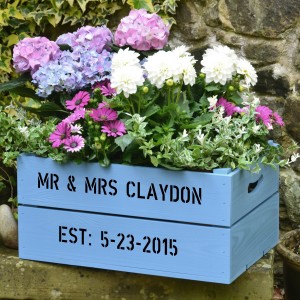
Crates, recycled or purchased, can be painted and personalized to create a colorful, unique planter for flowers and edibles. Photo credit: courtesy of PersonalizedCrates.com

Crates, recycled or purchased, can be painted and personalized to create a colorful, unique planter for flowers and edibles.
Photo/PersonalizedCrates.com

By Melinda Myers

Perk up your containers and add a bit of sparkle to your landscape with bright colors, unusual materials or a unique purpose.

Include an elevated garden to increase planting space and make planting, weeding and harvesting easier on the back and knees. Liven things up with a robin egg blue or washtubs elevated on a support for a bit of rustic charm.

Add wheels to make it easier to move planters around the patio or deck.  This allows you to follow the sun or make room for company at summer gatherings.

Recycle items into containers or invest in some of the new planters made from galvanized metal, wooden apple crates and more. Look for new colors or personalize them to create a warm greeting for you and your guests.

Increase growing flexibility with lightweight grow bags. They now come in a variety of colors and sizes. These fabric containers fold flat for easy storage when not in use.

Save space with sleek designs and built in trellises. You’ll be growing pole beans, tomatoes and flowering vines in a compact space. The colorful flowers and fruit will brighten a blank wall or screen a bad view.

Use containers and elevated gardens to increase the fun factor at your summer gatherings. Start your party with a trip to the outdoor bar. Weather-resistant butcher-block with built in planting space is sure to get the conversation going.  Gardener’s Supply Company is offering a new reclaimed wood outdoor bar with an integrated planter called “Plant A Bar.” Fill the planting space with some favorite cocktail herbs. Then mix up your beverage and let your guests add a bit of homegrown flavor.

Include the next course by growing your own salad bar. Guests will enjoy harvesting and creating their own bed of greens to accompany the main course. Fill a pot or elevated garden with greens, radishes, onions, carrots, herbs and your other favorite salad fixings.

Keep your containers healthy and productive with proper care. Water thoroughly whenever the top inch of soil is dry.  Check pots daily and water as needed. Extend the time between watering with self-watering pots.  Look for features such as weep holes that allow excess water to drain, funnels for top watering, and moisture indicators that let you know when it is time to add more water.

Further reduce maintenance by adding a slow release fertilizer to the potting mix at planting. Small amounts of nutrients are released over time, eliminating the need to mix and fertilize weekly. Give planters a mid-season boost or when making a second planting by sprinkling slow release fertilizer over the soil surface.

Harvest regularly to keep vegetables producing and looking their best. Replace early plantings as they fade with a second crop. You’ll extend the harvest and your enjoyment.

So take a second look at your patio, deck or front steps and move in a bit of color, fun and flavor for this growing and outdoor entertaining season.

Gardening expert, TV/radio host, author and columnist Melinda Myers has more than 30 years of horticulture experience and has written over 20 gardening books, including “Small Space Gardening” and the “Midwest Gardener’s Handbook”. 


Out-of-towners appreciate South Shore’s rebirth

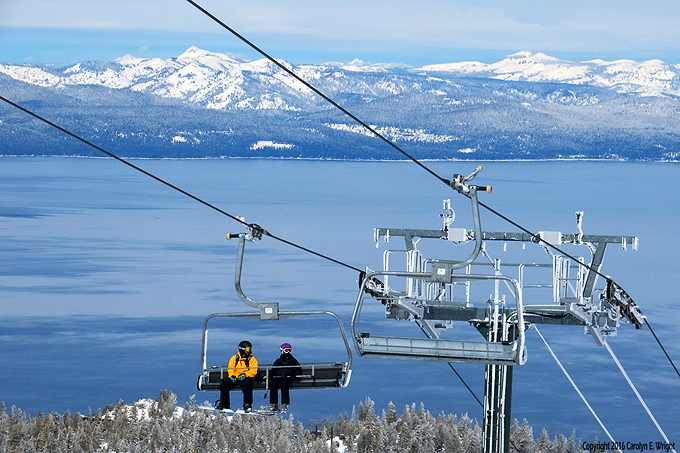
While skiing will inevitably always be Heavenly's main attraction, the resort wants to be a year-round destination just like the rest of the South Shore.  Photo Copyright 2016 Carolyn E. Wright

While skiing will inevitably always be Heavenly’s main attraction, the resort wants to be a year-round destination just like the rest of the South Shore. Photo Copyright 2016 Carolyn E. Wright

By Megan Michelson, Ski

I’m eating a vegan burger, made from scratch with green-chile pinto beans, at 
an Irish pub across the street from the Heavenly gondola, steps from the border of California and Nevada. I’ve been skiing all morning and need to refuel, and this place, McP’s Taphouse, is a ski-pole’s length from Heavenly’s groomed paradise.

The pub used to be in a dark, dingy space a few blocks down. And this spot, where I’m enjoying my burger and side of “Irish fries,” smothered in gravy, was a cavernous and depressing hole in the ground a mere 18 months ago.

For over six years, a halted construction project occupied a full city block in prime real estate neighboring the Heavenly village. It was a hollow symbol of the economic downturn, an ever-present blemish on a tourist town trying desperately to give itself a makeover. Locals took to calling it, simply, “the hole.”

“That hole in the ground was the shining star for how dysfunctional things were here,” says Heavenly’s vice president and COO, Pete Sonntag.

Eventually the south side of Lake Tahoe became known as a place where you could stay up all night playing roulette and
 sleep all day in cheap motels with in-room Jacuzzis. You could wake up hungover, eat bacon and eggs at a casino buffet, then start drinking bloody Marys at the local dive bar. Skiing wasn’t on the to-do list for many of the town’s visitors.


“There’s a sense of optimism now,” Heavenly’s Sonntag says.

Read the whole story


3-day mountain bike summit set for SLT

TAMBA’s Tahoe Trails Summit is May 6-8 at the Beach Retreat & Lodge in South Lake Tahoe.

The Tahoe Area Mountain Biking Association will host a weekend long summit involving workshops, movies, photo displays, discussion, and riding. Speakers will include representatives from the U.S. Forest Service, leaders of area trail organizations, and two special guests from the Mountain Bike Hall of Fame.

TAMBA wants to bring together all trail users to gain input and consensus on the future of multi-use trails around Lake Tahoe.

For more information about TAMBA and the summit, email Ben Fish at info@tamba.org


Nutrition expert coaches Tahoe-ites on eating

By Kathryn Reed

What you put in your body has a direct correlation to how you will function. Fad diets are not necessary. Trans fats are poison.

These were some of the words of wisdom Bridget McGrath shared at a recent nutrition talk sponsored by Tahoe Regional Young Professionals. McGrath is owner of Elevated Fitness in South Lake Tahoe. Nutrition coaching comes with the gym membership.

“Everyone’s diet is specific to them. Just eat healthy for you,” McGrath said.

She employs the philosophy of using one’s hand size to determine a portion size. For women at each meal, this means a palm size of protein, one fist size of vegetables, and a thumb worth of essential fats. If carbs are on the plate, no more than one cupped handful worth. For men, it’s twice the amount at each serving.

McGrath is a proponent of getting as many nutrients as possible from food and not from vitamin supplements.

“Since vitamins don’t get synthesized that well, you can do more harm than good,” she said.

Bridget McGrath talks about what constitutes a healthy diet. Photo/LTN

Bridget McGrath talks about what constitutes a healthy diet. Photo/LTN

She also said it’s better to get calories from food instead of liquids. Alcohol and fruit juices have little if any health benefits.

McGrath also stressed how essential fats are necessary. This includes things like nuts and avocadoes.

“If you are on a super low fat diet, you are angry all of the time,” McGrath said.

Food affects more than just one’s weight – nutrients tie into cognitive ability, strength, how internal organs are working and more.

Processed foods are some of the worst things people consume. She had nothing good to say about anything that comes out of a cardboard box, adding that the box is “more nutritious than what it contains.”

Sugar is one of the big issues with processed foods. More than 25 grams of sugar per day is toxic for the body, McGrath said.

It’s not that McGrath said people should never splurge on “bad” foods or drink alcohol, but it all needs to be in moderation. The “bad” items should also be consumed after the good and not on their own because it’s easier for the body to break everything down together.


Opinion: Time to Keep Squaw True

By Tom Mooers

Even in the face of increasing opposition, massive development for Tahoe’s Squaw Valley took another step forward last week when Placer County released a final version of the proposed plan.

Would-be developer KSL Capital Partners is asking Placer County for permission to build a series of high rises – including a 10-story tall indoor water park – in iconic Squaw Valley. According to Sierra conservationists, it would be development of a size, scale, and scope North Tahoe has never seen.

The latest version of proposed development in Squaw Valley is a matter of ‘meet the new plan; same as the old plan’. It’s still a blueprint for disaster that threatens everything we love about the Tahoe Sierra.

The fight over the future of Squaw Valley is shaping up as a pivotal moment in the long struggle between conservation and development in the Sierra Nevada.

KSL Capital Partners, a private equity firm based in Denver, purchased Squaw Valley in 2010, citing the property’s “great growth potential”. They filed an initial application for development entitlements in 2011 and followed up with a series of proposals, resulting in the final version of the “Village at Squaw Valley Specific Plan” last week.

The plan is available online.

Proposed development would remake Squaw Valley with a series of high rise condo projects with 1,500 new bedrooms − as many as in three of the biggest casinos at Tahoe’s Stateline combined, time share mansions in the mouth of Shirley Canyon, and a massive indoor amusement park with waterslides, fake rivers, arcades, and simulated sky-diving.

All told, the project would be so big it would take 25 years to construct.

Local residents, second homeowners, and conservationists have struck back with a grassroots campaign to Keep Squaw True.

Even though KSL’s proposed nightmare just took another step towards becoming Tahoe’s reality, we’re committed to stopping the project and ensuring a sane future for Squaw.

More than 300 private citizens, regulatory agencies, neighboring jurisdictions, and conservation organizations wrote letters to Placer County during last summer’s public comment period. And nearly all – 97 percent – of those letters expressed opposition to project approval or questioned the county’s environmental analysis.  Over the past several months an additional 80 individuals have written the Placer County Board of Supervisors urging them to reject the proposal.

Opponents point to a range of unacceptable impacts the project would have on North Tahoe, from the economic viability of local businesses to the brightness of stars in the night sky.  The strategy of KSL seems to be to stay full steam ahead with their project – in spite of increasing opposition.

In last week’s revised version, the total number of bedrooms (1,547) remains the same, the maximum building height (108 feet) is unchanged, and the proposed indoor water park would still have waterslides, fake rivers, and arcades.

Placer County’s ongoing environmental review of the project has raised a number of potential problems.

Of particular concern: traffic. Tahoe is increasingly infamous for gridlock. Earlier this winter, the California Highway Patrol turned back cars trying to exit Highway 89 toward Squaw Valley; there was simply no room for more cars.

Yet the proposed development would add an estimated 8,410 new daily car trips to Tahoe traffic when traffic is already at its worst.

The horrific traffic projections raise a basic question. Do you want to spend your time in Tahoe enjoying the great outdoors – or stuck inside your car?

Reliability of the local water supply has also emerged as an important issue. Even during a winter of abundant snow, Squaw Valley is acutely aware of persistent drought and its limited watershed.

For years, the primary water provider in the valley has warned that their supplies are inadequate and that they need to build a pipe to import water from Martis Valley. Yet KSL claims there is plenty of water for their new development.

“It makes no sense to consider massive development in a place that is already worried about insecure water supplies,” says Isaac Silverman, staff attorney for Sierra Watch.

Some of the project’s demand for water would come from its proposed indoor water park. At 90,000 square feet, it would be as wide as a Walmart and more than twice as tall. KSL says they need it as a “wet amenity to compete with the lake” (as in Tahoe). Local residents feel otherwise.

Squaw Valley should be the kind of place where we introduce our kids to the wild wonders of the great outdoors, not funnel them inside for the artificial amusements of a big box water park.

Most important to many opponents of the project is its potential impact on Tahoe and its famously blue water. The bi-state Tahoe Regional Planning Agency (TRPA) weighed in with a comment letter, pointing out that impacts from the development would “reach and extend into the Tahoe Region.”

Of particular concern to TRPA is the amount of traffic Squaw Valley development would pump into the Tahoe basin. That traffic – and the pollution it would generate – would lead directly to loss in lake clarity.

Their concerns are shared by regional conservation groups and, also, local businesses. More than 50 signed on to a joint letter to Placer County, urging officials “to reject KSL’s proposed development and, instead, encourage landowners and the community to work together to create a blueprint that makes sense for Squaw, Tahoe, and beyond.”

But, in spite of the clear consensus of opposition to the plan, the latest revision included no substantive changes – and continues to move through the planning process.

Next, Placer County will release the final environmental impact report for the project – the final written assessment of what proposed development would mean to Squaw Valley, to Tahoe, and beyond. The public will have 30 days to digest that document. Then the county will hold public hearings – with a vote on the project coming as early as this summer.

Conservationists plan on rallying more support for their campaign to Keep Squaw True.

This isn’t the first time Tahoe has been threatened by wild development schemes. Fifty years ago, our parents and grandparents worked together to protect the lake from a plan to ring the lake with freeways and urbanization. Now it’s our turn.

Tom Mooers is executive director of Sierra Watch, the conservation nonprofit spearheading a campaign to Keep Squaw True.


How climate change affects wines of the world

By Esther Mobley, San Francisco Chronicle

Has global warming been improving the wines of France over the last few decades?

That’s part of the claim being made by a new study by NASA and Harvard University. However, the study warns that the upswing in quality may not last forever, and a hotter planet looks like bad news for French vineyards in the long run.

In California, meanwhile, the relationship between climate change and wine quality is not nearly as straightforward as what the study authors observe in France.

Read the whole story


Prop. 47 lowers county inmate counts

By Bob Egelko, San Francisco Chronicle

A November 2014 ballot measure that reduced punishment for drug possession and low-level theft crimes lowered county jail populations by 9 percent in its first year, an effect that could increase public safety by allowing more serious criminals to be kept behind bars longer, according to a study released Wednesday.

The report by the Public Policy Institute of California gives supporters of Proposition 47 a counterargument against police and prosecutors who blamed the ballot measure for a statewide increase in crime last year. Another study earlier this month found an 8 percent increase in crimes reported in the state’s largest cities during the first six months of 2015, compared with the same period in 2014, but also found that crime rates had risen more rapidly in counties that released fewer inmates from jail under Proposition 47.

Read the whole story


Warning about summer vacation rental scams

By ABC News

Many people are back home and back to work after spring break, and some are already planning a summer vacation. Authorities are now warning, however, there are some bait-and-switch rental scams that could ruin your next vacation and your wallet.

Vacation spots across the country are being affected by scammers including the South Lake Tahoe-area where authorities say scammers have already struck 30 times this year.

“What they’re doing is they’re having you take that money and deposit it in a legitimate bank account,” investigator Dave Stevenson of the El Dorado County District Attorney’s Office told ABC News. “However, it’s a fraudulent bank account in the sense that the people then close it after they get their money and then they’re gone.”

Read the whole story


California misses water conservation target

Even though the snowpack in late March was high on Highway 88 east of Kirkwood, it isn't enough to provide California with all the water it needs. Photo/LTN

Even though the snowpack in late March was high on Highway 88 east of Kirkwood, it isn’t enough to provide California with all the water it needs. Photo/LTN

By Associated Press

Residents of drought-plagued California fell just short in February of the state’s mandated water conservation target that has forced them to let lawns turn brown, flush toilets less often and take other strict measures, officials said Monday.

Residents statewide used 23.9 percent less water in February compared to the same period in 2013. The savings were shy of the 25 percent water cuts that Gov. Jerry Brown ordered last year for users in cities and towns.

Felicia Marcus, chair of the State Water Resources Control Board, called it an “enormous effort” in saving water, despite the missed target.

“Californians rose to the occasion, reducing irrigation, fixing leaks, taking shorter showers and saving our precious water resources in all sorts of ways,” she said.

February was the ninth and final month of reporting under the governor’s 25 percent savings mandate. Californians will now be required to use at least 20 percent less water.

The state is now in the fifth year of drought, even though an El Nino weather system delivered a near-average year of rain and snow in some parts of the state.

State officials say that might impact the outcome of a workshop planned later this month to consider the best approach for conservation.

Key reservoirs in Northern California are brimming after El Nino storms drenched the region. However, Southern California saw relatively little precipitation, leaving most of its reservoirs low.

By April 1 – typically the end of California’s rain and snow season – the state was left with a nearly average snowpack and few hopes of more significant storms.

“We need people to keep saving,” Marcus said.


USFS wants input on roads, trails, facilities

The U.S. Forest Service Lake Tahoe Basin Management Unit is seeking comments on a draft environmental assessment for the management and use of existing roads, trails and facilities in the basin.

The environmental document analyzes: maintenance and management of roads, trails and facilities; authorization of outfitter guide activities; authorization of events; and authorization of special use permits for recreational uses in the forest.

The Forest Service will accept comments until April 30. For more info, go online.