Senior driving classes in South Lake Tahoe

The South Lake Tahoe Senior Center is hosting two one-day classes for drivers of all ages.

The instructor is R.S. Lynn.

Auto insurance companies give a premium discount valid for three years to those over 55 who complete the class. There are no tests to pass.

AARP members pay discounted fee of $15; for others the cost is $20. Payment by check is preferred.

Register in person at the Senior Center (located at 3050 Lake Tahoe Blvd.) or call 530.542.6094.

Classes are May 3 and Sept. 6 from 8:30am-4:30pm, with a break for lunch.


STHS teacher elected to state union board

By Kathryn Reed

The classroom will never be far from Mike Patterson no matter the physical distance. That is because as a member of the California Teachers Association board he intends to put students at the forefront.

Patterson, who started teaching auto shop at South Tahoe High School in 1988, begins a three-year tenure on the CTA board June 26.

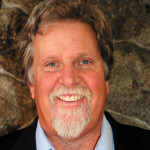
Mike Patterson

Mike Patterson

“I’m going to be the first career tech education teacher on the CTA board in a very long time,” Patterson told Lake Tahoe News. “I’m a firm believer that for the last 20 years in the state of California we have been dismantling the career tech programs. It is a huge disservice to the students of California, and the economy and the businesses in California because we are not training students for good paying careers.”

He had high praise for STHS, where so much emphasis is placed on CTE. But this is an anomaly.

Patterson intends to work with the governor and lawmakers to make career tech ed a priority throughout the state.

It was on Sunday that Patterson found out the state board position was his. That was the last day people could apply for the position. He was the only one to do so, which is not uncommon.

CTA has 17 districts, with Patterson’s including at least part of 23 of the 58 California counties going from Tuolumne to the Oregon border, all east of the coast. Each district has about 14,000 members.

Technically he will remain an employee of Lake Tahoe Unified School District. CTA reimburses the district the cost of his salary and benefits. This could be for nine years if he were to be elected to two more terms, which would be the maximum allowed. He is the first LTUSD employee to be on the state CTA board.

Patterson’s route to this statewide position has been an evolution, having started in 1991 when he was elected vice president of the local teachers union. That same year he became president of the chapter.

“I’ve always been a strong believer that school districts are better when there are strong advocates looking out for teachers, students and the community. That was the driving force for getting involved in 1991,” Patterson said.  “I’ve always been interested in our political process. In the early ’90s I started a political action committee for our association to elect school board members over the years.”

What got him involved at the higher level about 17 years ago was frustration with the state council. There is one elected state council rep for about every 450 teachers. The representative for South Tahoe Educators Association got reassigned and staff at the state level weren’t responsive enough. That led Patterson to getting on the council.

“About 700 of us get together and we argue and debate and vote and decide what policy CTA as a statewide organization wants to have,” Patterson said.

He served for nine years, went off a term and is now completing another six years on the council.

Seven years ago he was elected to CTA’s statewide political action committee, and has been the president the last four years.

The new job will involve even more travel. While there will be days Patterson will be able to work from his home in Meyers, much of his will be on the road. District offices are in Sacramento, Chico, Redding and Yuba City. CTA headquarters are in Burlingame.

“I will be out working with local chapters that need help. They could need help because they are having disagreements with the school board, or superintendent or not able to get a bargaining agreement, or it could be an internal issue where members aren’t seeing eye-to-eye,” Patterson said. “I don’t think there will be an average day.”


Opinion: Trump offers a lesson in rhetoric

By William Simon

For thousands of years, rhetoric, the art of persuasion, was a core area of study in our schools. Over the last century or so, that changed, and rhetoric and public speaking have all but disappeared from curricula. Why? My best explanation is that the academy became skeptical of rhetoric as speaking became associated with media salesmanship.

The costs of this decline of rhetoric education are now apparent, as the country reckons with a very strange presidential campaign. The rise of Donald Trump is much easier to understand if you have been schooled in rhetoric and advocacy.

I’ve had three educations in rhetoric. I first learned persuasive techniques as a courtroom litigator in the 1980s. Then, in 2001 and 2002, I had a re-education in rhetoric as the Republican nominee for governor of California. Today, I blend lessons from those experiences with classic texts—from Aristotle to a 1988 book by Roger Ailes and Jon Kraushar called “You Are the Message”—to teach the Art and Science of Rhetoric and Advocacy class at UCLA’s law school.

At first, I had a lawyerly conviction that the content of my trial presentations and court appearances was the most important aspect of public speaking. But when I ran for office, I learned I had been wrong.

It turns out that between 80 and 85 percent of delivering a message is non-verbal. Body language, I learned, is incredibly important. Ben Elliott, who was President Ronald Reagan’s chief speechwriter, told me that Reagan would give a speech “with his eyes.”

The Ailes book, and Aristotle, offered remarkably similar lessons. Make your point in one sentence. Find a way to be comfortable—and you’ll make your audience comfortable. And be memorable—or “leave footprints,” in the words of Ailes, now famous as the Fox News chief. One way to do that is to use chiasmus, (that’s the Latin) or what we think of as contrast. As in President John F. Kennedy’s formulation: “Ask not what your country can do for you, ask what you can do for your country.”

After politics, I returned to my work in business, but I also wanted to share some of what I learned. Dan Schnur, a political consultant who now runs a USC institute, asked me what I would do next, and I replied, half-kiddingly, that I wanted to dress up like Julius Caesar, walk into a classroom, and declare, “Veni vidi vici.” That conversation got me teaching classes first at USC, then at UCLA.

I didn’t teach rhetoric at first. I taught economics, but I made a point of emphasizing speaking. I required students to make a five-minute presentation instead of writing papers. Some students told me they got a lot out of the assignment, and suggested offering a whole course on this topic.

In my rhetoric class at UCLA law, I have my students study classical texts (including the Romans Cicero and Quintillian) and great, historically important speeches. This year, the presidential campaign, and Trump, have come up repeatedly.

I’m sorry to say that Trump, with whom I don’t agree much, is an important example, for a lot of reasons. It doesn’t matter that he’s not saying very much at all about specific policies. Or that he’s repeating the same canned lines about walls and winning. Content doesn’t matter so much when you have such effective body language.

His big motions and gestures convey that he’s unequivocal. He’s offering a message of militancy and defiance. He’s not married to his text, like so many speakers. He connects with the audience, reading them, making eye contact. He leaves people feeling that he is speaking to them. I tell my students to turn down the volume when Trump is speaking—and watch how much he is communicating without words.

It’s worth trying the same thing with other candidates. Hillary Clinton’s body language is pretty contained, even pained, creating the impression that she’s well scripted. Sanders’s body language projects sloppiness, not strength. Ted Cruz is very well organized, but he’s a little bit contained, like Clinton, and doesn’t give the impression that he’s inviting people’s opinions.

It’s unfortunate that there are people who expertly use rhetorical techniques to gain power that maybe they don’t deserve. But that’s all the more reason people need to understand how rhetoric really works.

William Simon is a professor, businessman and philanthropist.


How the Great Recession increased domestic abuse

By Karen Weise, Bloomberg

Almost seven years have passed since the Great Recession was finally, technically, over, and only recently have social scientists had enough long-term data to calculate how the crisis affected American families beyond economics.

A paper published in the journal Demography, goes deep inside relationships to show that hardship and uncertainty increased rates of intimate partner violence, defined as abuse through violent or controlling means.

The paper is based in part on data from an ongoing longitudinal study that surveys thousands of mothers who first gave birth from 1998 to 2000. The survey asks the women questions that indicate “economic hardship,” such as whether they’ve been able to make rent or afford food. It also looks for controlling or violent behavior by their partners, asking about whether a woman’s partner prevents her from seeing friends and family, for example, or slap and kick her.

Read the whole story


U.S. faces threat of losing EU visa waivers

By Laurence Norman, Wall Street Journal

BRUSSELS—The European Union’s executive will discuss on Tuesday the right of U.S. citizens to visit the bloc without a visa, a spokeswoman said Friday.

The European Commission’s discussion is a response to the fact that the U.S. has yet to grant visa-free entry to the whole of the EU, despite pressure from the bloc. The discussion could lead to EU visa waivers for U.S. citizens being shelved within months, although the bloc has some wiggle room over when it must act.

In January 2014, a revised visa system was implemented, giving the commission power to temporarily suspend visa exemptions for foreign countries that didn’t lift their own visa requirements. The new rules were primarily an attempt to put pressure on countries such as the U.S.

Read the whole story


LTCC to showcase staff, student artwork

There will be two artist receptions on April 14 from 5-7pm at Lake Tahoe Community College.

In the Haldan Gallery inside the library building works created by LTCC faculty and staff will be showcased. Each member of LTCC’s Art Department was invited to share two pieces of their artwork. It’s a chance to meet the artists, including faculty members Phyllis Shafer and Bryan Yerian, and learn about their techniques at a free talk.

In the Fine Arts Building’s Foyer Gallery, just outside the Duke Theatre, will be an exhibit of photographs taken by LTCC students enrolled in a once-a-year Death Valley landscape photography class taught by Pat Leonard-Heffner and Richard Johnson. This photography class has been offered for more than a decade, providing students with an opportunity to explore the diverse and stark beauty of Death Valley over a two-day trip each spring. This exhibit will feature some of the best photos taken by students in this class over the years.

Both exhibits will be open to explore through mid-June. Haldan Art Gallery hours are Tuesdays, Wednesdays and Thursdays from 11am-5:30pm, and Fridays 11am-2:30pm. The Foyer Gallery can be accessed Monday through Friday 8am-8pm, and Saturdays 8am-4pm.


Helping the next generation understand extreme risk

By Tim Hauserman, Adventure Sports Journal

“We are sick of going to funerals,” said John Walsh, a lifelong Tahoe local and former ski racer, lamenting the steady stream of Tahoe based athletes and adventurers (including his nephew) who died in recent years while pushing the envelope in dangerous sports.

Action sports filmmaker Steven Siig adds, “You never want to make that phone call that a friend has died.” He knows, he has made the call.

Walsh and Siig are part of a group of Tahoe locals who, fed up with the pain of losing a steady stream of great athletes and friends, have formed the Go Bigger Coalition. The group is attempting to discredit the prevailing wisdom that flying through the air 200 feet on skis is a worthy goal no matter what the risks, and emphasize the importance of being alive at 70 and enjoying the simple beauty of skiing every day.

Read the whole story


NDOT trying to curb work zone fatalities

With numerous road improvement projects across the region, the Nevada Department of Transportation and Nevada Highway Patrol are making a concerted effort to get people to slow down and pay more attention while driving in road work zones.

“Tragically, there were 12 deaths in Nevada road work zones in a recent one-year period,” Nevada Highway Patrol Trooper Duncan Dauber said in a statement. “Nothing other than zero fatalities is acceptable on Nevada roads. By slowing down, always buckling up and focusing on the road, drivers can help reach that goal. And drivers should pay particular attention when driving through road work zones. If you commit a traffic violation in a road work zone with workers present, you can be cited and fines and demerit points against your license can be doubled.”


FAST FACTS Statewide Work Zone Crashes     July 1, 2014 to July 1, 2015 Total fatalities - 12   /   Total injuries - 612  /   Total crashes – 1,020  Washoe County Work Zone Crashes     July 1, 2014 to July 1, 2015 Total fatalities - 2   /   Total injuries - 53  /   Total crashes – 166

Nevada work zone crashes July 1, 2014, to July 1, 2015
Total fatalities – 12; injuries – 612 ; crashes – 1,020
                                                                        Source: NDOT

This spring and summer, NDOT will continue improvements on Interstate 580 between Glendale Avenue and Moana Lane in Reno. Other road construction projects will enhance I-580 through Washoe Valley and Highway 50 at Cave Rock.

Throughout construction, NDOT works to keep drivers and road workers safe, using protective barriers, warning signs, lower speed limits, lane closures and flaggers in certain work zones. Construction work is also often scheduled during nighttime and off-peak hours.

Nevada law doubles the penalty for speeding, up to $1,000, in any marked road construction or maintenance work zone when workers are present.


Washoe County woman tests positive for Zika

By Reno Gazette-Journal

The woman developed symptoms consistent with Zika virus after returning from El Salvador, according to an announcement from the Washoe County Health District. Symptoms included joint pain, body ache, fever, conjunctivitis, chills, abdominal pain, headache and rash.

A woman with recent travel history to El Savador has the first confirmed case of Zika virus in Washoe County, according to health officials.

The woman’s symptoms resolved within a week, according to health officials. The woman is one of 12 people Washoe County who have been tested in recent weeks. No other positive results have been received to date.

Read the whole story


Nev. establishes ties with NASA for drone business

By Sean Whaley, Las Vegas Review-Journal

STEAD — Nevada and NASA announced last week they are now partners in the drone business.

Gov. Brian Sandoval and Frank Aguilera, deputy director of the Aerospace Systems Program at the NASA Ames Research Center in California, along with other officials, unveiled the new $400,000 NUANCE lab at Reno-Stead Airport north of Reno.

The Nevada Unmanned, Autonomous, and NextGen Collaborative Environment Lab will enable NASA researchers and students with UNR to create drone simulations. The new project is expected to get under way by the end of the month.

Read the whole story