Valhalla releases summer festival schedule

The 37th season of the Valhalla Arts, Music & Theatre Festival, which runs June 22-Aug. 31 on the South Shore, includes a Tony Award-winning play, jazz orchestra, and immersive outdoor art camps for kids.

A special event this year is the Boathouse Theatre 20th Anniversary fête.

The season opens with the Earles of Newtown, a Dixie swing band with an Americana punch.

The big fundraiser for the Boathouse will be June 25. The Lucky Baldwin Poker Promenada and Concert featuring Radoslav Lorkovic will include various stations around the Tallac Historic Site, each offering food and drinks, interpretive history and historic figures along with playing cards for event participants.

Tahoe Improv Players return for four engagements.

“Who’s Afraid of Virginia Woolf?” will be on the stage for 10 nights.

Free music on the lawn returns Sundays starting July 3 at 2pm. Other music offerings are scattered throughout the season, with most being paid performances in the Boathouse.

Word Wave – a three-day festival of story at Lake Tahoe is returning in October.

The full schedule is online.


Calif. won’t get money from estate of CalPERS bribery figure

By Dale Kasler, Sacramento Bee

The late Alfred Villalobos, the central figure in the CalPERS bribery case, always insisted he did nothing wrong and he didn’t owe the state of California a dime.

Now it appears Villalobos and his defunct company won’t be paying the state anything to settle civil fraud claims filed six years ago, officials connected with the case said Tuesday.

Even as a federal bankruptcy judge Tuesday approved the state’s $20 million settlement with Villalobos’ defunct company, it was clear that the Villalobos bankruptcy estate doesn’t have nearly enough money to make good on the state’s claim.

Villalobos, who used to reside in Stateline, once estimated his worth as $62 million, but the estate wound up being considerably less.

Read the whole story


Snow gives Vail Resorts reason to celebrate

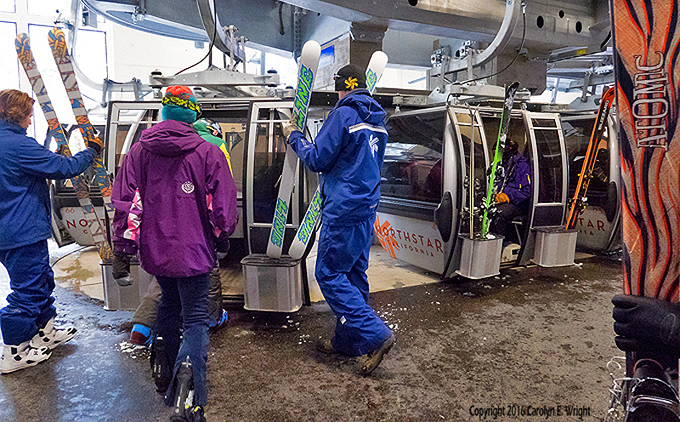
Northstar, with more than 400 inches of snow this season, has been busier than a year ago. Photo Copyright 2016 Carolyn E. Wright

Northstar, with more than 400 inches of snow this season, has been busy. Photo Copyright 2016 Carolyn E. Wright

By Lake Tahoe News

Vail Resorts today said its ski mountain division is doing much better than a year ago.

The figures released April 14 from the Broomfield, Colo.-based company do not include the urban ski areas of Afton Alps, Mt. Brighton and Wilmot Mountain.

Results released Thursday:

·       Season-to-date total lift ticket revenue is up 19.3 percent compared to the prior year season-to-date period.

·       Season-to-date ancillary spending increased compared to the prior year, with dining revenue up 16 percent, ski school revenue 10.1 percent, and U.S. resort store locations 11.5 percent.

·       Season-to-date total skier visits increased 13.4 percent compared to the prior year season-to-date period.

CEO Rob Katz in a statement said, “Our momentum throughout the year continued across each of our Western geographies with strong visitation from destination and local guests throughout the spring. The season’s results highlight the experience we provide guests at each of our resorts due to the engagement of our employees and the investments we have made at each of the mountains and the success of our more sophisticated marketing efforts to drive season pass sales and overall destination visitation.”

He credited the stronger than expected results for March 7-April 10 to conditions being good in Tahoe and Colorado. Ample snow has fallen this season in the Lake Tahoe area, where Vail owns Heavenly, Northstar and Kirkwood. This is a huge change from the previous three winters.

The abundance of snow is also helping spur people to buy 2016-17 season passes.

“To date, we have seen very strong overall results with significant continued growth on top of the record results we saw last spring and good momentum across all of our critical geographies,” Katz said of pass sales for next season.


El Dorado County Fair accepting entries

El Dorado County Fair’s entry guide has been released.

There are multiple divisions to choose from. Some entries have generous sponsors and the prize money can be well worth it, not to mention the bragging rights.

The guide is online. Entry forms with discounted entry fees should be submitted to the fair office by May 25.

This year’s theme is Cowboys & Carousels. The fair is June 16-19 in Placerville.


Snippets about Lake Tahoe

tahoe fund·       Art Chapman is now chair of the Tahoe Fund board of directors. Environmental attorney Clem Shute has joined the board.

·       The Restaurant Industry Group is open to any South Shore restaurant owner or manager. Meetings are the fourth Wednesday of the month from 9-10:30am in the conference room of the chamber of commerce in Stateline.

·       The El Dorado County Commission on Aging is seeking a community representative. The deadline to apply is May 12. For more info, email janice.haney@edcgov.us.

·       The final snowshoe cocktail race of the season at the Beacon restaurant at Camp Richardson is April 16 at 7pm. Signups are from 5-7pm. No cost to enter.

·       Tahoe Forest Hospital District successfully refinanced its Measure C, election of 2007, general obligation bonds April 7, resulting in a net savings of $10.6 million, or approximately $424,000 annually over the next 25 years. This savings will be directly passed on to district taxpayers through lower annual property tax assessments.


Calif. agencies eager to rebuild Kings Beach pier

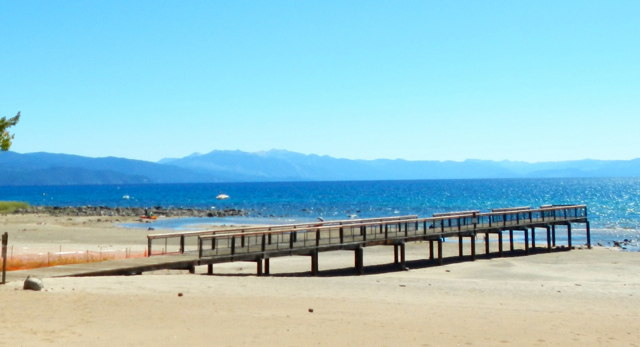
Rebuilding Kings Beach pier would ideally ensure it could be used by boaters even during a drought. Photo/LTN file

Rebuilding Kings Beach pier would ideally ensure it could be used by boaters even during a drought. Photo/LTN file

By Kathryn Reed

STATELINE – Providing more recreation access is the overriding reason to improve and extend the pier at Kings Beach, according to the landowners.

While State Parks and California Tahoe Conservancy are about to embark on the environmental process for this project, tied into it is creating an updated general plan for the Kings Beach State Recreation Area.

This 14-acre swath of lakefront last had a general plan written in 1980. That document only covers 7 acres, was 12 pages, with 1½ pages devoted to the environmental impact report. Today’s EIRs are usually at least an inch thick.

The general plan will include policies for the site. The event center is not part of the discussion other than how parking affects it. The building is owned by North Tahoe Public Utility District, however parking is on state property.

Where the pier will be rebuilt is still to be determined. Four main issues to be looked at in the environmental documents include fish habitat, scenic impacts, littoral processes and safety.

The depth and length of the pier will be dependent on where it is located and the orientation.

The plan is to have a portion be fixed on single pilings that will be attached to a floating pier. Three action alternatives are expected to be studied in the EIR/EIS that Ascent Environmental will put together.

State reps gave a presentation April 13 to the Tahoe Regional Planning Agency’s Advisory Planning Commission. The TRPA will have a say in the environmental impact statement and pier project, but not the general plan.

Lighting was one concern. The answer: only navigational lights will be on the pier.

Parking was another issue that was broached. State Parks technically closes the parking area at sunset. However, because this is used more like a community park, that policy may change.

The existing boat ramp has not been operational for years, mostly because of the water level. It’s future is also being considered.

Sue Rae Irelan with the CTC pointed out how the last time the ramp was open the town of Kings Beach looked much different. Boat trailers were parked on Highway 28. Now the highway has been improved, roundabouts added and trailer parking wouldn’t fit in.

Dredging was brought up. And while it’s possible to do so, the amount of sand that moves in and out of this section of the lake was called “dynamic” and therefore would require continual dredging.

One APC member asked about water transit. This would require a special use permit by State Parks and additional environmental review, along with more land side issues addressed.

“It would be a huge mistake to go through the process without considering a water transit option,” Steve Teshara, APC board chairman, said. As a planning consultant for the Truckee North Tahoe Transportation Management Association, he was instrumental in crafting a letter to the state agencies about water borne transit – even if it’s a shuttle and not the proposed lakewide ferry.

—–

Notes:

·      The deadline to comment on the notice of preparation is April 15.

·      More information is available online.

·      The draft environmental documents should be released in early 2017, with the final completed in summer 2017.


Opinion: Time to overhaul TRPA commodities

By Joanne Marchetta

When people visit Tahoe for the first time, they marvel at the extraordinary natural landscape and fresh, clean air. At the same time, some are shocked at the dilapidated condition of the built environment:  rundown buildings, crumbling infrastructure, and tired-looking development. The paradox is compelling. Despite TRPA’s mandate to harmonize the natural and human-made landscapes so that they blend together, outdated development that preceded environmental standards now serves as blight in our community.

Joanne Marchetta

Joanne Marchetta

How we got here and what we plan to do about it is the focus of TRPA’s Governing Board and the community at large. Because of cutting-edge science we know that not only is this outdated legacy development a visual scar on Tahoe, it contributes to the loss of the lake’s world-famous clarity. Polluted stormwater runoff from areas developed before environmental measures were in place is clouding the lake’s transparency. And policies from the 1980s that were designed to slow and manage growth and development had the unintended consequence of locking in the status quo and freezing in time 1970s-era buildings.

We need to improve the system of development rights for housing units, hotel rooms, and commercial space to accelerate the kind of environmentally-beneficial redevelopment projects our environment and our communities so desperately need. Overhauling the development commodities system is one of TRPA’s top priorities. At a strategic planning retreat this March, our 15 Governing Board members confirmed they are committed to innovating and working together to make needed change happen.

But we at TRPA need your help to envision and implement the growth management system of tomorrow. We need the ideas, perspective, and help of all Tahoe stakeholders—residents, business owners, investors, environmental advocates, local government leaders—to create a growth management system that will work for Tahoe in the 21st century.

The 1987 Regional Plan limited the total number of homes, hotel rooms, and commercial floor area allowed in the Tahoe basin, turning them into a fixed amount of development rights. It also created mechanisms for these commodities to be transferred from one property to another and banked and sold as development rights that are needed for any project to happen.

With the new Regional Plan adopted in 2012, “bonus” development rights are available from publicly-held pools for projects that remove development from environmentally-sensitive areas, restore those areas, and transfer development into existing town centers. The goal is redevelopment that benefits our environment and revitalizes our communities.

This complicated commodities system is unique to Tahoe and has profoundly impacted our environment and economy in ways that are both good and bad. The system has successfully halted the runaway growth that once threatened our basin and limited the size of Tahoe’s urban footprint. That’s a good outcome for our natural environment and our recreation-based economy that depends on its health. But the commodities system has also made it exceedingly difficult to realize the kind of multiple-benefit redevelopment projects that will restore our environment and revitalize our communities.

Without those redevelopment projects, Lake Tahoe will continue to see harmful environmental impacts from legacy development built before TRPA’s creation in marshes, meadows, and stream zones where it would not be allowed today. The restoration of those areas is critical for the health of our watershed and wildlife. Meanwhile, communities will continue to struggle to secure the development rights and private investment needed to revitalize their town centers.

Interviews with dozens of stakeholders this year confirmed some of our suspicions about the commodities system: It is complicated, difficult to navigate, costly, not well understood, and a major obstacle to private investment and environmental redevelopment at Tahoe. The question confronting us now is how we will work together to make the commodities system better, and make it work for our environment and communities.

We at TRPA are committed to bringing our best ideas to the table and working toward a solution for this important issue. We want you to share with us your ideas to improve the commodities system and bring about this needed change and innovation. By working together, I am confident that we can reach a bold solution that protects and restores our invaluable natural resources and helps our communities thrive as places to live, work, play, and raise families.

Joanne Marchetta is executive director of the Tahoe Regional Planning Agency.


Annual South Tahoe paddleboard race canceled

South Tahoe Standup Paddle is taking leap year to a new level. The South Lake Tahoe business is skipping this year’s Race the Lake of the Sky event.

The Bracketts are instead focusing their energy on moving and improving their new facilities.

The Harrison Avenue building where South Tahoe Standup Paddle has been since 2010 has been sold. While initially the hope was to use the back area, the reality was a move would be in the company’s future. It just came sooner than expected.

South Tahoe Standup Paddle is moving to where the Picchetti Winery tasting room was. This puts the paddleboard company two blocks closer to the lake and still on Harrison Avenue.

Owners said putting on the summer event would be too much, so instead it will be resurrected in 2017, which will be the fifth year for the races.

— Lake Tahoe News staff report


Calif., Nev. gas prices some of the highest in U.S.

California in March was the most expensive place to buy gasoline, with Nevada coming in third.

The national average was $2.06 per gallon. This was an increase of 33 cents from February, according to AAA.

In California the average price was $2.77 per gallon, while in Nevada it was $2.44.

Hawaii was the second highest at $2.62 per gallon.

— Lake Tahoe News staff report


USFS proposes massive West Shore fuel reduction project

The U.S. Forest Service Lake Tahoe Basin Management Unit is seeking public comment on a proposal to reduce hazardous fuels on the West Shore.

The project would treat approximately 4,875 acres from Emerald Bay to Burton Creek State Park. It would include thinning and fuels reduction treatments intended to reduce the risk of severe wildfire and would provide defensible space to adjacent communities, improve forest health by thinning trees in high density areas, which decreases the risk for widespread tree mortality during drought conditions, insect infestation and spreading of diseases.

This project would mark the completion of initial Forest Service treatments in the Lake Tahoe Basin.

The project would also include demonstration areas for various treatment types that may be considered in the upcoming Lake Tahoe West Collaborative Project.


The proposal is available online. Comments are being taken until May 9.