Global timber trafficking harms forests

By Kenneth E. Wallen, The Conversation

If a tree falls in the forest, do you care how it was brought down?

Few people think about where the wood in their furniture, floors or doors comes from or how it got there. And few would guess that one of the most illegally traded wild products worldwide is a tree, rosewood (Dalbergia).

Rosewood is so widely trafficked it is called “the ivory of the forest.” Its rich reddish-brown timber is used to make furniture, flooring and musical instruments. Yet many of the trees that produce it are threatened and internationally protected.

Rosewood is an extreme example of a wider problem. Globally, 15 to 30 percent of timber is taken illegally. According to Interpol, the illegal timber trade is worth $50 billion to $150 billion annually.

This complex issue will not be solved overnight. But I believe that social science can help curb it by showing the damage illegal timber trade causes to humans and forests, and by stigmatizing the sale and purchase of contraband wood products.

The role of rules

My research uses social science to address conservation issues like wildlife trafficking and invasive species. I focus on the role of norms and rules, which guide human behavior by signaling whether an action is common or approved. When people or organizations know that doing something is unacceptable and punishable, they are more likely to refrain from it.

Today, many rules designed to protect against timber trafficking are either not strict enough or poorly enforced. This signals that illegal activity can occur with impunity, although some nations are tightening up regulations in an effort to curb the problem.

A global trade

Illegal timber is estimated to account for 50 to 90 percent of wood harvested from Amazonia, central Africa and Southeast Asia. Interpol estimates that 40 to 60 percent of timber exports from Indonesia, 25 percent from Russia and 70 percent from Gabon are illegal. In 2016 the U.S. Trade Representative’s Office estimated that 90 percent of U.S. timber imports from Peru were sourced from illegal logging.

North America is not exempt. Tree poachers target centuries-old cedars and redwoods in British Columbia and the Pacific Northwest.

Illegal activities lower global timber prices by 7 to 16 percent, costing source nations up to $5 billion in lost annual revenue. This would suggest governments have a significant incentive to act. But weak regimes, corruption and unresponsive agencies – particularly in source countries – are failing to curb timber trafficking.

Improving enforcement

To protect forests and guide timber use, governments create rules. International treaties and trade regulations restrict timber imports based on quantity or species. Domestic management plans, certification programs and procurement policies dictate how timber should be harvested, bought and sold.

But the effectiveness of these rules often depends on sanctions that penalize rule violators. Many source countries have little capacity to effectively monitor forests or enforce penalties for illegal logging. This makes it easy for traffickers to avoid being caught.

Countries with few or weak regulations also act as trans-shipment points. For example, traffickers send timber from Papua New Guinea to nations like China that do not ban illegal timber. It is then processed and exported as finished products to the United States.

Over the past decade the United States has acted to bolster rules and sanctions against illegal timber purchases. Notably, in 2008 Congress amended the Lacey Act, which prohibits trade in illegal wildlife, fish and plants, to include timber.

Several high-profile sanctions followed. Lumber Liquidators was fined $13 million in 2011 for selling flooring made from illegal Russian timber. In 2015, the Yacu Kallpa, a Peruvian vessel carrying illegal timber destined for Houston, was detained by Mexico. And in late 2017 the U.S. trade representative blocked timber imports from Peru.

But until source countries can effectively monitor and enforce laws against illegal harvesting, intercepting a single shipment does little. Importing countries – particularly the United States, European Union nations and China – must also initiate actions that reduce illegal timber production. And this is where social science can play a role.

Learning from wildlife trafficking

Timber trafficking has many parallels with illegal trade in charismatic and endangered wildlife, such as pangolins, turtles and rhinos. In both cases, the trade is extremely lucrative, and consumer demand is a major driver of the black market.

To reduce demand, many countries use social science to stop consumers from purchasing illegal wildlife. Social influence approaches attempt to convince us that peers are engaging in or refraining from certain actions, such as recycling or reusing grocery bags. They can also help convince organizations that certain actions are inappropriate and counter to rules and norms.

For example, advocates in China and Hong Kong have reduced pressure on endangered sharks by convincing elites and professionals through public awareness campaigns and political advocacy to eat less shark fin soup. And in Indonesia and Malaysia, Muslim clerics declared fatwas against wildlife poaching to signal social disapproval of it. Using the powerful medium of religion and their role as public leaders, clerics have aligned religious faithfulness with existing rules against poaching. In doing so, they make it easier to peer-pressure others and further stigmatize poaching and illegal purchasing.

Steering consumer choices

Governments and businesses can use similar strategies to address timber trafficking. They can educate consumers about the scale of the contraband trade and which products are likely to be illegally logged, much as ocean advocates are working to steer consumers away from buying fish that are overharvested.

Organizations exist to track, monitor and certify timber and timber products. But awareness is not enough. Stigmatizing or sanctioning the sale and purchase of illegal timber would be a useful further step. For example, governments could destroy shipments of confiscated timber in the same way that the United States and some African countries burn or crush confiscated ivory from slaughtered elephants.

Through events like Arbor Day, many Americans develop a generalized warm glow toward trees and forests. Portraying contraband wood products as harmful and damaging can help shape these views into more focused and sustained opposition to illegal timber trafficking.

Kenneth E. Wallen is an assistant professor of human dimensions of natural resources at the University of Arkansas.


Candidates’ forum for Douglas County offices

On May 3, the non-partisan Good Governance Group of Douglas County will have its 2018 candidates’ forum featuring individuals running for Douglas County offices.

This free event will be at the Carson Valley Inn, in Minden. Doors will open at 5:30pm to give candidates and voters a half hour to mingle before the program begins. Libations will be available from the in-room no-host bar during this time.

Voters of all ages and political affiliations are invited to attend and participate. The program will feature formal Q&A sessions for sheriff and county commissioner candidates, as well as an opportunity for other candidates to introduce themselves and state the reasons they are seeking election or re-election.


Slew of tennis events in Zephyr Cove

With winter in the rearview mirror, it is time to look forward to non-snow sports. Zephyr Cove Tennis Club has a calendar full of activities for this season.

The nets are up at the six courts. Play is free through the end of April, with membership required starting May 1. Cost is $90 for the season, which includes the ability to reserve courts, participate in club events for free or at a reduced cost, and to receive regular updates about all things tennis. Membership information is available online.

Returning May 1 for his second year as head pro at the tennis club is Dave Nostrant. He is increasing his offerings this year in terms of lessons for all abilities, as well as multi-day camps.

Viva La Tennis on May 26 is the official start to the club’s tennis season. The doubles event is for current, new and prospective players of all levels and ages. It starts at noon. No need to have a partner. It is free for 2018 club members, $15 for others. It includes a barbecue and lots of tennis. Pay your membership dues that day and the tournament is free.

Zephyr Cove Tennis Club Foundation runs the programs at Zephyr Cove Park under a multi-year agreement with Douglas County. An all-volunteer board is in charge, with members volunteering to help in various aspects.

The first activity is the annual cleanup day on May 18 from 9am-noon. This is when members and others spruce up the grounds. Bring gloves and a rake, if you have them, to participate.

Tennis events this season at ZCTC include:  

·       May 26, noon: Viva La Tennis

·       June 9, 11am-1pm: Free Kids’ Clinic

·       July 14, 9am: Breakfast at Wimbledon

·       July 26-29: Tahoe Tennis Classic

·       Sept. 1-2: ZCTC Club Championship

·       Sept. 10-16: USTA National Husband-Wife Hard Court Championships

·       Sept. 24, 11am: Sundae Monday.

Get more information on the club’s website.


Letter: Expand ‘straw smart’ thinking

To the community,

I would like to commend the students who participated in the event the “Last Straw” because they are creating awareness as middle school students.

It would be great if the students that are involved in the Sierra Watershed Education Program (SWEP) could be more involved with the college students here at SNC to give them more opportunities to get their ideas out into the community more. They are currently working with IVGID which is a start to making Incline Village a better place. If the students that have been spearheading the Outreach program continue to create awareness in the community, the community can help those who enter such as tourists, this summer season to be “straw smart.”

We should help this movement become just as powerful as the saying of “Keep Tahoe Blue.” 

During the summer, Incline Village and Kings Beach become a hot spot for summer fun on the lakefront. We as locals in the community are the ones who have to deal with the aftermath of all the trash and excess litter.

If we can downsize the amount of plastic being littered around the lake by just reducing the straw usage, the lake can be a much cleaner and more respected place to be viewed as a get-a-way not a party scene.

Gavin Ryan-Massa, junior at Sierra Nevada College


Social media redefines how people plan travel

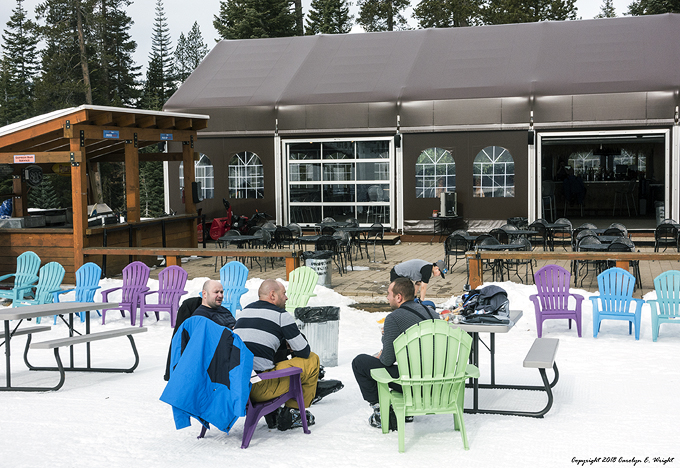
Travelers want to see people in photos to entice them to visit a destination. Photo Copyright 2018 Carolyn E. Wright

By Kathryn Reed

STATELINE – Social media continues to challenge marketers when it comes to promoting a destination because people are using multiple platforms and how they use them differs. In other words, the exact same message used every place probably isn’t going to work.

Geotags are the latest way people are searching social media. It’s about tagging a location, not just using a hashtag. Most smart phones can geotag automatically via the GPS device that is built in.

Even with all the technology that is available today, word of mouth is the No. 1 way people get introduced to a destination. According to research done by marketing firm Chute, 57 percent of people rely on word on mouth, with social media being No. 2 at 44 percent.

Geotagging can help combine the two by people looking up on social media what they’ve heard about from a friend.

Jody Farrar with Chute led a session about travelers’ social media preferences and habits during this month’s Mountain Travel Symposium at Harrah’s Lake Tahoe.


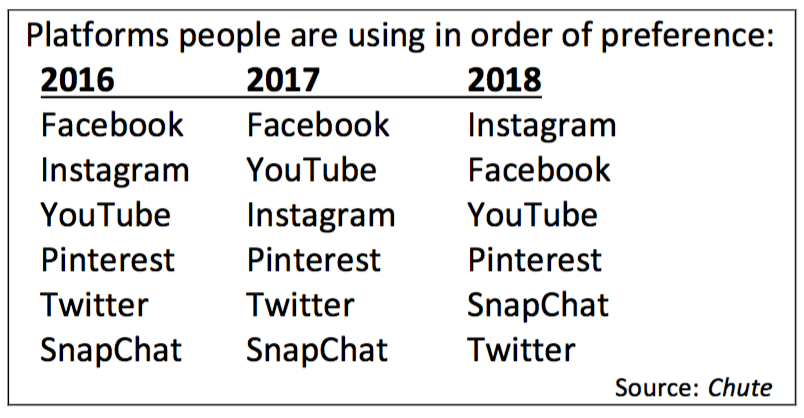
Facebook, Instagram and YouTube combined account for 50 percent of travel searches.

Farrar said Instagram’s rise to the top could be because “it’s easier to find inspiration.” She added, “Following a hashtag is easier than following a brand.”

Instagram has changed some things on its platform in the last 18 months which allows people to create collections. It’s a way to save photos they like.

What Chute researchers are finding is that 75 percent of travelers are not following a destination. The No. 1 reason, Farrar said, is because people don’t know they exist. Forty-one percent believe the information is too promotional.

For Tahoe this would mean they aren’t following Tahoe South, Go North, Lake Tahoe Visitors Authority or North Lake Tahoe Resort Association.

However, for those who are following a brand, the reasons are because they are researching a trip (38 percent), have already been there (37 percent), they like the content (25 percent.)

What could make SnapChat appealing for destinations is the ability to reach people once they are in the market. This is because of how people use the platform, but more important is that 80 percent of travelers don’t make plans until they get to their destination, according to Farrar.

It’s not just pretty pictures people want to see. They want to see others in the photos so they would have an easier time imagining themselves being transported to that spot. Travelers also tend to prefer authentic photos – ones shot by people actually experiencing the destination, and not professionally shot stills or videos.

Farrar said it’s important to tell people to use key hashtags, to share collections and to tag other accounts so travelers are spreading the message in a different word of mouth format.


Editorial: Strengthening Nev. ethics regulations a worthy pursuit

Publisher’s note: This editorial is from the April 16, 2018, Las Vegas Sun.

On March 21, the Reno Gazette-Journal published a story raising questions about Clark County Commissioner Chris Giunchigliani’s expenditure of more than $1 million in campaign funds on services provided by her late husband’s political consulting firm.

Five days later, in what was obviously no coincidence, Commission Chairman Steve Sisolak unveiled a package of proposed ethics and transparency reforms that included a prohibition on payment by candidates to family members or their businesses.

He didn’t mention Giunchigliani, but you can be sure he wouldn’t object if Nevadans drew their own conclusions, as both Sisolak and Guinchigliani are seeking the Democratic nomination for governor.

Competitive politics aside, however, Sisolak’s ideas deserve consideration in a state where transparency requirements and ethics laws are an unfunny joke.

Read the whole story


1 serious injury in explosion-fire at TRPA building

A fire Wednesday in the Tahoe Regional Planning Agency building could have been a lot worse had there not been sprinklers, according to Tahoe Douglas fire officials.

One person was airlifted to UC Davis Medical Center in Sacramento with second and third degree burns to his face, head and upper extremities.

“There was no damage to the building. Six fire sprinklers opened and held the fire to the vehicle until the fire department put it out,” Tahoe Douglas Fire Marshal Eric Guevin told Lake Tahoe News.

The man was working at Ron’s Auto & Small Engine Repair on the bottom floor of the Stateline office complex when something exploded. The cause of the incident is still under investigation.

The TRPA Governing Board was meeting at Lake Tahoe Community College at the time of the incident. Staff was evacuated.

— Lake Tahoe News staff report


Nevadans have less student loan debt than most of U.S.

By Natalie Bruzda, Las Vegas Review-Journal
 
Nevada usually finds itself at the bottom of national education rankings.

But a new study examining student loan debt in America paints a more positive picture.

Nevada residents carry less student loan debt than a majority of Americans, according to a new report, “Debt in America,” from the Urban Institute. The median student loan debt in Nevada is $14,218 — a debt load that’s greater than that of only two other states: Utah and Wyoming.

Read the whole story


Serious ‘precipitation whiplash’ predicted for Calif.

By Dale Kasler, Sacramento Bee
 
It was the greatest flood in recorded California history, 43 days of rain and snow that swamped the state, killed thousands of people and forced the newly elected governor to take a boat to his inauguration at the Capitol.

Now a group of climatologists says global warming will increase California’s risk to repeat performances of the devastating flood of 1862.

In a study published Monday in the scientific journal Nature Climate Change, the scientists say climate change will increasingly expose California to a phenomenon they call “precipitation whiplash,” in which drought or drought-like conditions will alternate with intensely rainy winters. Rain and snow will become concentrated in narrow windows of time at the peak of winter, instead of being spread between October and April.

Read the whole story


USFS approves South Shore thinning project

The U.S. Forest Service Lake Tahoe Basin Management Unit released the final decision last week for a forest thinning project that aims to reduce excess vegetation on 3,737 acres of National Forest lands on the south end of Lake Tahoe.

This project is designed to decrease the risk of wildland fires and should complement defensible space treatments implemented by local municipal fire districts on adjacent non-federal lands. 

Treatments include forest thinning using hand and mechanical methods, cable yarding and prescribed fire operations involving pile and understory burning. Tree planting will occur in some areas to promote tree species or forest structure diversity. Treatments will take place in areas primarily thinned within the past 15-25 years and in some areas that will be treated for the first time.

In addition to possible short-term impacts to recreational areas, thinning projects change the appearance of our forests. Treated areas may look disturbed at first, but recover visually within a few years and provide for a healthier, more resilient forest over time.

Work could begin this year and may take approximately 10 years to complete, depending on funding and conditions.