

Exercise during pregnancy good for mom, fetus


By Kenneth Spielvogel
A vital component to a healthy pregnancy is some element of exercise. Beyond the potential physical benefits for both mother and fetus, improvement in one’s emotional and overall mental well-being can be achieved through even the simplest of exercise plans.
It is important to establish clear guidelines with your health care provider regarding what is safe for you and your baby during pregnancy. Certain medical conditions — such as high blood pressure, a history of preterm labor (or short cervix), and other high-risk conditions — require more specialized plans. But even the most restrictive exercise plan may still allow a woman to reap the exercise benefits of a sound mind and body.
Focus on your goals
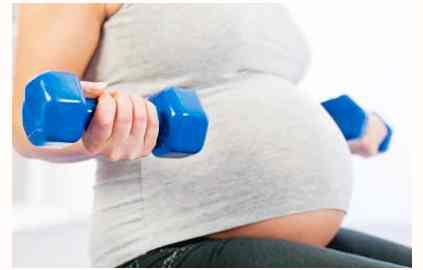
Exercise during pregnancy is important. Photo/Women’s Health Care
A workout plan during pregnancy should be separate from discussions of weight gain. A recent patient of mine was told by her previous provider that she was, “gaining too much weight and should drink only water and exercise more.”
Few providers take the time or have the experience to give specific guidelines about when to exercise and when to slow down. For those who have never been formally told how to exercise, this type of advice often falls on deaf ears. With each passing visit, the number on the scale becomes the focus.
With little guidance, patients’ self-esteem decreases, stress levels increase, and the chances for a healthy and happy pregnancy are reduced even further.
Let us not focus on a number, but rather our goals. Weeks of pregnancy challenge one’s strength, posture, and balance. Expectant mothers grow more fatigued as their sleep is disturbed by both physical and hormonal changes. We work to ensure the safety of both mother and fetus in our plan.
I target a goal for beginners of approximately 30 minutes of activity, five days a week. If time restrictions make this difficult, they can break it into two, 15-minute sessions, or even three, 10-minute sessions.
Start with easy walking
Assuming you have no dangerous health conditions, I recommend beginning by walking. Mix in a hill or two, pump the arms, and maybe even add some tiny hand weights if you’re not pushing a stroller. If you can hold a conversation, but are also huffing and puffing, you’re exercising at the right pace.
With regular exercise, you can improve your strength, balance, and cardiovascular conditioning. And exposure to sunlight raises vitamin D levels, decreasing your risk for gestational diabetes, in addition to other potential benefits for your baby — but don’t forget that sunscreen. Bring along some friends and combine your walk into a pregnancy support group.
Each individual has different guidelines. Even exercise enthusiasts need support regarding limitations, positional considerations, and which activities to avoid during pregnancy. Work with your provider to develop a plan that is both safe and effective in accomplishing the simple goals of sound mind and body for a healthy mom and baby.
Kenneth Spielvogel is a doctor with Barton Women’s Health.
