

Sierra lakes drop as needs to the west take toll


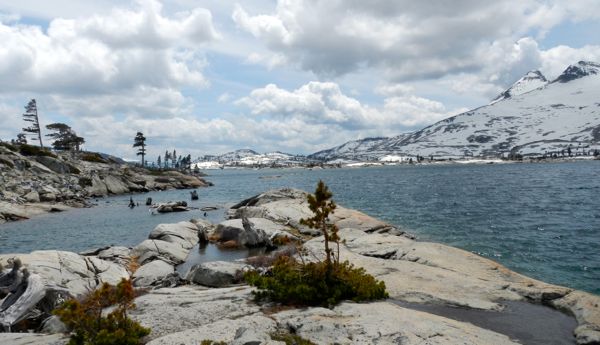
Lake Aloha in Desolation Wilderness is at 50 percent capacity and will continue to be drained for use downstream. Photos/Kathryn Reed
By Kathryn Reed
The water level of so many Sierra lakes is anything but natural. That’s because of dams and the needs of water users downstream. This in turn affects those who use these water bodies for recreation.
As the fourth year of one of the worst droughts in California’s history drags on, the impact will become more pronounced as spring turns into summer.
There was significant legislation in 1914 that established rights that are still in effect today and have been brought to light because of the drought.
It was in 1925 that the El Dorado Irrigation District was formed. The voters did so “to protect water filings, ensure a secure water supply, keep irrigation rates reasonable, and increase the value of agricultural lands,” according to EID’s website.
Today, EID has 39,775 water customers, 21,498 sewer and 4,678 recycled water. The number of actual people, as opposed to households or businesses being served, is about 118,000.
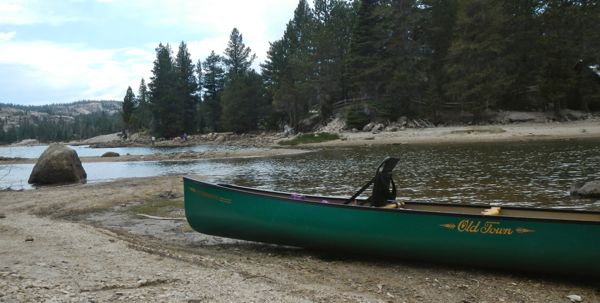
Silver Lake is almost full thanks to the rain in May.
Balancing needs
While those customers are on the West Slope, much of the water they use is from the Sierra – Lake Aloha, Echo Lake, Caples Lake and Silver Lake. They are storage facilities for EID for water consumption as well as the hydroelectric plant.
Water from these lakes goes into the South Fork of the American River, is diverted at Kyburz and then at Pollock Pines is rerouted again to the hydroelectric plant or for drinking water customers.
EID, though, doesn’t have complete control over its water. Rules are in place that mandate minimum stream flow into the South Fork of the American River. However, EID received a one-time variance that goes through the end of this month to limit that flow.
“This measure was to help us to ensure we can deliver our drinking water supply. We want to have water in the reservoirs so we have stream releases throughout the year,” Brian Deason, EID hydroelectric analyst, told Lake Tahoe News. “We want water next year, with enough storage in the event we have another drought year. We are positioning to respond to that.”
These four lakes are also popular recreation destinations for those who live in the Lake Tahoe Basin and visit the region.
“Drinking water needs take precedence over recreation needs by far,” Greg Hawkins, EID parks and recreation manager, told Lake Tahoe News. He is also in charge of Jenkinson Lake at Sly Park.
Still, Hawkins predicts the waterways EID oversees will be in better shape than reservoirs down stream, much like what occurred last year when Folsom Lake was so low and people headed east to EID’s lakes.
Saving water for human consumption outweighs all other needs – even making money off the hydroelectric operations, which in some years generates $14 million for EID. That is why Jenkinson Lake at Sly Park has fared well during the drought. EID is diverting water there for consumption and having less go to the South Fork for the 20-megawatt hydroelectric plant.
EID bought Jenkinson from the Bureau of Reclamation in 2003. Had it not done so, the state would be able to tap that water at will.
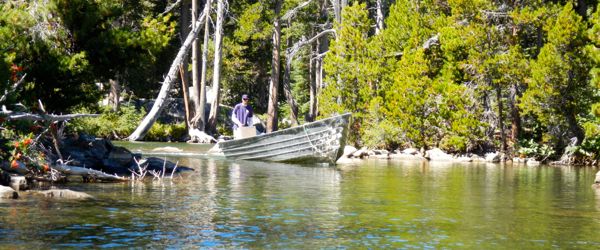
The boat shuttle at Echo Lake is operating now, but may have to stop if levels drop again.
Tahoe area lakes
“At Silver, Caples and Echo the outlook is a lot better than it previously was. Some of these recent storms really helped,” Deason said.
He said Silver is near capacity and that Caples is a few thousand acre-feet from full. (An acre-foot covers an acre with water to a depth of 1 foot.)
Recreation sites at these two lakes off Highway 88 opened May 1. EID regulates the day-use areas and campgrounds, has rights to the water, but does not regulate those lakes. In other words, if unsafe conditions were to exist, it would be up to Alpine County officials for Caples and Amador County officials for Silver to make those decisions.
At Echo Lake the use of water by EID is much less – usually three weeks after Labor Day water is diverted into the South Fork.
EID has no say over any recreation activities at Echo. Operators of the boat shuttle are on a storm-by-storm watch in regards to whether the upper lake will be reached. Today the boat can make it through the channel, whereas earlier this month it couldn’t. Smaller boats, and human powered vessels, have not been hindered by the flow.
Lake Aloha is a different animal than Caples, Silver and Echo lakes because it is governed by post-1914 rules. Aloha spills forth and is what makes Horsetail Falls. It then goes to the South Fork for EID purposes. Deason said Aloha is at 50 percent capacity and will only keep getting lower.
The four Sierra lakes fall under Project 184 of the Federal Energy Regulatory Commission. The first 50-year license was issued to PG&E in 1922. EID took over the system in 1999. Until that time, EID bought water from PG&E. EID has a FERC lease that expires Oct. 1, 2046.
EID, like all water districts in the state, must curtail its use. Twenty-eight percent from 2013 totals is the magic number. Officials believe this will be met by reducing outdoor use. Last year EID cut its use by 24 percent.
The EID board meets May 26 to consider the staff recommendation to continue the restricted irrigation to two days per week. As of April 22, the most recent figures available, the district was at a 15 percent savings this year.
“This will limit customer confusion by conveying to customers that instead of changing to odd/even starting June 1, they simply must continue their current irrigation practices of watering no more than two days per week throughout the summer and fall. We went to twice a week water schedule on April 16 and if the board does not change the published schedule, it will go to the odd/even schedule on June 1, three days a week,” Mary Lynn Carlton, district spokeswoman, said.

The lack of rain/snow is not a drought it is climate change, and it isn’t going to get any better until humans stop destroying the things that keep us alive on this planet.
Nope. For now, just a drought. Ask the Duke of Prunes how many droughts = a climate.
Don’t ask me dumb questions.