Officials proclaim new level of wildfire danger

By Kevin McCallu, Santa Rosa Press Democrat

Fire officials gathered in Santa Rosa’s devastated Fountaingrove neighborhood Wednesday to implore residents of the entire state to prepare for what they fear will be another long, dangerous wildfire season.

Some 950 wildfires have burned more than 5,800 acres of California so far this year, and residents need to recognize that fire, as a result of a host of factors including climate change, is now a year-round threat, CalFire Director Ken Pimlott said.

Read the whole story


6-year prison sentence in Truckee rape case

A Truckee man is going to prison for six years for raping a woman last fall.

James Russell Ferrigno

James Russell Ferrigno, 32, pleaded guilty earlier this year to using an intoxicating substance before raping his roommate.

The victim was renting a room from Ferrigno on a platonic basis. She told police she suspected Ferrigno of putting a substance in her drink at night, which led her to set up a camera in the kitchen.

The victim was at the May 8 sentencing. She presented the court with a written statement: “I know that whenever Jim is eventually released out of custody, my life will change again. The sense of security I get from knowing he is behind bars will only last so long.”

— Lake Tahoe News staff report


Rain, road closures forecast for Amgen bike event

It must be time for the Amgen bike race because the weather forecast for Lake Tahoe has changed from summer back to winter-ish.

While it’s a week out for the cyclists to hit South Lake Tahoe, it’s too far away to definitively say rain will be part of the mix. But wet weather is going to start this weekend and some weather sites say it will last a week.

Weather seems to always play a role in this race when Tahoe is part of the mix. One year it was snowed out, the start temperature has been a concern in the past, and wind is an element.

Rain is something these professionals can deal with. Thunder and lightning could be a different story.

The women participating in the Tour of California will spend all of May 18 in the region, while the men’s stage 6 ends at Heavenly Mountain Resort that day. All athletes will climb Kingsbury Grade – a first for the men.

The women will start at the Cal Lodge at 11am, with the first racers expected to finish at 2:18pm. The men should arrive about an hour later.

The women start and end at Heavenly. They will go out Pioneer Trail, over Luther Pass, make a loop in Woodfords, go along Foothill Road to Kingsbury back to the ski resort. The men will do much of the same route once they hit Hope Valley.

Kingsbury Grade will likely be closed from 1-3:30pm that Friday. Expect 20-minute rolling closures on Highway 50 in the Stateline area in that time frame. There will be temporary road closures all along the route.

— Lake Tahoe News staff report


Brown signs order to reduce wildfire danger

By Associated Press
 
Gov. Jerry Brown signed an executive order on Thursday that aims to reduce the dangers of wildfires following some of the deadliest and most destructive blazes in state history.

The order calls for accelerating forest management procedures such as cutting back dense stands of trees and setting controlled fires to burn out thick brush. Brown wants to double the forest area managed by such practices to 500,000 acres (781 square miles) within five years.

Brown’s order also calls for streamlining the process of allowing private landowners to thin trees and encouraging the building industry to use more innovative wood products.

Read the whole story


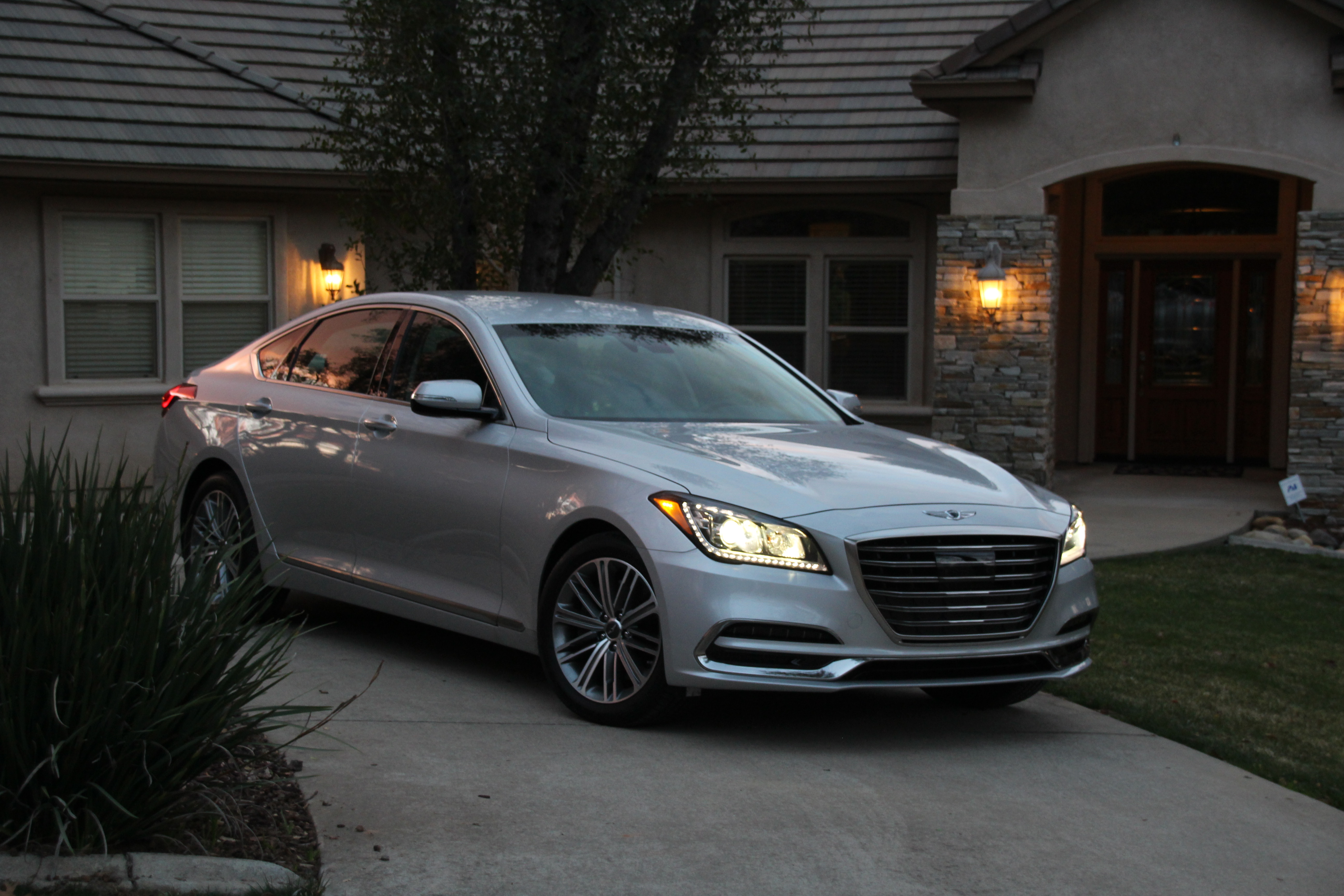
Road Beat: 2018 Genesis G80 — value in a luxo ride

Hyundai continues to be a leader in the luxury car market. Photos/Larry Weitzman

By Larry Weitzman

Genesis is talking of becoming a stand-alone brand. It is no longer a Hyundai. That happened with the introduction of its super luxury ride the G90 about a year ago. Not much has changed since the Road Beat last visited the G80 three years ago. It’s hard to believe its been three years, but it was time to see how the G80 stands up to the competition, if there is any.

When introduced, its design was ground breaking and it still is. From the aggressive, powerful front end, the svelte window line to the slightly kammed tail, the G80 is still a looker. It’s a big midsize or a smaller full size. Wheelbase is huge at 118 inches and it stretches out a full 196 inches, but it is only 3 inches longer than some other midsize entry level luxo models. G80’s narrow 74-inch width make tight places a breeze. Inside are large car volumes and dimensions with almost 110 cubes in the cabin and another 15 cubes in the well-shaped trunk.

And at a 0.26 co-efficient of drag, it is slick to the wind as you will see later.

Under the expansive hood lies a standard 3.8L DOHC, 24 valve, direct injected V-6 that belts out 311 hp at 6,000 rpm plus a stout 293 pounds of twist peaking at 5,000 rpm. Behind this longitudinally mounted unit is a slick eight speed auto cog swapper that comes with standard paddle shifters. The result is world class performance knocking down an average 0-60 mph acceleration elapsed time of just 5.74 seconds which is a tenth and a half quicker than my previous tester. That is quick, very quick.

Specs and Techs
Price $39,450 to about $55,000
Engines
3.8L DOHC 24 valve V-6 311 hp@ 6,000rpm
293 lb.-ft. of torque @ 5,000 rpm
5.0L DOHC 32 valve V-8 420 hp @ 6,000 rpm
383 lb.-ft. of torque @ 5,000 rpm
Transmission
Eight-speed automatic
Configuration
Longitudinal front engine/Rear Wheel Drive/All Wheel Drive
Dimensions
Wheelbase 118.5 inches
Length 196.5 inches
Width 74.4 inches
Height 58.3 inches
Track (f/r) 64.1/65.3 inches
Ground clearance 5.3 inches
Weight (RWD/AWD/5.0L) 4,138/4,295/4,541 pounds
Trunk capacity 15.3 cubic feet
Fuel Capacity 20.3 gallons
Steering lock to lock 2.55 turns
Turning circle 36.2 feet
Wheels (3.8/5.0) 18X8/19X8.5f; 19X9r inches
Tires (3.8//5.0) 245/45X18//245/40X19f; 275/35X19r
Cabin volume 107.7 cubic feet
Coefficient of drag 0.26
Performance
0-60 mph 5.74 seconds
50-70 mph level 2.64 seconds, uphill 3.47 seconds
Top speed electronically limited to 149 mph
Fuel economy EPA rated at 18/27/22 mpg combined. Expect 23-25 mpg in suburban/rural driving. 32-33 mpg on a level highway at 70 mph.

If that doesn’t get your attention, passing performance is also world class with a 50-70 mph simulated passing run of just 2.64 seconds backed up with an uphill run of 3.47 seconds. All these times are an improvement over my original test (5.89/2.97/3.86 seconds). While it appears to be the same car, maybe some beneficial tweaking was performed. And it is a great sounding V-6 with the smoothness and sounds emulating a V-8. This G80 flat out rocks, so much so its hard to stay out of the responsive, delicious throttle, yet it’s so easy to drive lightly.

Even with all my aggressive driving, in 400 miles of flogging the G80 averaged 23.8 mpg with almost no miles on a freeway.

While the EPA rates the G80 at 18/27/22 mpg city, highway, combined expect better. On the highway with the cruise control set at 70 mph with the engine spinning just 1,800 rpm, in a two-way run the G80 averaged 33 mpg. In a 200-mile round trip from Placerville to Carson City, the G returned 26.7 mpg and overall in 400 miles of driving including all testing meaning about two dozen full throttle runs, the G averaged 23.8 mpg. Zero to 60 mph in well under six seconds and 24 mpg overall. Pretty amazing.

Suspension is a sophisticated five-link system in all four corners with coils and high-performance gas shocks. Solid stab bars are at both ends. Steering is a quick 2.55 turns lock to lock and standard 18X8 inch wheels are shod with meaty 245/45 series rubber. While you may think the ride is soft, body roll is well controlled and it is truly amazing how well the G80 blasts through the twisties. Those meaty tires have excellent predictable grip and it goes through transitions quickly and smoothly. Genesis handles well and is a pleasure to drive aggressively, even this base model that came with no optional equipment. As you will read later, you will want for nothing as the standard equipment list is long and complete.

Genesis could be used in place of the word smooth. The ride is about “as good as it gets,” an almost perfect blend of softness with just the right amount of solid. The body and structure are bank vault solid. It is a wonderful thing about modern cars as exemplified by this Genesis. Quiet is also another word synonymous with Genesis. With the engine spinning a low 1,800 rpm at 70 mph, the Genesis is inaudible and wind and tire noise are nonexistent.

Safety is standard with Genesis. Besides the compliment of usual safety gear and acronyms, is auto emergency braking. Lane Keep Assist is standard. Headlights are fab with Bi-xenon and auto high beams. Brakes are strong and powerful. As I wrote, safety is standard.

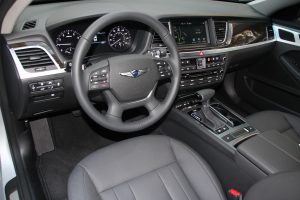
Inside is a luxo leather interior. The driver’s seat is great for long distance, but the passenger seat wasn’t as good. Instrumentation is perfect with three separate trip computers and a big tach and speedo flanking. The center stack was easy to use. Simple and elegant and no college course necessary to learn. It’s like plug and play.

As mentioned above, Genesis has a huge interior with the rear seat legroom of a limo. And the trunk is also huge, an easy four golf bagger.

Now to the coup de grace, this G80 stickers for $41,750, plus $975 for the boat from Ulsan, Korea. Imagine $42,725 for a complete world class performing luxo ride that even looks better. I could go on with the superlatives, but I think you already get that. This is a fabulous car for an even better price. It’s called value extraordinaire.

Larry Weitzman has been into cars since he was 5 years old. At 8 he could recite from memory the hp of every car made in the U.S. He has put in thousands of laps on racetracks all over the Western United States.


Opinion: Calif. democracy is like a Wendy’s in Colton

By Joe Mathews

One recent Sunday night, I stopped by a Wendy’s in Colton, a gritty San Bernardino County city. I wasn’t there to grab a square hamburger and a Frosty, but rather to glimpse the struggles of California’s peculiar system of democracy.

California’s governance might seem to emanate from the marble halls of Sacramento. But if you want to see how our state really treats democracy—as fast food, with laws and amendments being rapidly cooked, distributed, and fed to us—then you should get to Wendy’s.

Joe Mathews

The people there were professional petition circulators, who have been gathering signatures to qualify initiatives for California’s November ballot. They are important because of California’s democratic laziness. Our state could address its biggest problems through painstaking collaboration and negotiation in the state legislature. But we Californians prefer the speed of direct democracy, with rich people paying circulators to put measures to voters who cast judgment with little thought.

Because we lean so heavily on direct democracy, we end up leaning too heavily on circulators like the folks at Wendy’s. Yes, initiatives are dreamed up, and campaigns plotted, by powerful people in beautiful California places, like billionaire Tom Steyer’s ranch on the San Mateo County coast.

But the people who do the work of turning our overlords’ dreamiest notions into reality work the streets, and retreat to Wendy’s for its air conditioning, free Wi-Fi, and cheap eats. Twice a week, the regional petition coordinator does a fast-food tour to meet circulators, hitting Wendy’s, Lake Elsinore’s Starbucks, Menifee’s Jack In the Box, and the Corona Carl’s Jr.

Paid petition circulators have been part of the initiative process for more than a century. But recently, the system has shown new strains that could further weaken our democracy.

First blame Gov. Jerry Brown and the Democrats for requiring all initiatives to appear only on November ballots, when Democratic turnout is high. Previously, initiatives were spread out over different elections; now all the initiatives circulate at the same time.

This creates greater demand for circulators even as the aging workforce shrinks California’s cost of living has pushed younger circulators to cheaper states with direct democracy, like Colorado and Washington.

Worse, the number of places where circulators can work is shrinking. Longstanding legal precedents give petitioners the right to work in malls and outside stores, but many groceries and retailers ban circulators anyway and dare circulators to sue, knowing they can’t afford to pursue cases in the state’s clogged courts.

Circulators must be inventive. Some play cat-and-mouse games with the stores and the cops. Others work door-to-door. A few are trying gas stations, where drivers are more likely to be registered voters.    

But in fact, no place is really safe for petitions anymore. Californians are so angry about politics that fewer will stop and sign. Voter behavior is worst in our richest places (“I only send circulators to Beverly Hills as punishment,” one coordinator says), so circulators increasingly work poor places, where people are less rude.

“I’m in Chowchilla,” Arenza Thigpen Jr., president of an international association of signature gatherers, told me by phone from the Madera County town. “They have an amazing group of people here, and it’s pretty much untouched territory.”

These trends in time, labor, and space have sent the price of a signature soaring, further restricting access to the ballot to the very richest. A decade ago, it might cost $1 million to qualify a measure statewide; today, the price tag approaches $5 million.

There are ways to make the process less costly and more democratic. The state could establish a citizens’ commission to study regular people’s suggested initiatives and put the best ones on the ballot, instead of requiring costly petitions. Or the state could give proponents much more time to gather signatures—two years, for example, instead of the current six months. But state officials refuse to entertain such ideas, because they threaten the power of the wealthy people and interests who control ballot access. 

On the Sunday night I visited, the circulators signed up on a list scrawled on the back of a Wendy’s receipt, waiting to submit signatures and get paid. Since there’s not enough time to verify all the signatures at the restaurant, the circulators receive an advance based on the coordinators’ best estimates of how many of their signatures are valid. If the validity ultimately proves to be too low when petition companies check, circulators can be forced to give back some of the advance. These refunds are called “chargebacks,” and they are dreaded.

The circulators spend 40 minutes checking petitions to make sure everything is filled in (some counties void even valid signatures because of minor technical mistakes with petitions). They also gossip about a circulator having her labor induced the day after the final turn-in.

So ends another trying season of California democracy.

Joe Mathews writes the Connecting California column for Zócalo Public Square.


SLT interim city manager expected to be hired

By Kathryn Reed

Dirk Brazil is expected to be the interim city manager of South Lake Tahoe.

According to the staff report for the May 15 City Council meeting, the rate of pay will be $103.85/hour, which equates to more than $16,000 a month. This is higher than what the electeds last month said they wanted to pay. They had agreed to a range of $14,583 to $15,833 a month.

Dirk Brazil

The staff report has no explanation how the higher rate came into being. It was human resources chief Tom Stuart who was negotiating with Brazil.

The contract is from June 4, with employment until a permanent city manager is hired.

Approval of the contract will mean taking $65,000 from assigned excess reserves to pay for the position through this fiscal year that ends Sept. 30.

Brazil was one of three people who interviewed for the job on April 30.

Most recently Brazil was city manager of Davis. Prior to that nearly three-year stint which ended in 2017, he was assistant county administrator for Yolo County from 2006-14. He has state experience working for Assembly members, was one of the deputy directors of the California Department of Fish and Game, and was policy director and deputy controller in the Gray Davis administration.

In his cover letter to the council he wrote, “Regardless of the policy area – cannabis, affordable housing/rental housing, homelessness, economic development, sustainability, public finance, pubic art or labor negotiations – I bring an array of skill that will move the council’s policy forward.”

The opening came about after the council for undisclosed reasons severed ties with City Manager Nancy Kerry. They ultimately paid out her contract – all nine months – which means she was let go without cause.


No fish killed from 4,700+ gallon chemical spill

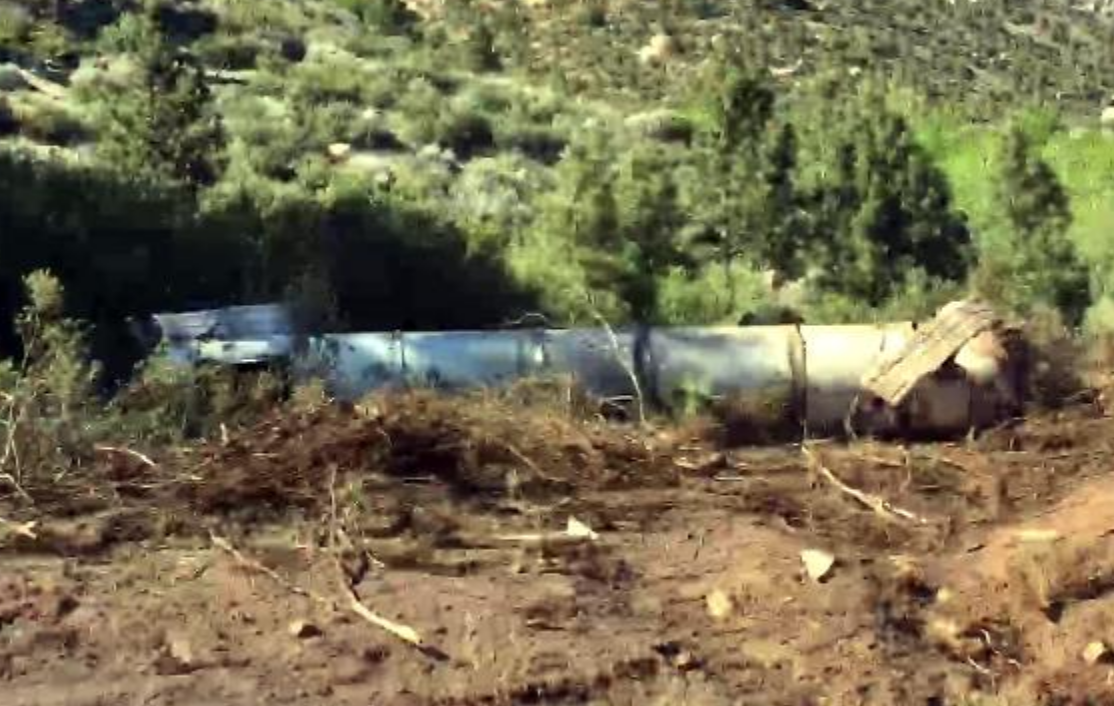
The driver of the rig that overturned was working for Watson Brothers Trucking out of Manteca. Photo/CDFWS

By Kathryn Reed

It is estimated that at least 4,700 gallons of a toxic chemical reached the West Fork of the Carson River after a tractor trailer crashed May 9 near Woodfords.

“The thinking is a lot of it went into the water. They just don’t have any specific number,” Scott Ferguson with Lahontan Regional Water Quality Control told Lake Tahoe News. Officials probably will never know the exact amount. Estimates are it could have been as much as 4,900 gallons.

The chemical was hypochlorite, a bleach-like substance. It had a concentration of 12.5 percent.

“The good news is so far there has not been any reports of any fish kill,” Ferguson said. “What is in the river is gone, meaning it has flowed on. There is nothing you can do once it gets into the water in this situation.”

Some of the remaining concerns are impacts to aquatic life, with trout the main species in the river; and then if any rain were to soak the contaminated soil and carry it into a waterway or spread it farther on land.

H2O Environmental is handling the soil removal. That likely isn’t going to start until Monday. Working with underground utilities is part of the delay in removing the soil. The site, which is near the Caltrans maintenance station in Woodfords, is being secured because of the incoming weather system.

Several agencies from California and Nevada are working together to resolve the contamination issue. They are in cleanup and assessment mode now, with any fines or recovery costs to be determined at a later date.

Lahontan, Nevada Division of Environmental Protection, and California Fish and Wildlife Service were all at the site on Thursday taking samples. Alpine County and Caltrans are also involved.

Greg Brown, 46, of Oakland was driving east on Highway 88 west of Crystal Springs when he lost control, crossed into the westbound lane and overturned. According to the California Highway Patrol, the trailer detached and continued to overturn up the embankment on the north side of the highway. The tank ruptured and the chemical spewed on to the road, dirt and then into a tributary of the Carson River.

“Due to his speed through curves the driver lost control,” the CHP report says of the 10am Wednesday incident.

Brown’s body was found in the cab of the truck hours later. The site had to be secured by hazmat crews before first responders were allowed in. It is not known if Brown died from the chemical release or the crash.


Douglas County Commission races heating up

Wesley Rice and Janet Murphy are vying for the District 4 seat that represents Lake Tahoe on the Douglas County Commission.

By Susan Wood

STATELINE – You know it’s a new day and age of politics when much of the focus for local government is on the party system.

Hence, the upcoming primary election for Nevadans is June 12, a week after California’s, and the candidates running for two seats on the Douglas County Board of Commissioners let it be known they’re steadfast Republicans.

Such is the case at the candidate forum sponsored by the Lake Tahoe South Shore Chamber of Commerce and the Tahoe Citizens Committee on May 9 in which current District 2 Commissioner Steve Thaler is being challenged by former chief financial officer and police officer John Engels, who’s relatively new to the Douglas County government scene.

Tahoe residents Wesley Rice, a deputy constable, and Janet Murphy, an engineer-turned-government consultant, also squared off in front of about 50 people to hear their ideas for the District 4 seat Nancy McDermid is being termed out on.

All candidates pledged at some point to attest to Republican values – a concept almost nonexistent years ago when the two-party system shared the same ballot.

Murphy even used the “drain the swamp” Trumpism when referring to being a fiscal conservative and making government more accountable to the taxpayers who seek getting the most out of District 4.

For District 2, the cowboy hat-clad Engels called himself nothing short of a staunch conservative Republican, equating affordable housing to gang housing and implying local government employees are paid too much in comparison to other jurisdictions in Nevada. The home page of his website displays the National Rifle Association logo, an inferred symbol of a no-holds-barred form of governing where might prevails over problems.

The more refined Thaler used his cerebral recollection of balancing a complex budget anchored by a $52 million General Fund as an “always challenging” but necessary task to be proud of without gutting it.

The District 4 race also represents a contrast of sorts in personalities, despite Rice and Murphy being neighbors five houses apart. Rice and Thaler, going for separate seats, appeared to tag team with hosting coffee chats together – one at Casey’s this Saturday.

The mild-mannered Rice, who serves on the Round Hill General Improvement District, opposed Engels characterization of the gang problem as not bad because of superior law enforcement. Like Engels, he also served as a police officer.

Nonetheless, Rice was predominantly placed at odds with the high energy, multi-tasking, shoot-from-the-hip style of Murphy, who made many of her take-no-prisoner points off the cuff. The experienced administrator for the Tahoe Douglas Utility District seemed to be peppered with questions from the chamber, citizen committee and audience by moderator Steve Teshara about whether her commitment level would be in jeopardy because of her busy schedule or dual party affiliation. She previously ran decades ago as an independent but now considers herself “an independent thinker.”

“I can do the job,” the Zephyr Cove resident repeatedly countered in various ways, making the case it’s “all government” where serving on different boards can mean sharing crossover information.

In November, the winner of the June Republican primary will face Kristi Kandel, a real estate consultant running as an independent with the goal of fixing infrastructure and balancing the vacation home rental quandary among other things.

The candidates never shied away from or ran out of topics to discuss.

“Tiregate” – Douglas County’s debacle involving a $1 million embezzlement by a former employee was described as shameful and embarrassing by all the candidates. The product of a grand jury investigation may have represented the one item they all agreed should never happen again with proper checks and balances.

Thaler promised those listening: “The criminal side is yet to come.”

Vacation home rentals, growth, cost-cutting, congestion, relationship with the Nevada Department of Transportation and the abundant supply of general improvement districts rounded out a lengthy list of discussion items.

“Congestion has become unbearable,” Engels exclaimed.

The tourism-driven topic came up again at the prospect of NDOT proposing the concept of reducing Highway 50 down to two lanes.

“It became four lanes for a reason,” Murphy said. Still, she understands why NDOT would want to make the road safer.

Rice partially agreed with his opponent by adding it took his daughter three hours to drive from Meyers to Round Hill on a holiday weekend; a reason to keep it four lanes.

While serving on the board now, Thaler accused the agency of not vetting the lane-reduction idea among government officials before putting it in the public eye. That said, he also noted the relationship with the county as: “working better than it ever has.”

“The best government is the government closest to the people” appeared to be the mantra of the night as the candidates discussed the need for multiple GIDs in the county. Rice listed Round Hill’s as only costing residents $111 a month for all utility services.

Another phrase in Murphy’s repertoire – “let ’em retire” — suggested employees leaving the county wouldn’t need to be replaced if others are cross-trained. She also believes the county should police the taxation of VHRs with more scrutiny.

Growth and development resembled a mixed bag of opinions related to the building of a Tahoe events center in the redevelopment area and a loop road to surround it.

All in all, the forum was well received by attendees, who provided limited applause but favored the listen-only mode.

Gardnerville resident Dave Maxwell sat attentively the entire time. Afterward, he told Lake Tahoe News he believed the candidates represented a broad spectrum of opinions and felt the topics put forth were good.

Maxwell would like affordable housing to be considered “quality housing.”

Teshara ended the hour-plus session reminding them they will need to be registered Republican to vote for any of the candidates speaking that night.    


Douglas County implements fraud hot line

In response to employees being accused of stealing tires, Douglas County has launched a public fraud, waste, and abuse hot line.

Using this hotline, the public and county employees will be able to confidentially report alleged inappropriate county activity. Douglas County employees also received fraud waste and abuse training and an ethics course.

The person reporting can choose to be identified or file a report anonymously.

Citizens and employees who report via the hotline will be able to track the status of the report through a report ID number. Reports will go to a third party contractor, which will forward reports to the county’s designated internal auditor, who will review each report and either deal with it directly or send it to the appropriate county department to address.


For more information about the program or to access the hot line, go online.