Opinion: End of life debate needs more discussion
By Joe Mathews
Seventy-four years ago in Long Beach, a bride stood at the back of the Second Presbyterian Church, preparing to walk down the aisle. Her father eyed the groom warily and whispered in her ear: “It’s not too late to change your mind, dear.”
Today, that bride greets me from her bed in a board-and-care home in San Mateo. “Did you know I’m 100 years old?” she asks.
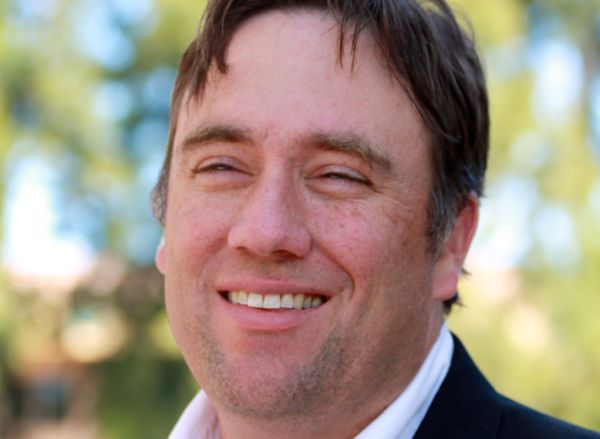
Joe Mathews
My grandmother is exaggerating. She’s 98. But I don’t correct her. I’ve inherited her conviction that facts shouldn’t get in the way of a good line. She’s also taught me that you can’t ever be too sure about life, especially its end.
Grandma Oops, as we call her (she’s a major league klutz), is in my thoughts these days, as SB128, the End of Life Option bill, makes its way through the California Legislature. The legislation would allow mentally competent California residents with six months or less to live to obtain a prescription for lethal drugs they can give themselves.
I have no beef with the legislation, and my grandmother is strongly for it. Such legislation suits California, where the long-standing movement to give people more control over how they die dates at least to the 1963 publication of Oakland resident Jessica Mitford’s exposé of the funeral business, “The American Way of Death”.
What doesn’t fit California, or the reality of the end of our lives, is the strident tone of those on both sides of the debate.
The advocates for SB128 can be unnerving in their unswerving commitment to the right to die, and in their bullying of those of us who would dare to use the term “suicide” in this context. The opponents are just as rigid. Religious leaders call the suicide of a terminally ill person an affront to God. Doctors claim that physicians are healers and nothing more (despite the lack of empathy and excessive charging of helpless patients in that profession).
These claims, and all the attention to the bill, are too much, for two reasons. One is mathematical. Even if the bill is enacted, such assisted suicides are certain to be extremely rare. In Oregon, which pioneered this right, there have been less than 1,000 such suicides since 1998, representing well less than 1 percent of deaths in the state. The second reason is fuzzier, literally: To apply rigid moral claims to a sphere as uncertain as the end of life is foolish. And wrong.
It also misses the point. The most important right to protect at life’s end is not the right to die but rather the right to change your mind.
Changes of mind define a life — that’s what my grandmother taught me. She didn’t care for marriage or family, but married as a nod to the times — you couldn’t spend all your time with a man if you didn’t marry him. She changed her mind about kids when she saw how good her husband was with them. She was committed to the casual Southern California life in Long Beach but became a Northern Californian — a teacher in San Mateo — when my grandfather, a civilian Navy employee, got a job at Hunters Point in San Francisco.
Because her teaching job came with government benefits, she could choose her end-of-life care, she selected a board-and-care that a large Tongan family runs out of their home. Tracking the decline of Grandma Oops has been a challenge. She was prone to spills and mixing up names when she was young, so falls and forgetfulness weren’t reliable signs of problems.
On her 90th birthday, Grandma Oops was taken to the local hospital and told she needed dialysis or she would die. She refused, saying she’d used too many of the earth’s resources already. Eight years later, she’s still refusing treatment when she’s ill. But when I visit her, I bring along her three great-grandchildren, ages 6, 4, and 20 months. She hugs them and encourages them to run down the long hallway of the board-and-care. She says she’s changed her mind — she’s glad she lived along enough to know them.
One of the best things about SB128 is that it leaves room for people to change their minds. You have to make two oral requests for lethal drugs 15 days apart, and a written request with witnesses. And you have to administer the medication yourself. The real problem with the legislation is its narrow focus. California needs a much broader conversation about improving end of life care for all of us. Palliative care is very hard to find. And we Californians have decided not to make the investments in the care we’ll need as our senior population explodes in the next several years.
Of course, it’s not too late for us to change our minds.
Joe Mathews is California and innovation editor for Zócalo Public Square, for which he writes the Connecting California column.