Settlement in Alpine County toxic mine case
Even though over the course of decades more than $100 million has been spent on cleanup activities at an old sulfur mine in Alpine County, a settlement agreement between disagreeing parties was just reached.
In July, at the Lahontan Regional Water Quality Control Board meeting officials said the settlement could happen any day. It took another eight months.
The Leviathan Mine is considered a superfund site, making it one of the most toxic areas based on Environmental Protection Agency standards. As a CERCLA site, there are certain parameters that must be followed. And there is also a certain amount of risk that is allowed. This site will presumably always be toxic, just not to the degree that it is today.
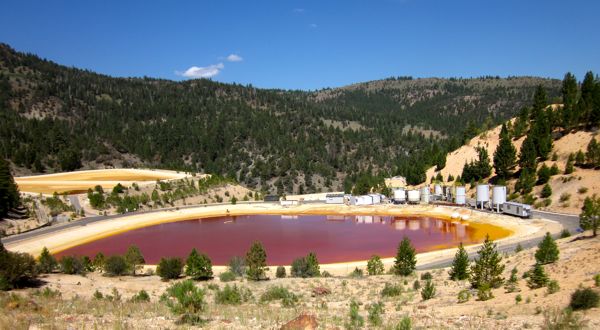
Leviathan holding ponds and treatment system used by Lahontan. Photo/Lahontan Water Board
It is better than what it was. In 1999, there were no rainbow, brook or brown trout in Lower Leviathan Creek, according to the U.S. Fish & Wildlife Service. In 2013, there were 72 rainbows, 521 brooks and zero browns.
Anaconda Copper Mining Company used the mine from 1951-62. It was sold in 1963 to William Mann, who was Alpine County’s clerk, for $100. Eventually officials discovered acid mine drainage was contaminating Leviathan Creek. There was no way Mann was going to be able to write the checks for the cleanup. California stepped in in 1983 and bought the land.
A lawsuit was filed against Atlantic Richfield Co., which had bought Anaconda. A settlement of just more than $2 million allowed clean up to start. But then the Washoe tribe asked the EPA to get involved because the pollutants were creating a thick layer of orange precipitate along the streambed that ended up in the East Fork of the Carson River. The EPA went after ARCO, and in turn ARCO filed a suit against Lahontan.
It is that second lawsuit that was just settled.
The settlement details what work ARCO and Lahontan will conduct at the site going forward, and lays out the cost-sharing formulas. The settlement also secures long-term funding for a cleanup project that could take decades, if not centuries to complete, according to officials. Lahontan will design and construct the remedy, and ARCO will pay 75 percent of the cost to complete it. ARCO will also pay 70 percent of Lahontan’s expense to operate and maintain the remedy over the long term.
Today, Lahontan and ARCO have separate treatment systems. The settlement allows for just one.
— Lake Tahoe News staff report