State reserve protects rugged coastal beauty


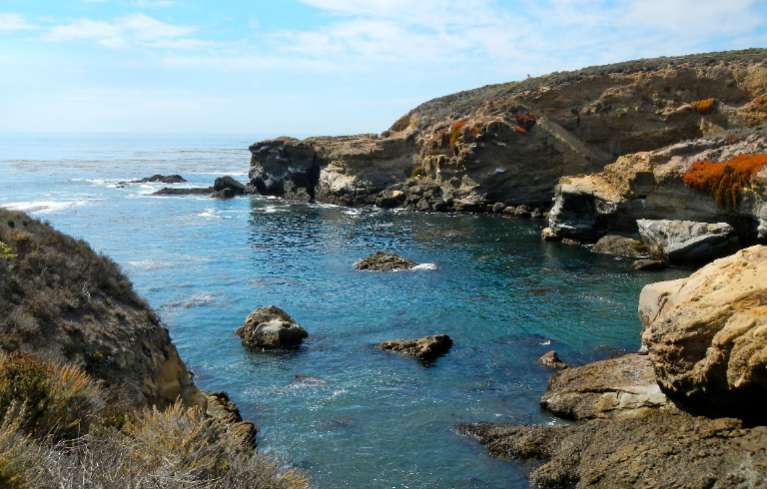
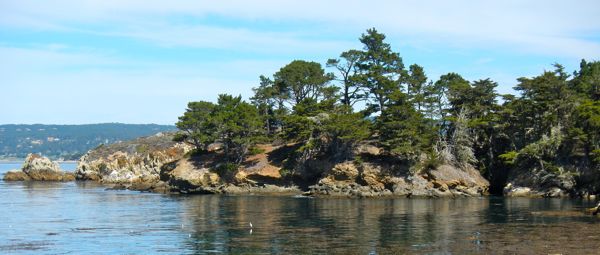
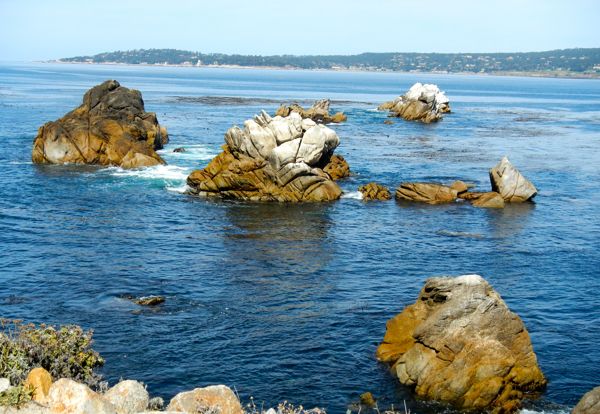
Point Lobos State Reserve in Carmel offers endless views of the Pacific Ocean. Photos/Kathryn Reed
By Kathryn Reed
CARMEL – Tails smacking the water, backs breaking the surface and water spewing from the blowhole.
It’s an unusual sight in early October to see humpback whales breaching off Point Lobos. About a half dozen of these creatures were a few hundred yards from shore. A volunteer with the state preserve says a shelf about 1,000 feet deep provides plenty of food for the whales. He allows visitors to peek through his high-powered binoculars to get a better view of the action in the ocean.
A couple kayakers are out with the whales in what looks like a potentially precarious situation.
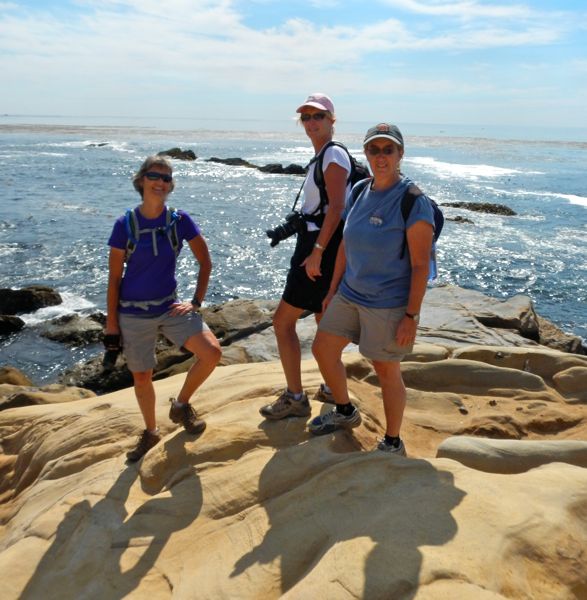
Point Lobos State Reserve is full on this first Sunday in October. We had to park on the road – which saved us $10. Maybe it had something to do with the federal shutdown; after all it’s why the four of us were there. Our girls camping weekend was canceled because we were headed to a national park. But Plan B was just fine – Carmel and its surroundings.
Birds are the most common and easiest form of wildlife to spot. Cormorants, herons, and pelicans flock to rock outcroppings and are in the bay area perched on kelp as they scout for food.
It would be near impossible, definitely exhausting, to hike all the trails in the reserve in one day. The $2 map that may be purchased at the parking kiosk is worthwhile. Besides letting you know where you are and how to get to the next spot, there is a wealth of information about the preserve.
Trails for all ability levels abound and some are wheelchair accessible. And those not into exploring by foot will find parking near the water.
Offshoots along many of trails provide sweeping vistas of the Pacific Ocean. The reserve is on a jagged slice of the Central Coast, which provides for several rather tranquil coves, at least on this day.
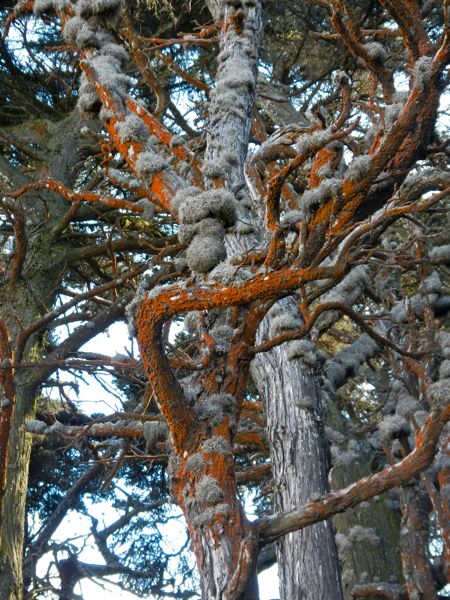
Windswept trees look deformed as their branches are not uniform. This just adds a unique natural beauty to the already stunning scenery. The Cypress Grove Trail goes through one of two naturally growing stands of Monterey Cypress trees that exist in the world.
Chinese fishermen built the Whalers Cabin in the 1850s. Now it’s a museum that tells stories of abalone being shipped to Japan, how cattle were brought to the area by the Carmel Mission padres in the 1770s, that Portuguese dairy farmers in about 1903 started making Monterey Jack cheese. The Jack is a tool, not a person.
Point Lobos is also a popular launching spot for scuba divers. In 1960, it became one of the country’s first underwater reserves.
In total, the reserve includes 775 acres underwater and 554 acres on land. The State Parks system began managing the area in 1933. It is on the National Register of Historic Places.