Ironman swim change will affect Tahoe event
By Michael Buteau, Bloomberg
World Triathlon Corp., the owner of the sport’s Ironman-branded events, is making changes to the swim portion of select races after an increase in competitor deaths in recent years.
Events in Coeur d’Alene, Idaho; Lake Placid, N.Y.; and Mont-Tremblant, Quebec, will no longer feature a mass swim start format, eliminating a long-standing Ironman tradition. Athletes at those races will either enter the water in a continuous stream through an access point, with their time starting when they cross a timing mat, or in staggered waves based on their age group.
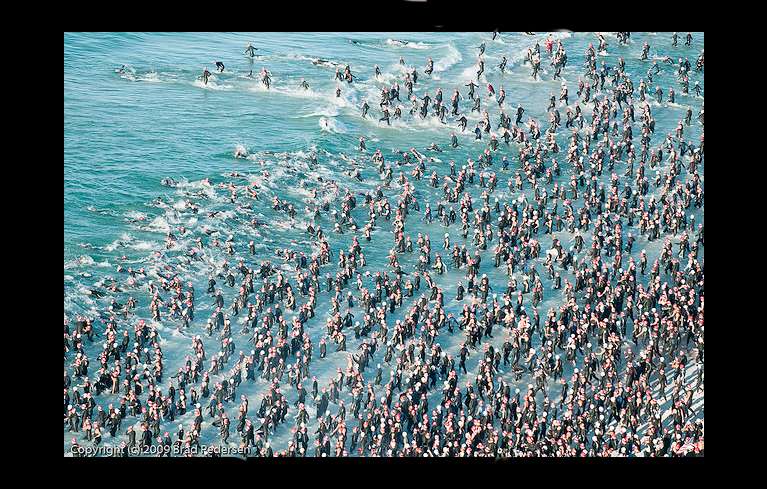
Ironman is making changes to swim starts. Photo/Brad Pederson
The changes come two months after Ross Ehlinger, a 46-year-old man from Austin died during the swim portion of the Escape from Alcatraz Triathlon and nine months after Andy Naylor, a 43-year-old member of the Hong Kong Police Force, died near the conclusion of the 2.4-mile swim portion of the New York City Ironman. In 2011, two competitors died during the swim portion of the Olympic-distance New York City Triathlon.
All North American Ironman events will also include a pre-race, in-water warm-up when possible. In addition, if the water temperature is below 52 degrees or above 88 on race day, the swim portion will be canceled or shortened, World Triathlon said in a statement May 9.
The Coeur d’Alene and Lake Placid races will feature the rolling start process, while Mont-Tremblant will begin in age-group waves entering the water every five minutes.
Events in Lake Tahoe (Sept. 22) and Panama City, Fla., will alter their mass swim start, with seeding into corrals based on the competitor’s estimated swim finish time.
USA Triathlon, the governing body for the sport in the U.S., released a study in October that found 30 of 43 athlete fatalities in triathlons from 2003 through 2011 happened during the swim portion. The study found most triathlon-related deaths were caused by sudden cardiac incidents and that course conditions didn’t play a role.
All swim courses will now include numbered buoys to assist in locating and helping distressed swimmers. Anchored rafts, as well as an increased number of rescue boats, kayaks and in-water personnel, will be included along the courses. Competitors who use the rafts to rest won’t be disqualified, World Triathlon said.
The swim changes will also include educating athletes about reducing anxiety, including pre-race screening for potential health issues, pre-race training and race-week preparation.